
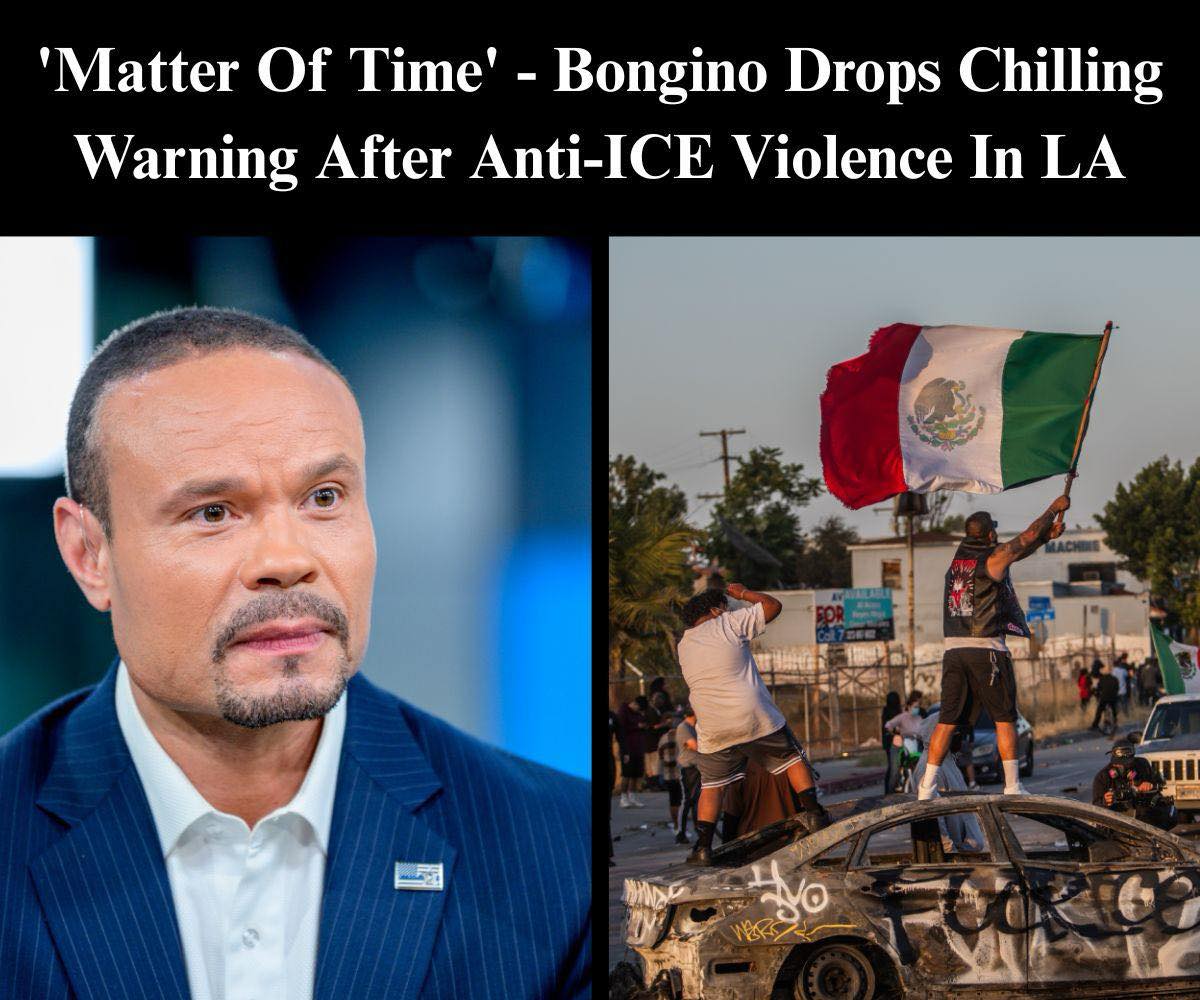
A weekend ICE workplace-verification raid in Los Angeles’ Fashion District erupted into violence when protesters surrounded departing agents and pelted their vehicles with rocks, an attack recorded on dozens of phones and quickly shared online. The agents had searched a garment warehouse after a judge found probable cause that undocumented employees were working there with forged papers.
FBI Deputy Director Dan Bongino reacted in an unusually blunt post on X, releasing the video clip and addressing the masked protester seen hurling the first stone: “We’re using every investigative tool to track you down. Turn yourself in now—it’s only a matter of time.” He made clear that every rock-thrower captured on camera would face federal charges.
FBI Director Kash Patel amplified the warning, writing, “Hit a cop, you go to jail—period,” and promising that federal agents would intervene if local police hesitated. Patel framed the incident not as civil disobedience but as felony assault on law-enforcement officers.
The confrontation set off wider unrest. By nightfall activists had gathered outside a downtown federal building amid rumors that detainees were being held in its basement. Early Saturday another ICE operation in nearby Paramount drew fresh crowds chanting “Set them free!” Graffiti defaced courthouse walls, and at least two Molotov cocktails were reported against federal vehicles.
Among the nearly two dozen arrests was David Huerta, regional president of the Service Employees International Union, charged with obstructing federal officers and moved to the Metropolitan Detention Center pending a Monday hearing.
Images of burning debris and smashed windows dominated cable news, prompting former President Donald Trump to invoke Title 10 authority and mobilize 2,000 National Guard troops for a minimum sixty-day deployment in Los Angeles County, extendable at the defense secretary’s discretion. On Truth Social Trump blasted Governor Gavin Newsom and Mayor Karen Bass for “weak leadership,” vowing that federal forces would end “riots and looters” if local officials could not.
Defense Secretary Pete Hegseth called the disorder a “national-security threat” linked to “violent mob assaults,” warning that Marines at Camp Pendleton were on standby for domestic deployment—one of the most forceful public hints at active-duty use on U.S. soil in recent memory.
Federal investigators have begun a comprehensive video review, employing facial-recognition software and license-plate scans to identify anyone who threw rocks, set fires, or damaged property. ICE, the FBI, and Homeland Security have established joint command posts to streamline warrants and share intelligence. National Guard units now ring federal buildings, detention centers, and major transit hubs with orders to safeguard property while avoiding confrontation with peaceful demonstrators. Marine involvement would likely require an Insurrection Act declaration, a step certain to trigger court challenges.
State leaders swiftly pushed back. Governor Newsom denounced the troop deployment as “politically driven grandstanding,” saying it would inflame tensions, while Mayor Bass condemned the ICE raids as “fear tactics” that undermine Los Angeles’ sanctuary policies. Both pledged that city and state agencies would not assist in detaining non-violent migrants. Civil-rights groups signaled lawsuits against any protest-mask ban floated by Trump and questioned the breadth of federal authority under Title 10 without state consent.
The showdown carries broader implications: it could set new precedents on federal intervention in local unrest, reshape political narratives on immigration enforcement, and determine how far Washington will go to impose order. For now, National Guard troops patrol Los Angeles streets and federal analysts match faces to flying rocks, leaving the city—and the nation—watching to see whether the crackdown cools tempers or sparks the next flashpoint.

