
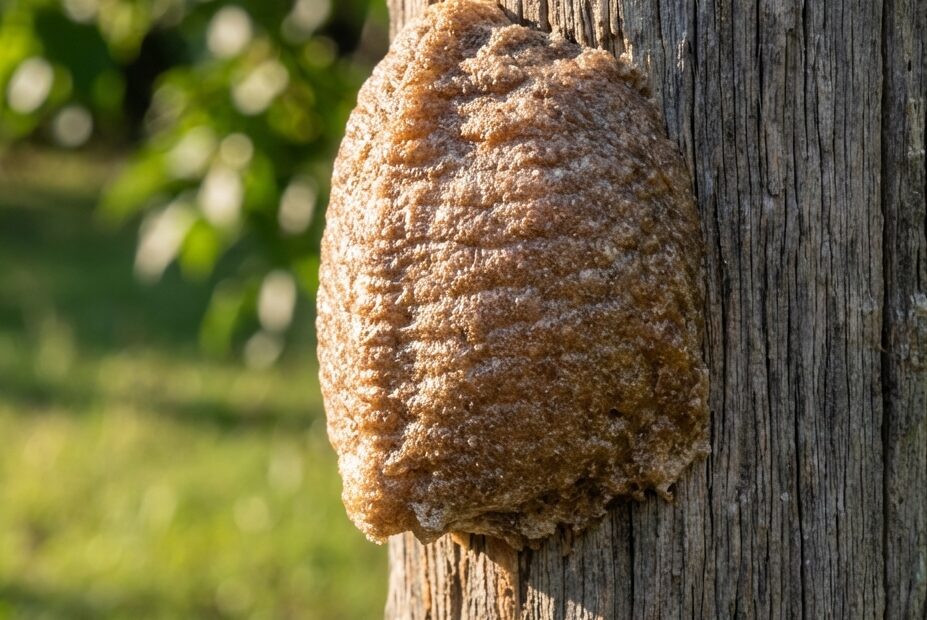
At first glance, it looks like something that doesn’t belong — a strange, hard, foam-like brown mass stuck to a fence post or branch. It’s not quite a nest, not exactly fungus, and definitely not something you remember putting there. Most people instinctively reach for a scraper… then pause. Is it dangerous? Is it alive? Before you knock it off, you might want to take a closer look — because what seems odd or even unpleasant at first could actually be one of the most beneficial signs your backyard ecosystem is thriving.
In many cases, that mysterious structure is a praying mantis egg case, known as an ootheca. Female mantises create these protective casings in late summer or fall after mating. They release a frothy substance that quickly hardens into a sturdy, foam-like shell designed to shield dozens — sometimes hundreds — of eggs through winter. Typically tan to light brown and about one to two inches long, the ootheca is built to blend in with twigs, fence posts, and garden structures. Its ridged, slightly spongy texture helps protect the developing insects inside from weather and predators.
While it may not look impressive, what’s inside is remarkable. When spring temperatures rise, tiny mantises emerge from the case, already equipped with the instinct to hunt. These insects are natural predators that feed on common garden pests such as aphids, flies, and caterpillars. Because of this, many gardeners consider them helpful allies. Their presence often signals a balanced outdoor environment, reducing the need for chemical pest control and supporting a healthier garden overall.
If you discover one attached to a structure in your yard, it’s generally best to leave it undisturbed. The egg case is harmless to people and pets, and removing it disrupts the life cycle of a beneficial insect. If it’s located somewhere vulnerable, it can be carefully relocated by trimming the small branch it’s attached to and securing it in a protected area. What may have first looked like a strange backyard mystery could turn out to be a small but fascinating example of nature quietly at work.

