
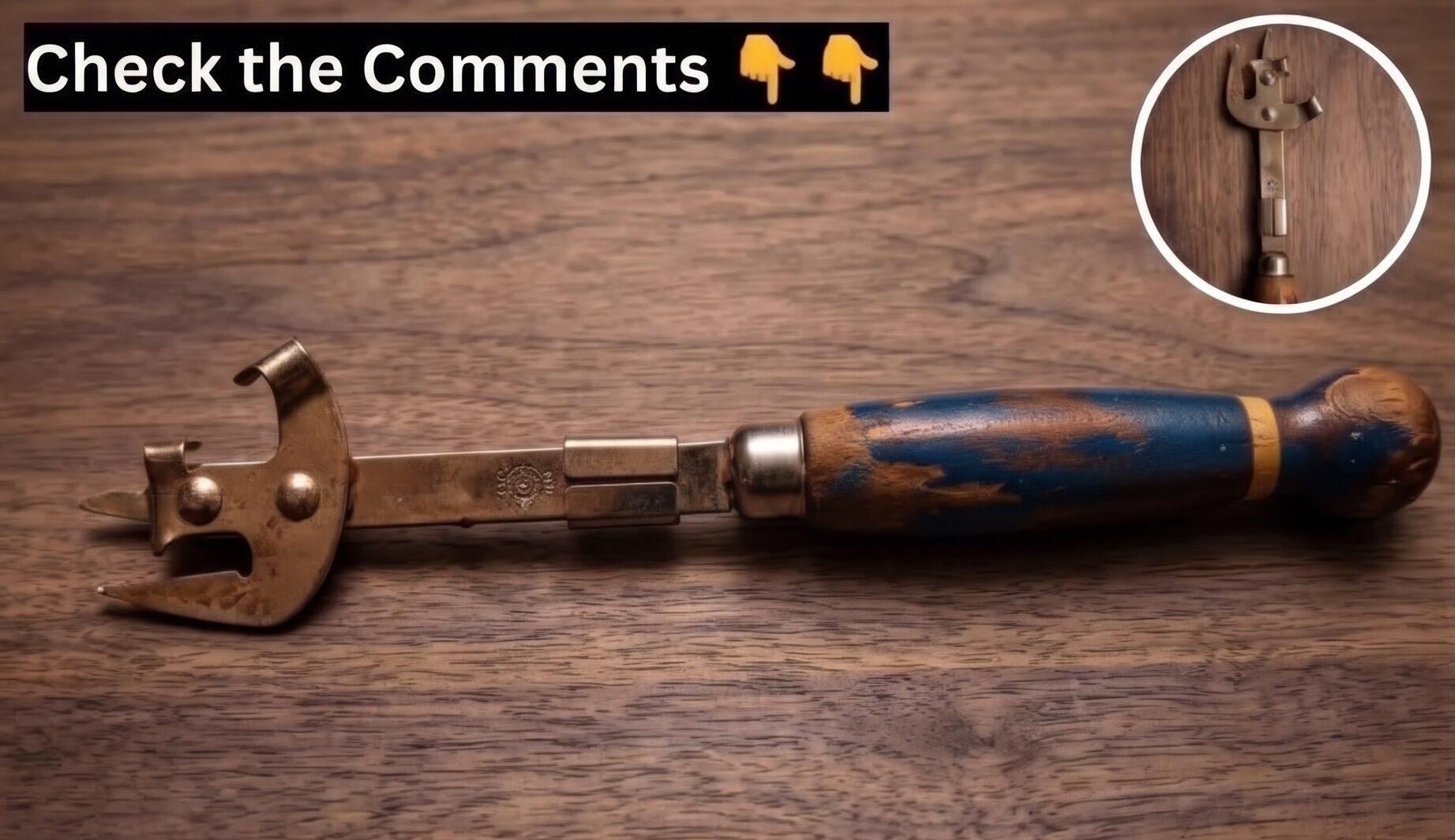
Cleaning out a grandparent’s kitchen cabinet often uncovers forgotten relics from another era. While sorting through old drawers in his grandmother’s home, one Reddit user pulled out a bizarre metal contraption featuring a menacing curved blade. At first glance, the heavy object looked more like an antique survival weapon than anything meant for preparing dinner.
Curious about the mysterious discovery, he snapped a photograph and uploaded it online for answers. Thousands of baffled commenters immediately began guessing, suggesting everything from a nineteenth-century medical instrument to a vintage farm implement. Older viewers, however, instantly recognized the gadget and admitted it brought back painful childhood memories of household injuries and permanent scars.
Before modern kitchen safety standards existed, using this device required serious grip strength, patience, and steady nerves. One wrong slip could send the razor-sharp edge straight into a person’s hand while leaving tiny metal shavings behind. Yet the real truth behind what this intimidating tool actually did shocked younger generations entirely.
The mysterious metal device was actually an early version of the everyday can opener. Unlike today’s smooth-rolling kitchen tools, users had to punch the pointed blade directly into a tin lid and manually rock it forward inch by inch. This grueling process routinely left behind razor-sharp, jagged metal rims that posed a serious health and safety hazard during meal prep.
Surprisingly, preserved canned food hit the market decades before anyone invented a safe way to open it. In the early nineteenth century, manufacturers literally instructed families to break open sealed tins using a hammer and chisel. That changed in 1858, when American inventor Ezra Warner patented a curved-blade opener that became standard equipment for soldiers during the American Civil War.
True household convenience finally arrived in 1870 after William Lyman introduced a safer rotating cutting wheel, eventually paving the way for electric models in the 1930s. Today, these rugged vintage gadgets serve as fascinating reminders of how far home engineering has come. What once turned opening a simple can of soup into a risky battle is now one of the easiest tasks in any modern kitchen.