
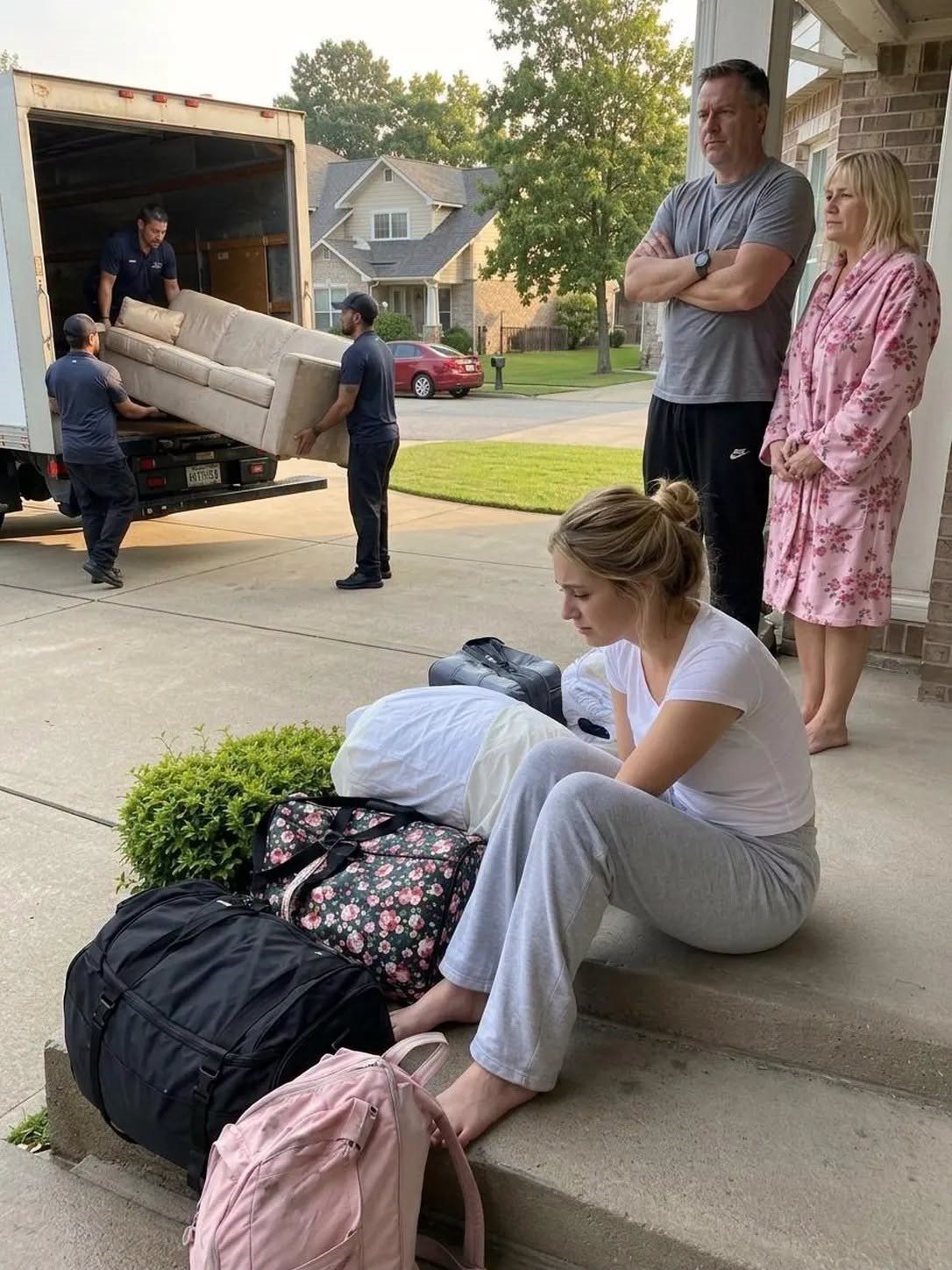
At 6:03 on a Tuesday morning, Adam’s sister walked into his apartment carrying two duffel bags and announced that she was moving in. His mother stood below the outside stairs in her robe, calmly drinking coffee, while his father acted as though the decision had already been made. Adam reminded them that he had paid rent for the apartment above their garage every month for six years. He had also purchased the couch, bed, shelves, lamps, microwave, and nearly everything else that made the empty space feel like a home. Instead of respecting that agreement, his mother told him the rent would immediately double if he refused to share the apartment with Chloe. His parents smiled when Adam said he would move out, clearly believing he had nowhere else to go. They did not realize he had saved every receipt.
Before noon, Adam called a friend with a box truck and began carrying his belongings down the stairs. At first, Chloe assumed he was only trying to make a point. Then the couch disappeared, followed by the bed frame, table, microwave, lamps, shelves, and every other item Adam had purchased himself. His mother tried to make him feel guilty, his father warned him that family would not help him in the future, and Chloe began crying when the apartment slowly became an empty room again. Adam never raised his voice. He simply checked each receipt, loaded each item, and kept moving. When Chloe asked how he could leave them with nothing, Adam finally understood how they had viewed him for years—not as a son with his own needs, but as the dependable person who would always sacrifice his comfort to protect theirs.
Adam rented a small apartment above a bakery on the north side of town. It was modest, but it was peaceful, and nobody appeared at dawn to change the rules of his life. His mother left angry messages, then worried messages, and finally offered to lower the rent again. His father said Adam had made his point and should return. Adam ignored them and slowly rebuilt his home with a secondhand table, an affordable couch, and a new bed. Several weeks later, Chloe called in tears. Their parents were now demanding $600 a month from her and threatening to change the locks if she could not pay. She asked to stay with Adam, but he refused. He knew that allowing one suitcase through his door would bring the same pressure, excuses, and family arguments into the peaceful life he had just created.
Two months later, Adam learned the truth his parents had carefully hidden. His monthly rent had been covering their rising property taxes and several household expenses, and doubling it had never been about Chloe needing space. It had been a desperate attempt to collect more money from the one person they believed would never leave. Without Adam’s payments, they could no longer afford the property. They placed the house on the market, advertised the empty garage apartment as a special feature, and eventually moved into a smaller condominium. Chloe found a roommate and took a full-time job, while Adam stayed in the quiet apartment he had chosen for himself. A year later, his father accused him of taking everything from the garage. Adam calmly answered, “I took what belonged to me—nothing more and nothing less.” When he returned home that evening, every piece of furniture was his, every bill was his responsibility, and for the first time, the word “home” came without conditions.

