
“You’re not invited, Jenna,” Melissa said across the dinner table. “It’s for real family.” The room did not erupt; it softened into comfortable laughter, the kind people use when cruelty has already been approved. Jenna looked toward Harold, the father who had adopted her at four, but he lowered his eyes and told her not to take things so personally. She stood, reached for her coat, and might have left with the humiliation still unnamed if he had not called after her. “We still need to talk about the cabin payment,” he said. The annual reunion cost $3,600, and Jenna had paid it for years. In that moment, she understood that the family did not consider her real enough to attend, only real enough to finance everyone who did.
Linda, Jenna’s adoptive mother, had never treated love as conditional. She packed school lunches with handwritten notes, attended every concert, and introduced Jenna simply as her daughter. After Linda died from cancer, Harold remarried, and his new stepdaughter Melissa quickly became central while Jenna’s position shifted toward usefulness. She paid overdue electric bills, covered Aunt Paula’s dental surgery, sent money to cousins who forgot her birthday, and funded the Blue Ridge cabin each spring because Harold always said Linda would have wanted the family together. Jenna mistook being needed for being wanted, partly because every demand arrived wrapped in the language of obligation and memory. The invoices listed her alone as the responsible party, but she had never examined what that meant. She had been paying for a tradition that preserved everyone’s belonging except her own.
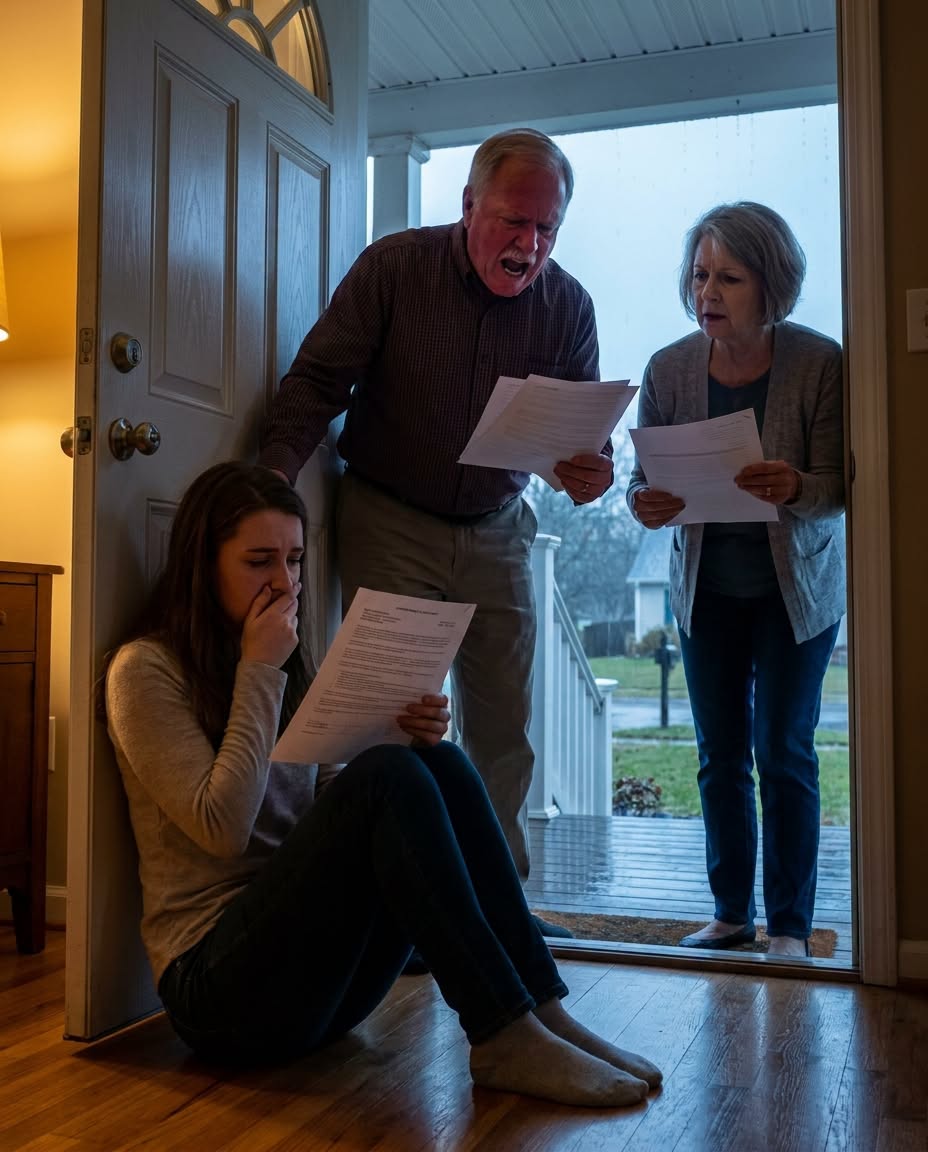
That night, Jenna reviewed years of statements, emails, receipts, and messages and canceled the scheduled transfer. When the payment failed, the family’s concern was immediate—not for her, but for the reservation. Harold ordered her to fix it, Melissa accused her of being petty, and relatives insisted she was punishing everyone over a joke. Jenna responded with the dinner message and wrote, “Payment denied. Must be that family-only policy.” Four days later, Harold and Melissa arrived at her house demanding the money before the rental agency released the cabin. When Melissa shoved the invoice toward the screen door, Jenna again saw her own name printed as the sole responsible party. The document made plain what the family had concealed beneath sentiment: she was not a guest contributing to a shared event; she was the person legally and financially carrying it.
Jenna preserved the invoices, payment confirmations, bank records, and written demands, then formally withdrew authorization for any future cabin charges. Because the reservation and payment obligation were attached to her name, Harold had no contractual basis to force the transaction or claim that she owed reimbursement. She also ended the informal financial support that had functioned for years without written agreements, receipts, repayment schedules, or accountability. When Harold threatened to exclude her from all future holidays unless she paid, Jenna told him he was not losing a daughter but a payment method. She closed the door, secured the deadbolt, and left the $3,600 in her own account. That morning, she used part of it to book a ten-day trip along the Amalfi Coast and saved the confirmation in a folder labeled only with her name.
In Italy, Jenna expected loneliness and instead discovered how much lighter solitude felt than belonging conditionally. The family messages gradually stopped once there was no money or reaction left to collect. None of them asked how she was; every communication concerned what she had refused to provide. Standing in the coastal light, Jenna thought of Linda, who had chosen her without demanding repayment and had never confused care with debt. For years, Jenna had tried to find that love among people who used Linda’s memory to keep her compliant. She finally understood that the $3,600 had never purchased a place in the family—it had only postponed the truth about the place she already occupied. She lifted her suitcase and walked toward a life no longer organized around earning an invitation.

