
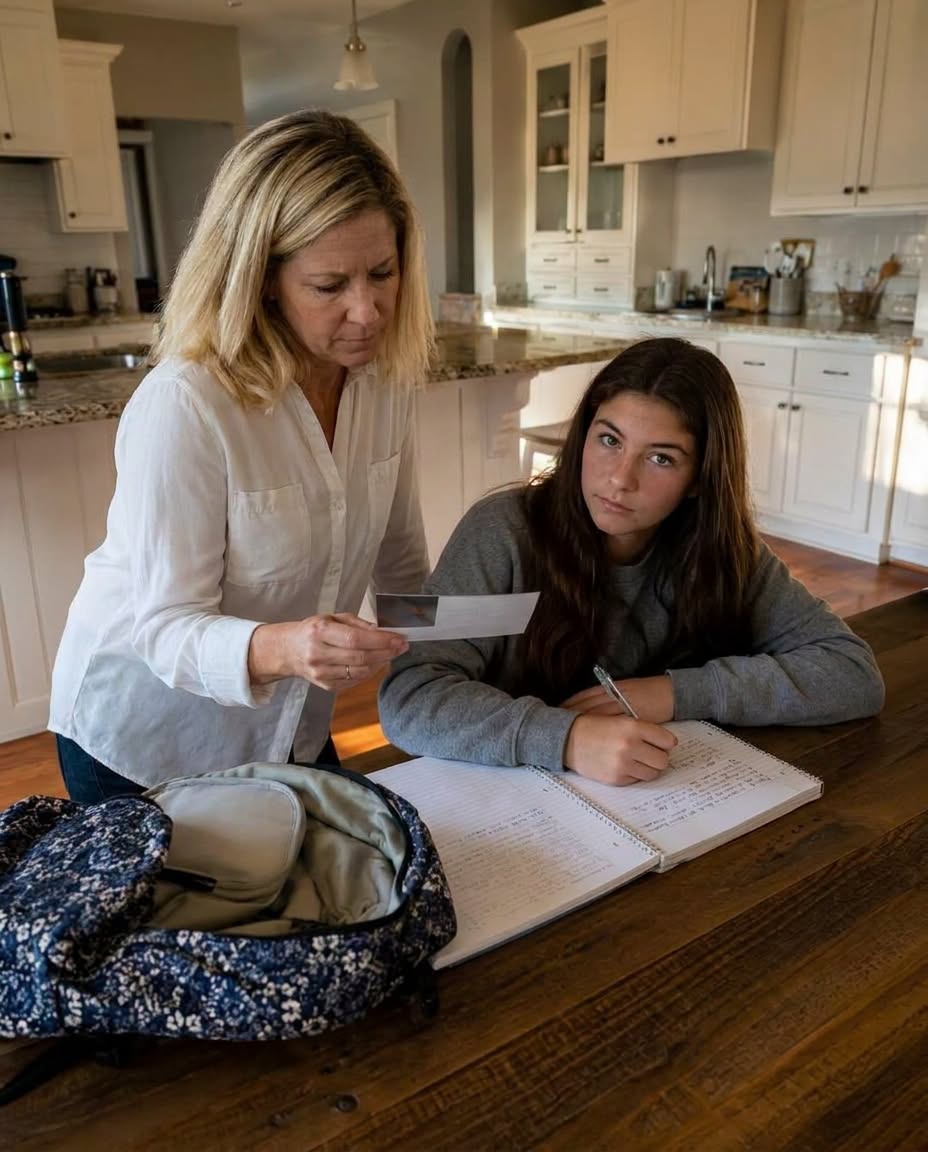
“You usually handle these things,” Marcus said from the living room, barely looking up from the sports pages. I stood beside the dishwasher with my hands still wet, listening to the sentence settle over a day that had begun before sunrise and had not belonged to me for even five uninterrupted minutes. I had packed lunches, managed two children’s schedules, driven my mother-in-law to a salon appointment, arranged childcare, cooked dinner, and kept every small mechanism of our household moving while Marcus played golf. Now he was disappointed because I had failed to confirm a dinner invitation he had mentioned once in passing. There was no cruelty in his voice, which somehow made the moment clearer rather than easier. He genuinely believed these arrangements simply became real after he mentioned them. That evening, I finally understood that my competence had not made me valued—it had made the labor disappear.
My name is Dr. Claire Ashford, and at forty-one I was balancing a cardiology career with nearly every administrative, emotional, and logistical obligation in our home. Marcus and I had been married for fourteen years, with two children, eleven-year-old Kieran and eight-year-old Zoe, while I also coordinated much of the care for his mother, Patricia. I scheduled medical appointments, monitored school policies, handled finances, purchased gifts, managed prescriptions, planned meals, maintained calendars, and solved problems before anyone else noticed they existed. Because nothing was allowed to fail, my family rarely saw what prevented failure. On paper, Marcus and I earned comparable salaries, yet outside our paid work I was performing the equivalent of a second position without recognition, negotiation, or meaningful relief. The arrangement had never been formally agreed upon; it had simply grown around my willingness to fill every gap.
That night, instead of crying, I approached the problem as I would a complicated diagnosis. The household functioned smoothly because I absorbed every symptom before it became visible, which meant Marcus experienced the solutions without understanding the system producing them. I told him plainly that I was not going to stop contributing, but I would no longer run the entire household while everyone else merely lived inside it. He said he had not realized how much I was doing and suggested that I should have spoken sooner. I answered that I was speaking now. Over the following weeks, we created a complete inventory of recurring tasks, from school communication and grocery planning to medication coordination, financial administration, and family scheduling. As the list grew, Marcus’s expression changed, because for the first time he was looking directly at the architecture I had spent years maintaining alone.
We divided the workload, redistributed age-appropriate responsibilities to the children, and began paying for practical support where our income allowed it. Marcus learned the pediatric portal, school mailing lists, grocery system, and procedures at Patricia’s assisted-living facility, while I practiced letting him complete tasks differently from the way I would have done them. I also calculated the market value of the documented hours I spent managing the household, using a conservative professional consulting rate, and showed him that the unpaid labor represented a substantial second job. The calculation was not an invoice or a claim against our marital assets; it was an accounting tool that made an informal arrangement measurable enough to discuss honestly. Months later, I began returning from hospital shifts to find dinner prepared, forms submitted, prescriptions handled, and children who understood that maintaining a home was shared work. Marcus eventually admitted that he had mistaken my ability to perform difficult tasks for proof that those tasks cost me nothing.
The deepest change appeared in smaller moments. Kieran told me I seemed less tired because I sometimes came home and simply sat down, while Zoe began managing her own school folder instead of relying on me to rescue every misplaced form. Patricia observed that Marcus was finally helping because I had made his participation necessary rather than solving every problem before he could see it. One Sunday afternoon, I sat at the kitchen table drinking warm coffee without mentally reviewing lunches, appointments, cleats, or permission slips. Marcus asked what I was thinking about, and I told him I had only been watching a bird on the fence. The bird had already flown away, but the quiet remained. I had not stopped caring for my family or giving myself to meaningful work; I had stopped carrying every care alone and in advance. After years of administering my own life from a careful distance, I had finally returned to it.

