
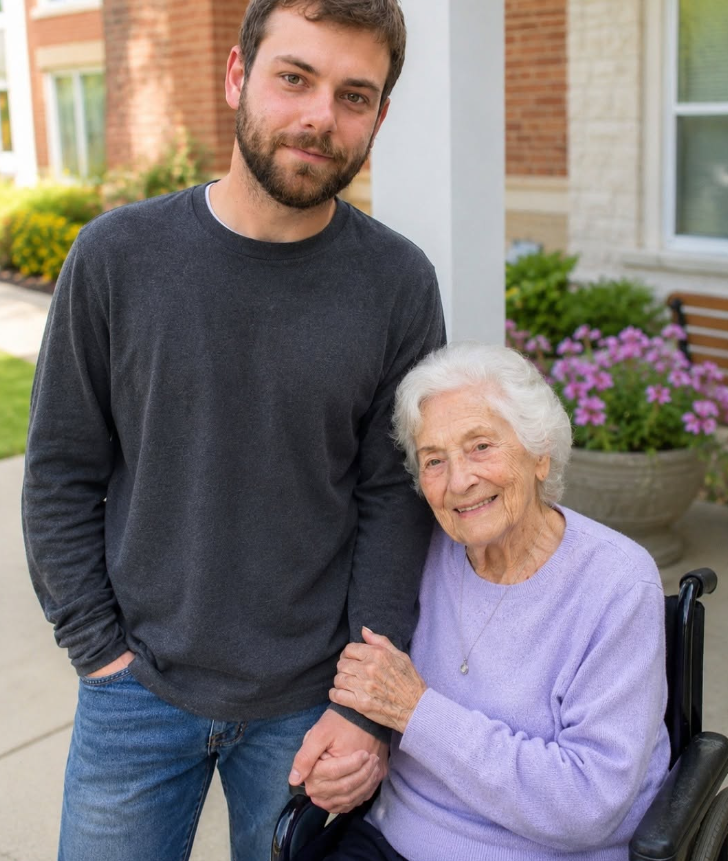
I never imagined that one desperate decision would change my life forever. At the time, I was struggling to cover my mother’s medical expenses, working long hours and still falling behind. Then a well-dressed stranger offered me an unusual job: visit his elderly mother in a nursing home and pretend to be him. The woman, Rosie, was living with memory challenges and often asked why her son never came to see her. The offer paid enough to help my mother, and despite my doubts, I accepted. On my first visit, I nervously introduced myself using the son’s name. Rosie studied my face for a moment before smiling warmly and taking my hand. Instead of feeling relieved, I felt guilty. Yet something about her kindness made it impossible to treat the arrangement like a simple job.
What began as weekend visits soon became much more. Rosie would ask whether I had eaten, remind me to take care of myself, and share stories from her life. Over time, I found myself bringing flowers, chocolates, and spending extra hours with her even when I wasn’t being paid. The nursing home staff noticed, and so did the other residents. When the man who hired me learned I was visiting more often, he warned me not to become emotionally involved. But by then, I genuinely cared about Rosie. One afternoon, during a rare moment of clarity, she looked at me and quietly said, “You’re a good man.” I assumed her words were simply part of her condition, but something in her expression stayed with me long afterward.
Months later, the nursing home called with sad news: Rosie had passed away peacefully in her sleep. Heartbroken, I attended her funeral and expected that chapter of my life to end. Instead, the director asked me to return a few days later because Rosie had left a special request. Sitting in her office, I learned an astonishing truth. Rosie had known almost from the beginning that I was not her son. She had recognized it during my first visits but chose to say nothing because she appreciated that I kept coming back. Then the director handed me a letter and a small key. In the note, Rosie explained that while her memory sometimes failed her, she always knew who truly cared enough to stay. She left instructions for me to open a safety deposit box and asked that part of its contents be used to improve life for the nursing home residents she loved.
The surprise did not end there. Rosie’s real son challenged her decision, arguing that I had influenced her unfairly. What followed was a legal dispute that forced the truth into the open. Records showed that he had hired me to visit his mother in his place, while staff members and residents confirmed that Rosie fully understood who I was. In the end, her wishes were honored. Inside the safety deposit box were savings, personal keepsakes, and a photograph that reflected a lifetime of memories. Following her instructions, I used part of the money to support the residents at the nursing home and the rest to help my own mother. More important than any inheritance, however, was the lesson Rosie left behind: family is not always defined by blood. Sometimes it is defined by the people who choose to show up, stay present, and care when it matters most.

