
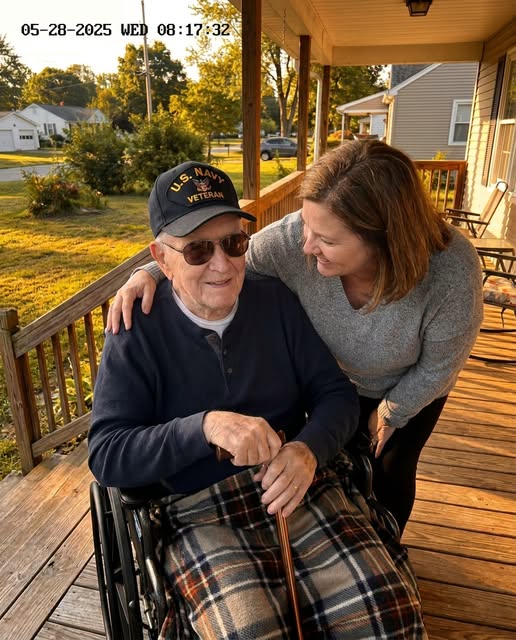
Emily Carter was sitting in a lawyer’s office with her hands clenched in her lap when Attorney James Whitaker opened Walter Harrison’s estate file and the room turned toward her. Relatives she barely knew whispered from the chairs behind her, their words sharp enough to hear: the fake granddaughter. A week earlier, Walter had been buried with military honors, his neighbors and old friends speaking of courage, loyalty, and the kind of humor that softened even grief. Emily had sat in the back row and cried like family, though she had entered his life through a paid arrangement built on a lie. Now the attorney cleared his throat and began reading Walter’s final instruction. The first sentence made Emily stop breathing: I knew from the beginning. Walter had known she was not his granddaughter the very first Sunday she walked into his little white house and called him Grandpa.
At twenty-two, Emily had been too tired to question desperation for long. She attended college by day, stocked grocery shelves at night, and helped her mother care for Noah, her fourteen-year-old brother whose medical treatments had turned hospital bills into a permanent presence on the kitchen table. Her mother worked double shifts as a nurse’s aide and smiled through exhaustion, but Emily saw the midnight tears, the unpaid envelopes, and the fear no one said aloud. Then she found the strange listing: a young woman wanted to spend Sundays with an elderly blind veteran as a family companion, generous pay, must be willing to act as a granddaughter figure. Walter’s real granddaughter had stopped visiting years earlier after a family rift, and his daughter Linda wanted him to feel loved in the years he had left. Emily almost closed the ad, then looked at Noah’s hospital bill and applied.
The first visit felt like theft. Walter opened the door before she could knock twice, smiled toward the sound of her footsteps, and said, “There you are,” as if he had been waiting for her all his life. Emily called him Grandpa with a throat full of guilt, but by the end of that afternoon, the role had begun to loosen. Walter told stories about repairing military trucks, fishing with his late wife Margaret, and learning to live in darkness without letting loneliness become the loudest thing in the room. Week after week, Emily returned, and the paid visits became porch conversations, shared cookies, long silences beneath the oak trees, and questions Walter remembered better than anyone else did. He asked about her exams, her mother’s work, and Noah’s treatments; when he squeezed her hand and said, “He’s lucky to have you,” Emily understood that somewhere between the lie and the Sundays, something real had grown.
Walter’s letter made that truth public. He wrote that blindness had not made him ignorant; he had known her voice, footsteps, and way of moving through the house were not those of the granddaughter he remembered. At first, he allowed the arrangement because he was lonely, but Emily soon stopped pretending and arrived as herself — tired, kind, worried, faithful, and present long after the money no longer mattered. Then Attorney Whitaker read the estate provision that silenced the room: a $200,000 trust had been established for Noah Carter’s medical care and future education, formally named The Second Chance Trust. In legal terms, it was a directed distribution from Walter’s estate, protected for a specific beneficiary and purpose. In human terms, it was an old man’s final act of recognition. Emily had chosen to stay, and Walter had chosen to make sure her family could finally breathe.
Years later, Noah was healthy, Emily had graduated, and her mother no longer worked herself into collapse. Emily became a social worker, visiting elderly people who had no family nearby, because Walter had taught her that loneliness can hurt as deeply as illness and that showing up is sometimes the most practical form of love. She still drove to the little white house when Linda left the porch open, sitting in Walter’s old rocking chair beneath the oak trees and telling him about her week. Eventually, she and Linda filled an old scrapbook Walter had bought after Margaret died, its first page titled, For the memories still waiting to happen. There were pictures of graduations, birthdays, Noah’s milestones, and faces that had become family not by blood, but by choice. Emily once accepted money to pretend she belonged to Walter. In the end, he gave her something no paycheck could buy: the certainty that love is measured not by who is obligated to come, but by who keeps showing up.

