
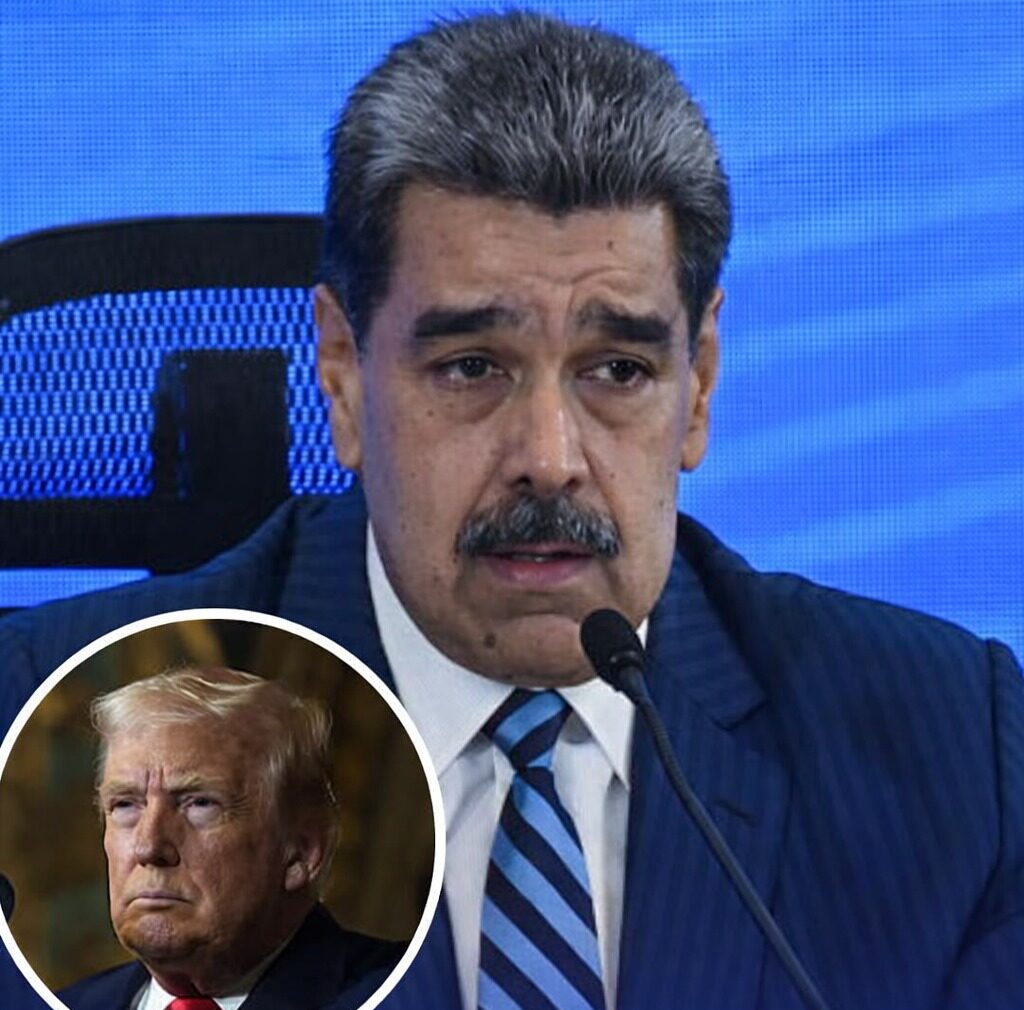
The federal judge presiding over the historic criminal prosecution of former Venezuelan leader Nicolás Maduro is no stranger to legal battles that test the limits of executive power, national sovereignty, and judicial independence. U.S. District Judge Alvin K. Hellerstein, a senior jurist in the Southern District of New York, has spent more than two decades at the center of some of the most politically sensitive and legally complex cases in the federal court system.
Now, as global attention turns to Manhattan for what may become one of the most consequential international criminal trials ever conducted in a U.S. courtroom, Hellerstein’s judicial record — including past rulings that placed him at odds with the Trump administration — is under renewed scrutiny.
The case against Maduro and his wife, Cilia Flores, marks an unprecedented moment in American legal history: the criminal prosecution of a captured former head of state on charges including narco-terrorism conspiracy, international drug trafficking, and coordination with designated terrorist organizations. At its center sits a judge whose career has been defined less by ideology than by a rigorous insistence on procedure, precedent, and the constitutional separation of powers.
A Veteran Judge With Decades on the Federal Bench
Judge Alvin K. Hellerstein was appointed to the U.S. District Court for the Southern District of New York in 1998, following a distinguished career in private practice and public service. Over the years, he developed a reputation as a meticulous jurist capable of navigating cases that blend criminal law, constitutional questions, and international implications.
After assuming senior status, Hellerstein reduced his formal caseload while continuing to preside over major matters — often those involving extraordinary complexity or sensitivity. His courtroom has hosted terrorism prosecutions, national security litigation, major financial crime cases, and disputes that directly challenged the scope of presidential and executive authority.
Legal scholars frequently describe him as a “judge’s judge” — deeply attentive to statutory language, procedural safeguards, and judicial precedent, even when such rigor frustrates political objectives on either side of the aisle.
That reputation now takes on heightened importance as he oversees a case that intersects U.S. criminal law, international relations, and long-standing debates over sovereign immunity.
The Charges Against Maduro and Flores
Federal prosecutors allege that Nicolás Maduro and Cilia Flores orchestrated and protected a vast international narcotics trafficking operation while Maduro was still in power, using Venezuela’s state institutions to facilitate cocaine shipments into the United States and other countries.
According to the indictment, the defendants are accused of:
- Conspiring with foreign drug cartels
- Providing material support to organizations designated as terrorist groups
- Using state resources to shield trafficking routes
- Accepting bribes and financial proceeds from narcotics distribution
The prosecution argues that Maduro’s status as a former head of state does not shield him from criminal liability for actions that fall outside legitimate governmental functions — a claim that is expected to be fiercely contested by the defense.
The assignment of Judge Hellerstein to oversee these proceedings ensures that every such argument will be tested against strict legal standards rather than political narratives.
Prior Tensions With the Trump Legal Team
Judge Hellerstein’s record includes several high-profile rulings that complicated or outright rejected legal strategies pursued by Donald Trump and his attorneys during and after Trump’s presidency.
One of the most notable examples involved an attempt by Trump’s legal team to move a major state criminal prosecution into federal court. The defense argued that the conduct at issue was tied to official presidential duties and therefore fell within federal jurisdiction.
Hellerstein rejected that claim.
In a sharply reasoned decision, he concluded that the alleged conduct did not arise from constitutionally protected executive functions, and therefore could not be shielded by claims of presidential authority. The ruling kept the case under state jurisdiction and signaled Hellerstein’s unwillingness to accept broad assertions of executive immunity without careful legal justification.
While later Supreme Court decisions refined aspects of presidential immunity doctrine, legal analysts note that Hellerstein’s ruling reflected a broader judicial philosophy: power must be justified by law, not presumed by position.
Executive Authority Under Judicial Scrutiny
During the Trump administration, Hellerstein issued multiple decisions emphasizing judicial oversight even when executive agencies invoked national security, immigration enforcement, or foreign policy concerns.
In several cases, he required the government to demonstrate concrete legal authority for its actions rather than relying on generalized claims of executive discretion. Supporters viewed these rulings as essential checks on executive overreach. Critics argued they constrained the government’s ability to act swiftly in matters of security.
What neither side disputes is consistency.
Across administrations — Democratic and Republican alike — Hellerstein has shown little patience for arguments that bypass procedural safeguards or attempt to expand executive power beyond statutory or constitutional boundaries.
That history has direct relevance to the Maduro prosecution, where the government is expected to argue aggressively in favor of U.S. jurisdiction and the legality of the capture operation that brought the defendants into American custody.
Judicial Independence, Not Ideology
Legal analysts caution against interpreting Hellerstein’s record through a partisan lens. His rulings do not align consistently with any political ideology, party, or administration. Instead, they reflect a strict adherence to legal standards — even when such adherence produces politically inconvenient outcomes.
Former federal prosecutors describe him as a judge who “reads everything, questions everything, and assumes nothing.” Defense attorneys, while sometimes frustrated by his intensity, acknowledge his fairness and predictability once the law is established.
That independence has earned Hellerstein both praise and criticism throughout his career. Supporters argue that his approach is precisely what the judiciary requires in moments of political volatility. Detractors claim that his insistence on procedure can slow government action in urgent circumstances.
Yet even critics concede that his rulings are rarely overturned — a testament to their careful grounding in precedent.
The Extraordinary Legal Questions Ahead
The Maduro case presents a constellation of legal questions rarely encountered in U.S. courts:
- Residual Sovereign Immunity: Can a former head of state claim immunity for actions allegedly taken while in office?
- Criminal Jurisdiction: Under what conditions can U.S. courts prosecute foreign leaders for conduct occurring largely outside U.S. territory?
- Legality of Capture: Does the manner in which the defendants were apprehended affect the court’s jurisdiction or the admissibility of evidence?
- Due Process: What procedural protections apply in cases involving international military or intelligence operations?
Judge Hellerstein is expected to confront each of these questions methodically, beginning with pretrial motions that could shape the entire trajectory of the case.
Observers anticipate extensive litigation over jurisdiction and immunity — disputes that could reach appellate courts and potentially the Supreme Court.
No Rubber Stamp — But No Obstruction Either
Those familiar with Hellerstein’s judicial style caution against simplistic predictions. He is unlikely to rubber-stamp government arguments simply because of the case’s political or diplomatic importance. At the same time, there is no indication he will obstruct the prosecution absent clear legal deficiencies.
His past decisions suggest a judge who demands precision from both sides: prosecutors must justify their authority with law and evidence, while defense counsel must ground immunity and jurisdictional challenges in established doctrine rather than political rhetoric.
In that sense, the courtroom may become less a battlefield of ideology and more a forum for defining the limits of international criminal accountability.
A Courtroom Watched Around the World
As proceedings begin, Judge Hellerstein’s courtroom has become a focal point not only for American law, but for the broader global debate over accountability and power.
Foreign governments, international legal scholars, and human rights organizations are watching closely. Some view the case as a landmark step toward holding powerful leaders accountable. Others warn it could set precedents that reshape international norms regarding sovereignty and jurisdiction.
Inside the courtroom, however, those geopolitical debates will give way to narrower legal questions: jurisdiction, evidence, procedure, and constitutional limits.
That is precisely where Hellerstein has spent his career.
A Judicial Philosophy Put to the Test
The prior clashes between Judge Hellerstein and the Trump administration are best understood not as personal conflicts, but as expressions of a consistent judicial philosophy: the law decides, not politics.
In the Maduro prosecution, that philosophy will face one of its greatest tests yet. The stakes are enormous — legally, politically, and internationally. The scrutiny is intense. And the implications could extend far beyond a single trial.
For Judge Alvin K. Hellerstein, it is another moment in a long career defined by independence, rigor, and an unwavering commitment to the rule of law — even when the entire world is watching.
As the case moves forward, one thing appears certain: whatever the outcome, it will be decided not by power or pressure, but by the careful application of law inside a federal courtroom in New York.

