
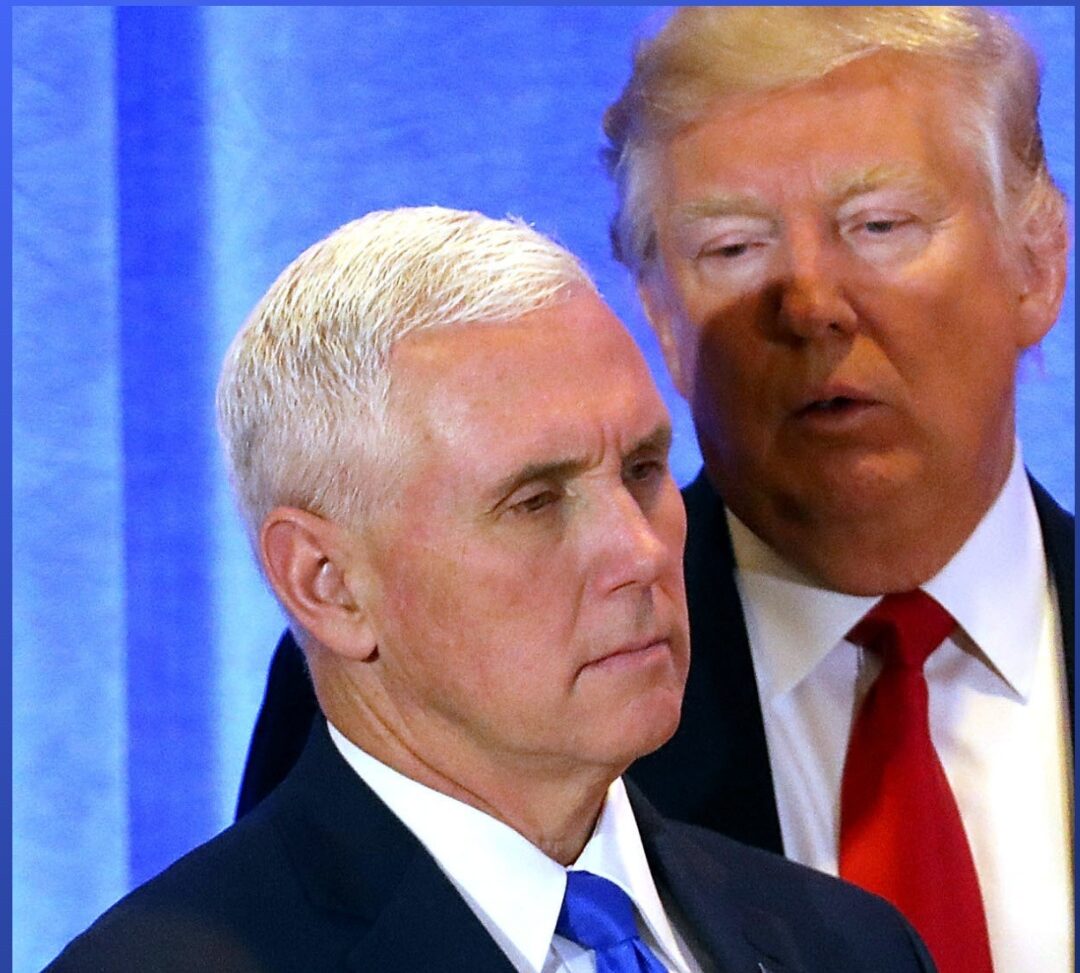
Former Vice President Mike Pence is once again breaking publicly with President Donald Trump, saying those who assaulted police officers during the Jan. 6 Capitol riot should never receive taxpayer compensation under the administration’s newly announced IRS settlement fund.
Speaking with Axios while discussing his upcoming book, What Conservatives Believe, Pence called Jan. 6 a “tragic day” and made clear he still strongly opposes rewarding violent participants.
“I didn’t agree with the President when he pardoned people who engaged in violence against law enforcement officials,” Pence said.
“And I would hope that anyone who engaged in violence against law enforcement or at the Capitol building would never be rewarded with taxpayers’ money.”
Pence’s comments come after Trump agreed Monday to settle his $10 billion lawsuit against the IRS in exchange for the creation of a $1.8 billion taxpayer-backed compensation fund for Americans who claim they were victims of government “weaponization.”
The broad language surrounding the agreement has raised questions about who could qualify for compensation, including whether some Jan. 6 defendants might be eligible.
Trump has long defended many Jan. 6 participants, referring to them as “patriots” and “hostages,” while critics have argued many were violent rioters who attacked police officers and disrupted the certification of the 2020 presidential election.
After returning to office, Trump issued pardons and commutations to hundreds of Jan. 6 defendants.
Pence has consistently drawn a sharp distinction between peaceful Trump supporters and those who engaged in violence that day.
His relationship with Trump fractured dramatically after Jan. 6, when Trump and allies pressured Pence to delay or block certification of former President Joe Biden’s 2020 election victory.
Pence refused.
That decision made him a target of anger from many Trump supporters and effectively turned him into a political outcast within much of the Republican base for a period.
Even now, Pence appears unwilling to soften his position on the Capitol attack.
Calling Jan. 6 a “tragic day,” Pence suggested the Republican Party must eventually return to traditional conservative principles rather than personality-driven politics.
“I think the overwhelming majority of people that have ever voted for Republican candidates … still believe in a strong national defense, still believe in fiscal responsibility, still believe in traditional values,” Pence said.
“And so I hope that, as time goes on, people are going to return to those time-honored principles.”
Pence’s latest remarks highlight the continuing divide between establishment conservatives and Trump’s populist wing over how to characterize Jan. 6 and its aftermath.
While Trump has framed many defendants as victims of politically motivated prosecutions, Pence continues to separate those who protested peacefully from those who assaulted police or stormed the Capitol.
The issue remains one of the deepest fault lines inside the GOP, Axios reported.
Pence has repeatedly defended his actions on Jan. 6, insisting he upheld the Constitution by refusing to interfere with the electoral certification process.
Trump, meanwhile, has maintained that the 2020 election was tainted and has fiercely criticized institutions he says targeted his supporters unfairly.
Now, Pence is making clear he draws a line when it comes to taxpayer compensation.
In announcing the “Anti-Weaponization Fund,” the Department of Justice said it “will have the power to issue formal apologies and monetary relief owed to claimants. Submission of a claim is voluntary. There are no partisan requirements to file a claim. Any money left when the Fund ceases operations will revert to the Federal Government.”
“The machinery of government should never be weaponized against any American, and this Department intends to make right the wrongs that were previously done while ensuring this never happens again,” Acting Attorney General Todd Blanche said. “As part of this settlement, we are setting up a lawful process for victims of lawfare and weaponization to be heard and seek redress.”

