
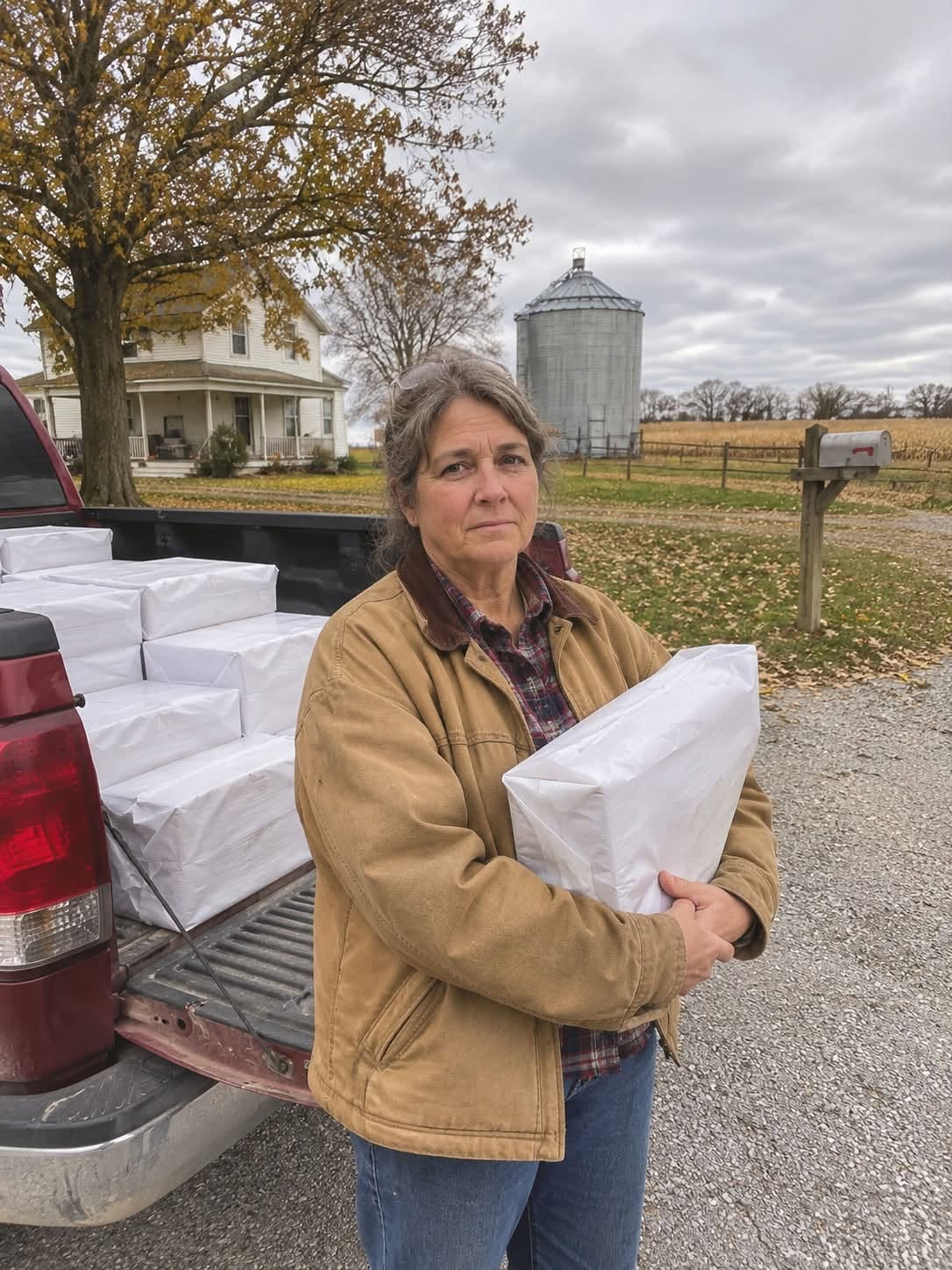
“I didn’t mean to hit him,” Vern said, his voice dropping into something raw and heavy, carrying across the dry gravel. “I meant to fire over his back. To scare him back toward your side.”
I didn’t say anything. I just stood by the open tailgate of the truck, the wind catching the edge of my barn coat.
“That steer was the only thing Kinley talked about all summer,” he continued, staring down at the cardboard box in his arms. “I saw her out there brushing him every afternoon after school. I know how much he meant to her. I just… I lost my temper about the corn. It wasn’t about the crop. It was pride, Jill. Pure, stupid pride.”
He swallowed hard, looking toward our distant farmhouse where the chimney smoke drifted up into the gray sky.
“Dale called me twice last night,” Vern said, his voice tightening. “I didn’t pick up because I didn’t know how to look him in the eye. I expected you both to come over here screaming. I figured we wouldn’t speak for the next ten years. And instead… you drove up my lane and handed me the very animal I took from you.”
“We were raised not to waste an animal, Vern,” I said quietly. “And Kinley wanted to make sure everyone knew whose beef it was. She wanted his name remembered.”
Vern looked back down at the bold marker lettering on the box. A muscle ticked in his jaw, and for a second, the hard, stubborn neighbor I’d known for a decade seemed to completely unravel. He looked older, smaller beneath the empty autumn sky.
“Tell Kinley I’m sorry,” he whispered. “I know saying it doesn’t bring him back, and I know she won’t want to hear it from me. But tell her anyway.”
“You can tell her yourself,” I replied, turning back toward the driver’s side door. “She’s old enough to forgive, Vern, if you’re man enough to ask.”
He stood frozen by the side of the road, holding Domino’s box tightly against his chest like it was something precious he didn’t deserve to keep.
I climbed into the truck and looked over at Kinley. She was staring straight ahead through the windshield, her hands resting quietly in her lap.
“What did he say, Mom?” she asked softly.
“He said he was sorry, sweetheart,” I answered, putting the truck into gear. “And he knows he has a lot of making up to do.”
Kinley didn’t say anything back, but as we turned out of the driveway and headed down the road toward home, she reached out and rested her hand gently on the dashboard.
We didn’t have Domino anymore, and the winter would be a little quieter without him greeting us at the fence line. But as the familiar landscape rolled past our windows, I knew something far more important had been saved. Families aren’t held together by pristine fences or easy agreements; they’re held together by grace when everything inside you wants to build a wall instead. And sometimes, the hardest fences to mend are the ones we build around our own pride.