
The telephone went silent while laughter and clinking champagne glasses still echoed in my ears. I stood in my kitchen staring at a surgical estimate, the number $3,200 circled in red, and tried to comprehend what my son had just told me. Julian, a thirty-five-year-old commercial real estate broker celebrating the biggest transaction of his career, had refused to help pay the remaining deposit for an operation that might save my life. “That money is already allocated,” he’d said, before suggesting I ask the clinic for a payment plan and ending the call. In the doorway, my wife, Eleanor, watched me struggle to find words, then reminded me that Julian was celebrating an important achievement and shouldn’t have been disturbed. When I asked whether she could help from her savings, she folded her arms and explained that the money was intended for her retirement. I looked back at the document on the counter, where the deadline was printed beneath the amount: forty-eight hours. I was fifty-eight years old, facing a potentially fatal aneurysm, and the two people I had spent decades supporting had just made it painfully clear how little room there was for me in their financial plans.
My name is Arthur Vance, and for most of my adult life I believed that a father should be the person everyone else could depend on. I grew up outside Bend, Oregon, where my father drove a logging truck for forty years and taught me that a Vance carried his own load. I followed his example, building Vance Heavy Equipment into a successful business with eighteen employees and contracts across central Oregon. Eleanor and I raised two children, Julian and Clara, and I took pride in being able to give them opportunities I had never enjoyed. I paid for Julian’s undergraduate education at Stanford, helped finance his MBA, bought him a car, covered living expenses during his early career, and later provided $40,000 toward his first condominium. He promised repeatedly that he would repay me once he became successful, though I never pressed him. Clara took a different path, becoming a second-grade teacher at Pine Ridge Elementary. At twenty-six, she lived modestly, still carried approximately $40,000 in student debt, and drove an aging Toyota Corolla that sounded as though it might surrender at every intersection. Our family’s circumstances had changed dramatically several years earlier after I purchased sixty acres near Bend, intending to establish a larger equipment yard. The property bordered the 1,200-acre Dawson Ranch, where environmental restrictions introduced to protect a rare wildflower in nearby wetlands had effectively frozen development across the surrounding area. My land, once worth an estimated $800,000, became difficult to sell or use as collateral. The resulting financial pressure, combined with shrinking contracts and outstanding loans, eventually destroyed my company. I liquidated equipment to meet obligations, lost the home I had once owned, and watched my marriage become increasingly distant. Fearing further financial exposure, Eleanor agreed to a postnuptial arrangement Julian had recommended, dividing our assets so that she retained the house, her retirement savings, and other protected property while I remained responsible for the restricted land and its carrying costs. I signed because I thought it was fair not to endanger her future through a business decision I’d made. Over time, however, the agreement seemed to reflect a deeper separation between us. We still shared a home, but not much of our lives. Then, six weeks before the telephone call to Julian, I visited Dr. Okonkwo because of persistent abdominal and back discomfort. Imaging revealed a 5.8-centimeter abdominal aortic aneurysm, an enlargement of the major artery carrying blood through the abdomen. She explained that its size created a serious risk of rupture and that I needed prompt surgical evaluation. Because my replacement health insurance came with a substantial deductible and limited coverage, arranging treatment proved financially difficult. A private surgical center in Portland could schedule the necessary procedure sooner than the hospital I had initially approached, but it required an $11,000 deposit. I emptied my savings, sold my fishing boat, chainsaw, and father’s old gold watch, and charged as much as I could to two credit cards. Even after exhausting those resources, I remained $3,200 short. Julian had recently told us that a $12 million land transaction involving the Dawson Ranch might bring him a commission and partnership payout in the high six figures, so I finally swallowed my pride and called him. He refused. Eleanor refused too, then suggested asking Clara. I told her I would not take money from a schoolteacher already struggling to build her own financial security. I didn’t know she would call our daughter herself.
Clara arrived at half past eight that evening carrying a pan of baked ziti, still wearing her school identification lanyard. When she spotted the surgical estimate on the kitchen table, she read it carefully, sat opposite me, and placed a white envelope between us. Inside was $2,000, almost everything she had saved for emergencies. I tried to return it, reminding her that she needed the money and that her car was becoming unreliable, but she pushed it back and said she could always save again. “I need you more,” she whispered, and the simple words undid something in me that years of financial loss had not managed to break. She stayed for dinner, told me stories about her pupils, and deliberately left the envelope behind when she went home. The following morning, while I waited for preoperative testing at the Portland surgical center, Clara called and asked me to come outside. She was standing beside a rideshare vehicle, holding another envelope containing twelve $100 bills. During the early morning hours, she had sold her failing Corolla to a buyer who wanted it for parts, paid off the small remaining balance on the vehicle, and brought me the proceeds. She had already checked the bus schedules and planned to make the forty-five-minute journey to school using two routes. When I protested that she needed a car, she wrapped her arms around me and replied, “Cars can be replaced. You can’t.” With her $3,200, I paid the remaining surgical deposit and received confirmation that my operation could proceed the following Monday. I folded the receipt and placed it behind my driver’s license, unable to stop thinking about how much she had surrendered without expecting anything in return. That evening, back home, I found a certified letter from the Oregon Department of Environmental Quality. After years of study, the agency had issued a final determination lifting the development restrictions affecting my sixty acres. For the first time in nearly a decade, the property could potentially be developed or sold without the barrier that had helped ruin my business. A second envelope contained an offer from Summit Pacific Development Group, the company Julian had just represented in its $12 million purchase of the adjacent Dawson Ranch. Summit Pacific offered $140,000 for my sixty acres, describing the land as burdened by longstanding limitations and emphasizing that funds could be available within forty-eight hours. The letter even referred to my “current circumstances” and identified Julian as the broker familiar with the property. I compared the dates and realized that the environmental determination and the offer had been issued on the same day Julian closed the Dawson Ranch deal. He had known the restrictions were being removed, had offered me a fraction of the land’s potential value through his client, and had refused to help me with a $3,200 medical deposit while I faced an urgent deadline. I couldn’t know every conversation he’d had with Summit Pacific, but the timing suggested he expected my desperation to make me accept an inadequate offer without seeking independent advice. I called my former attorney, Harlan Pike, a seventy-one-year-old lawyer who had helped me through both the successful years of my business and its collapse. After reviewing the original property survey, Harlan identified something I’d never fully appreciated: a spring on my land supplied one of the only dependable year-round water sources near the planned resort development. With the restrictions lifted, the property was not merely available acreage; it might be essential to the developer’s water supply and infrastructure plans. Harlan estimated that its strategic value could be several million dollars, subject to a proper appraisal, the legal status of the water rights, and negotiations. Then he asked what I intended to do, and I gave him an answer that surprised even me. I wanted to give the land to Clara, not because she had asked for it, but precisely because she had given me everything she could when she believed I had nothing left.
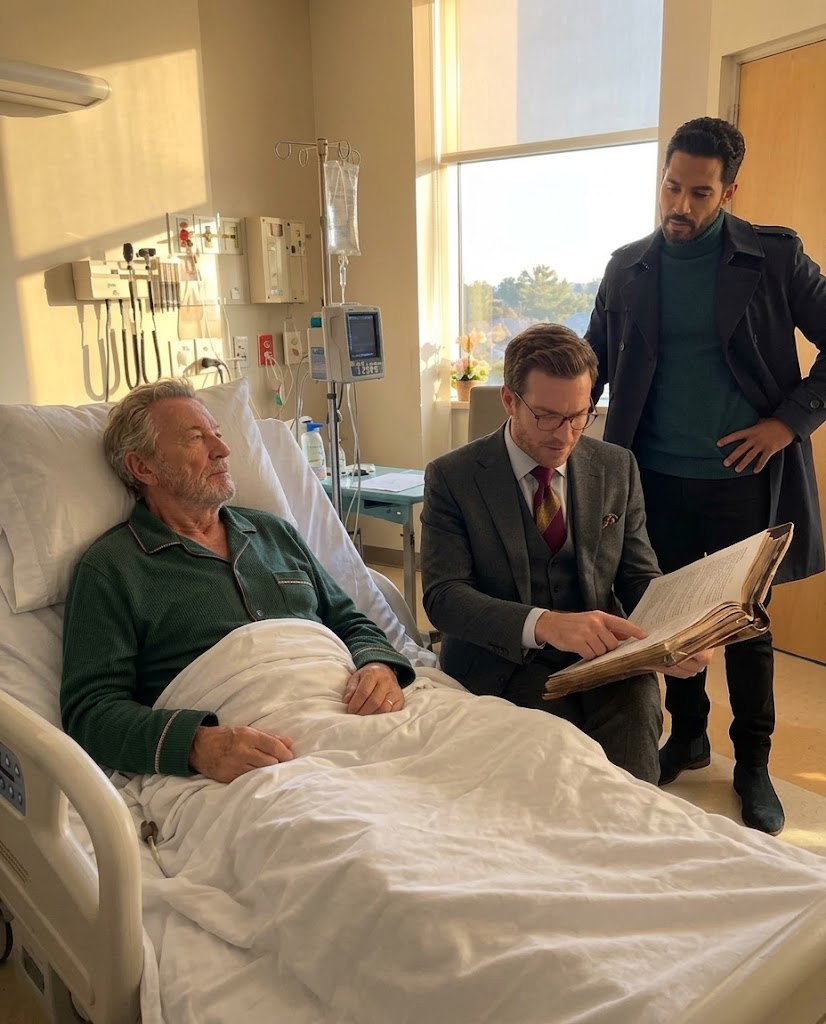
Harlan came to the house with a prepared gift deed transferring my interest in Parcel 17-23-400, including the associated rights that could lawfully be conveyed, to Clara Anne Vance. He carefully explained the consequences of making an irrevocable transfer and urged me to consider the financial, tax, and legal implications before signing. We reviewed the property description, ownership records, and postnuptial agreement to confirm my authority to make the gift. Although a properly executed and recorded deed can transfer title, the ownership and exercise of water rights in Oregon involve separate legal considerations, and Harlan made clear that any future development or sale would require appropriate due diligence. I understood that transferring valuable property to my daughter was an enormous decision, but I had made it with a clear mind and independent legal advice. Harlan arranged the necessary execution, notarization, and recording, and the following Friday he confirmed that Clara was the owner of record. A rushed appraisal suggested a value of approximately $4.6 million, with the possibility of a substantially higher negotiated price if Summit Pacific needed access to the spring. When the transfer appeared in county records, Julian began calling frantically. I left his messages unanswered while preparing for surgery. On Monday morning, Clara took the bus to Portland and stood beside my hospital bed before the anesthesia team took me into the operating room. The operation lasted four hours, and the surgeon later told me that the aneurysm had measured about 6.1 centimeters, larger than the earlier scan suggested. I survived, but recovery was painful, and four days afterward I was still weak when Julian appeared in my hospital room. Clara was sitting nearby grading spelling tests, Eleanor stood at the foot of the bed, and Harlan had arrived with his old leather briefcase. Julian immediately accused his sister of manipulating me into giving away the land, although she knew nothing about the transfer. When I explained what I’d done, Clara looked horrified and insisted that she had never helped me for money. I told her that was precisely why I’d chosen her. Julian demanded that she sign a quitclaim deed returning the property and allow him to arrange the sale to Summit Pacific for $140,000. Harlan informed him that an independent valuation placed the land in the millions and questioned whether Julian had disclosed the true value and his personal interest in the transaction. Julian insisted the offer had been good business, but his argument grew less convincing as he admitted how much Summit Pacific needed the water source. Clara calmly refused to transfer the land to him. When Julian threatened to challenge the deed by alleging incapacity or undue influence, Harlan reminded him that the transfer had been signed before surgery, with legal advice and proper documentation. Then my attorney opened another folder: a promissory note Julian had signed in 2016 acknowledging $186,400 in educational expenses, housing assistance, and other financial support I’d provided over the years. The note was interest-free and included a repayment provision triggered by demand or a specified income threshold. Harlan explained that any actual enforcement would require consideration of the applicable law and limitation periods, but the document carried another significance that no legal argument could diminish. Beneath his signature, Julian had written by hand that if I ever needed anything, I should call him first and he would be there. He stood in the hospital room reading those words while I reminded him that I had done exactly that. I had asked for $3,200, and he’d refused because helping me could have interfered with the transaction he wanted to complete. I told him I expected him to repay that amount directly to Clara, and that what I wanted beyond the money was to see him become someone who could be trusted with another person’s welfare. He apologized, and although I believed his remorse was genuine, I made no attempt to declare our relationship repaired. The following day, he delivered $3,200 to Clara in person. She accepted the repayment but did not immediately invite him back into her life. Meanwhile, Summit Pacific approached Harlan about negotiating directly with the new property owner. The initial offers rose from $3 million to $4 million and eventually $5.5 million, but Clara was concerned about what a large development might do to the creek that passed through a small park near her elementary school. Her pupils visited the waterway during science lessons, measuring the water and studying the creatures that lived there. Instead of accepting a proposal that could substantially reduce the flow, she negotiated a different arrangement: a $5 million sale of forty acres and an agreed portion of the available water rights, subject to the necessary legal approvals, while retaining twenty acres and rights intended to help maintain the creek. After the transaction, she bought a reliable used Corolla, paid off her student loans, and worked with Harlan to establish a trust and a charitable initiative called the Vance Creek Fund. It began helping families facing the kinds of financial emergencies that rarely make headlines but can change a life: a broken-down car that prevents someone from reaching work, overdue rent after a layoff, medical equipment an older person cannot afford, or a school field trip threatened by budget cuts. Clara continued teaching second grade, reviewing applications in the evenings and preserving the remaining land as a place where her pupils could learn about the natural world.
The changes in our family did not happen as quickly as the property transfer. Eleanor and I spent weeks talking about the fear that had settled into our marriage after my business failed. She admitted that protecting her retirement had gradually become more important to her than recognizing that I was frightened, ill, and in need of help. She apologized for refusing me that night in the kitchen and for treating my financial troubles as though they were the whole measure of who I had become. I could understand her fear because I’d lived through the same losses, but I also needed her to understand how alone I’d felt when she turned away. We began rebuilding our relationship slowly, and later consulted counsel about formally changing the postnuptial arrangements that had separated our finances and contributed to the distance between us. Merely tearing up a signed agreement would not necessarily have changed its legal effect, so we worked through the proper process rather than pretending that a symbolic gesture settled every question. Julian’s professional life changed as well. His firm learned about the proposed below-market offer to his father and removed him from the Summit Pacific account and the partnership track. He sold his expensive loft and SUV, moved into a smaller apartment, and eventually found work in property management. For a time, we barely spoke. Then Clara told me she’d seen him riding the same bus routes she had used after selling her car. He had moved closer to family and was learning to live without the privileges he’d once considered essential. He began referring tenants facing temporary hardship to the Vance Creek Fund and helped them complete assistance applications without expecting special treatment. Slowly, he returned to Sunday dinners. One evening, about a year after my surgery, he joined me on the back porch while the sun sank behind the Cascades and handed me a check for $3,000. On the memo line, he’d written, “Payment 1 of 61.” He explained that he intended to repay the full amount of the old promissory note over time, not because I’d demanded it but because he wanted to make his long-forgotten promise mean something again. I reminded him that I had asked for his honesty and character, not his money. He answered that writing a check every month would remind him of the father who had once believed in him and the promise he’d failed to keep when that father needed help. We sat together remembering a Little League game from his childhood, when I’d knelt behind the backstop to console him after he struck out. I’d told him that even the best players failed sometimes and that failure didn’t make a person unworthy of love. He remembered my ruined trousers and how annoyed Eleanor had been when I came home covered in dirt. For the first time in a long while, we laughed together without pretending the past year hadn’t happened. I didn’t cash Julian’s check. I tucked it into a white envelope, intending to save any future payments for Clara’s fund, where they might eventually help people facing the same kind of impossible choice that had brought our family to this point. I still carry the receipt from the surgical center behind my driver’s license. It shows a payment of $3,200, a sum that once stood between me and an operation I urgently needed. It is worth more to me than the sale of the land, the appraisals, or the millions Clara received, because I know exactly where that money came from: two thousand dollars from a young teacher’s emergency savings and another twelve hundred from the sale of her only car. She gave me those things without knowing the land was valuable, without asking what she might inherit, and without expecting anything except the chance to see her father come home from the hospital. Clara once told me that most of the requests reaching her fund were for amounts between two and five thousand dollars, sums too small to attract much attention but large enough to overwhelm a family living close to the edge. She understood that because she had seen what $3,200 meant to me. So did I. When I think now about what I hope to leave my children, it is not the memory of a successful business or the value of property I once owned. It is the lesson Clara gave me without ever intending to teach it: when someone you love is in trouble, you discover what matters by what you are willing to give, and by whether you show up when they need you.

