
The Florida beach house was supposed to be the place where I could still hear my late husband Harold in the quiet — not the place where my own daughter-in-law would stand in the doorway wearing my shirt and tell me I needed permission to enter. I was sixty-nine, widowed, and holding two grocery bags on the porch of the home Harold and I had bought one careful payment at a time. We had skipped vacations, driven old cars, worked extra shifts, and saved for years to make that little white house with blue shutters ours. But when I typed in my alarm code, the red light flashed. Lauren opened the door and said they had changed it because they “needed boundaries.” Then my son Marcus appeared behind her, saw my face, and looked away.
It had started months earlier when Marcus called to say their condo had water damage and asked if he and Lauren could stay at the beach house for a few weeks. I said yes because he was my only child and because mothers often believe the best version of their children even after life has shown them warning signs. At first, everything seemed fine. Lauren sent sunset photos, Marcus fixed a loose latch, and I brought groceries and towels when I visited. Then Harold’s shell bowl disappeared from the coffee table, his fishing photo was moved to the guest room, and his old porch rockers were pushed into the garage. Lauren began calling it “our beach house,” hosting dinners, changing curtains, and posting online about “new traditions” where “old energy ends.” Every small change felt like a hand quietly erasing my husband from the home we had built together.
After Lauren locked me out and said I could visit only after they approved it, I did not argue on the porch. I set the groceries down, drove to a small motel off Highway 98, and opened the leather folder Harold had always told me never to lose. Inside were the deed, tax records, insurance papers, and a signed agreement Marcus had made years earlier. It clearly stated that any family member allowed to use the beach house was only a temporary guest, had no ownership or residency rights, and could be asked to leave at my discretion. My attorney, Rebecca, reviewed everything that night and told me exactly what to do: reset the alarm, call the insurance agent, and request a civil standby from the sheriff’s office so I could safely regain access.
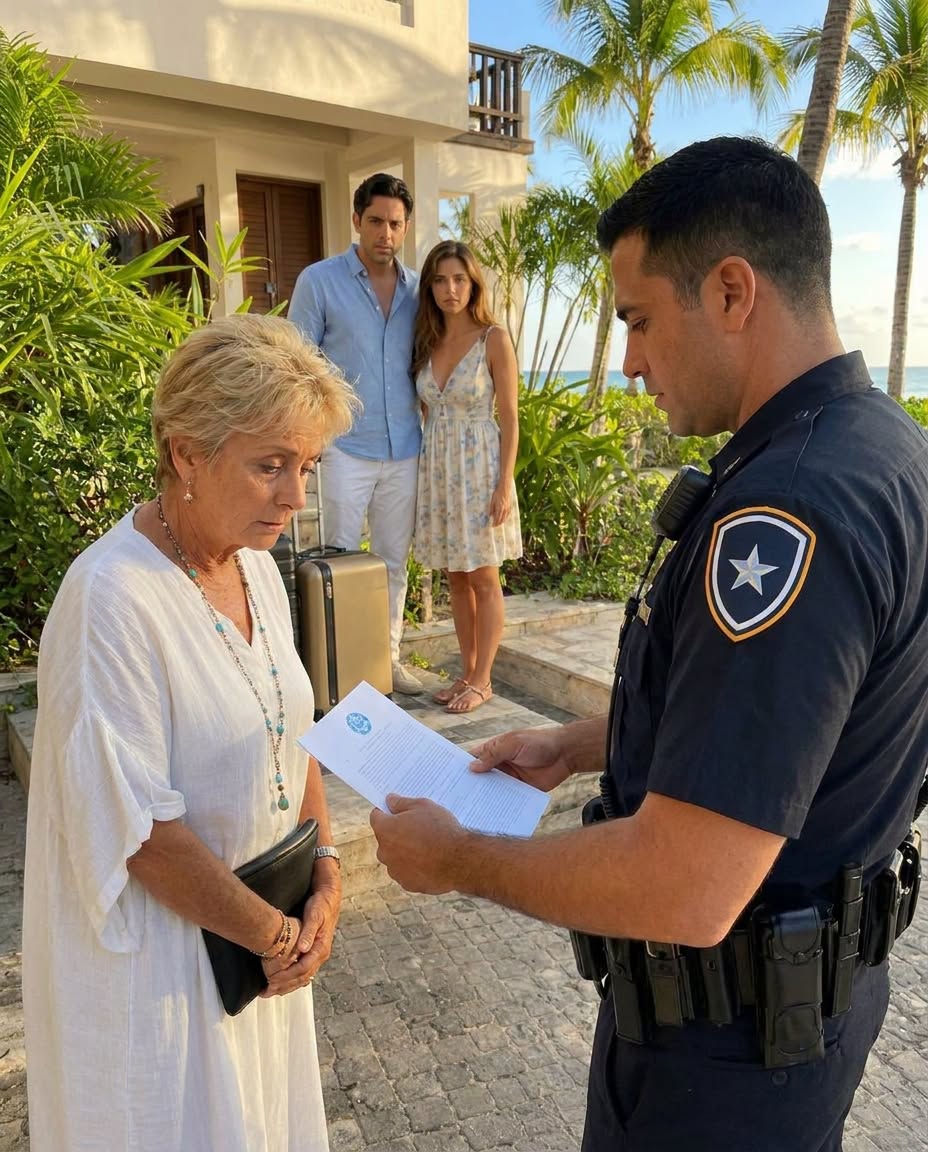
By midmorning, Deputy Calhoun stood beside me as my new code opened the door on the first try. Lauren tried to act offended, saying they lived there and deserved privacy, but the paperwork told a different story. They had a condo, no lease, no rent agreement, and no written permission to stay permanently. When I showed Marcus the document with his own signature, his face changed. Then he admitted Lauren had believed if they stayed long enough, made improvements, and treated the house as their main home, it would become harder for me to force them out. The truth settled over the room like a storm. Lauren had not misunderstood my kindness. She had been trying to turn it into control.
They were allowed to take clothing, personal documents, medication, and work items, but nothing that belonged to the house. I made Lauren put my shell bowl back on the table, and I told Marcus to leave Harold’s fishing hat where it belonged. By noon, their suitcases were lined on the porch, and the beach house finally felt like it could breathe again. Later, Marcus apologized, but I told him love was not a deed and did not give him the right to take what grief had left me. In time, he began to understand, and we slowly rebuilt a relationship with boundaries instead of excuses. As for the house, I restored Harold’s photo by the window, brought back the blue curtains, and sat in his old rocker listening to the waves. Taking back the house was not just about property. It was about remembering that a peaceful woman does not have to be a permissive one.

