
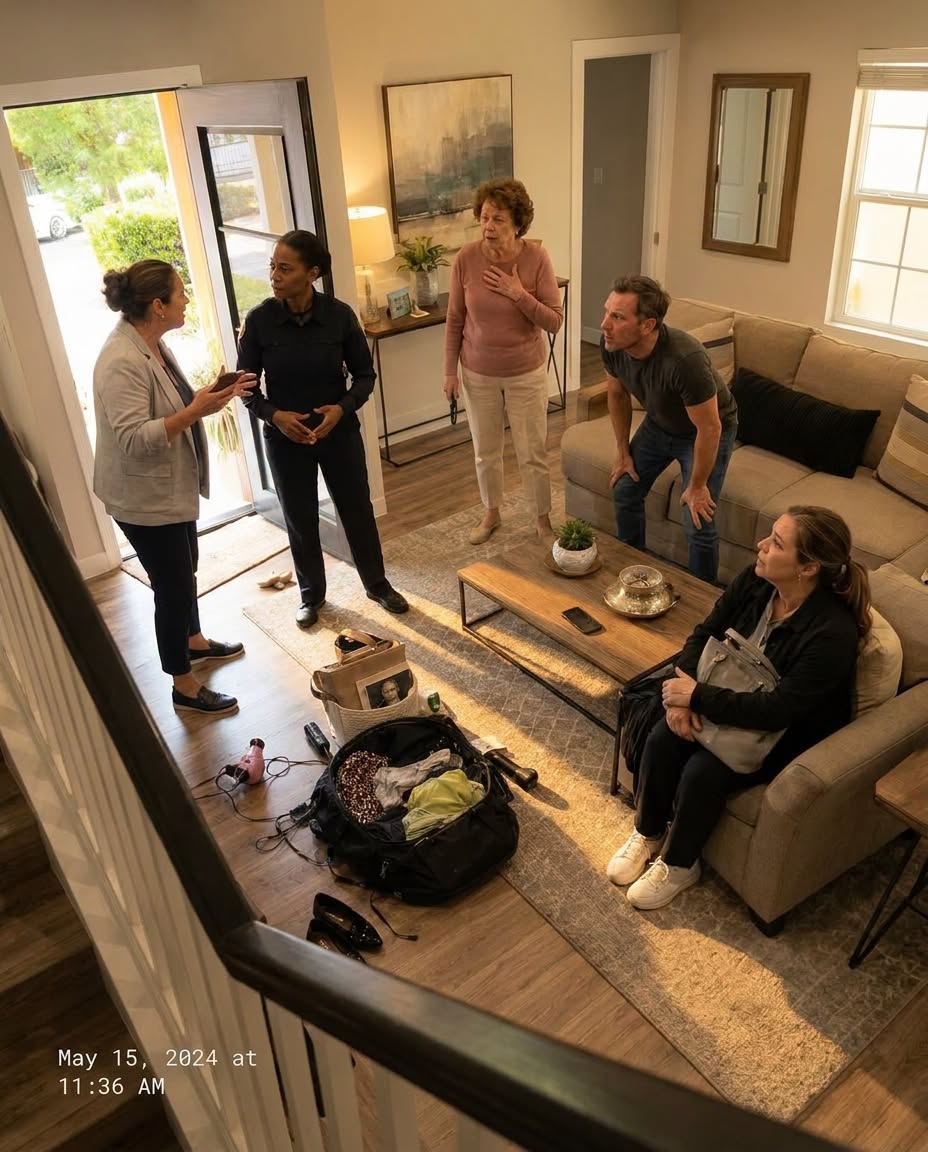
When I opened my front door that Saturday morning, my brother Derek was standing on the porch with four suitcases, two laundry baskets, and a brand-new gaming chair wrapped in plastic. His girlfriend Mia leaned around me to inspect the hallway while my mother held a box of kitchen pans as though she were supervising a scheduled move. “Surprise,” Derek said with the same effortless grin that had excused his failures since childhood. “We’re moving in.” Mom lifted her chin and explained that because I had refused to pay his rent, I would now provide housing instead. I smiled, opened the door only wide enough for them to see the red light blinking on my new security camera, and told them the police were already coming. The grin disappeared from Derek’s face before the first patrol car turned onto the street.
A week earlier, Mom had called me in my Tampa kitchen and demanded that I cover Derek’s apartment rent. At thirty-five, he had been unemployed by choice for much of three years, while Mia had quit several jobs because customers and managers were supposedly too demanding. They lived in a complex with a pool, gym, and concierge, paying more each month than I paid on the mortgage I had earned through years of careful saving. When I refused, Mom warned that there would be consequences, so I treated the threat seriously. I changed the door code, notified the homeowners association, installed a porch camera, and consulted attorney Carol Ibsen about unauthorized occupancy and Florida trespass procedures. I also sent Derek a written notice stating that neither he nor Mia had permission to stay, arrive uninvited, or bring belongings onto my property.
Mia tried to force her shoulder past the doorway, but the alarm sounded the moment her foot crossed the threshold. I stepped back so the camera would clearly record that she was entering without permission, then showed her the security log on my phone. When the officers arrived, Mom cried and claimed I was abandoning family members facing hardship, while Derek insisted that my empty guest room proved I had space to spare. I handed the officers my deed, the threatening message from Mom, the written notice to Derek, and the live recording of them announcing they were moving in whether I agreed or not. The younger officer read everything twice before telling Derek that my refusal had been unmistakably clear. My mother had expected guilt to unlock the door, but instead she found ownership records, witnesses, and a legal boundary waiting on the other side.
The officers ordered all three of them off the property and warned that returning without permission could result in formal trespassing charges. No arrests were made, but the incident report, video footage, HOA notification, and attorney-prepared notice created a documented record protecting me from later claims of tenancy or verbal permission. When relatives began repeating Mom’s story that I had thrown an innocent couple onto the street, I sent them one unedited clip showing Derek saying, “We’re moving in,” followed by Mom calling it my consequence. The calls slowed quickly after that. My aunt later revealed that Derek and Mia had rejected two affordable apartments because they wanted a walk-in closet and soaking tub. Within weeks, Derek accepted warehouse work and moved in with a coworker, while Mia returned to part-time employment once it became clear that no family mortgage, investment, or guest room would rescue them from supporting themselves.
The silence in my house felt unnatural at first because I had spent years expecting the next emergency, request, or accusation. Eventually, the guest room became an office with a secondhand desk and shelves I assembled myself. Months later, Derek sent a brief message admitting that I had been right not to let them move in, and I answered only, “Good. Keep going.” I did not invite him over, because acknowledgment was a beginning, not a replacement for trust. My mother had warned me that refusing to pay his rent would bring consequences. She was right, though not in the way she intended. The consequences belonged to the adults who finally had to stop leaving their lives on my porch and expecting me to carry them inside.

