
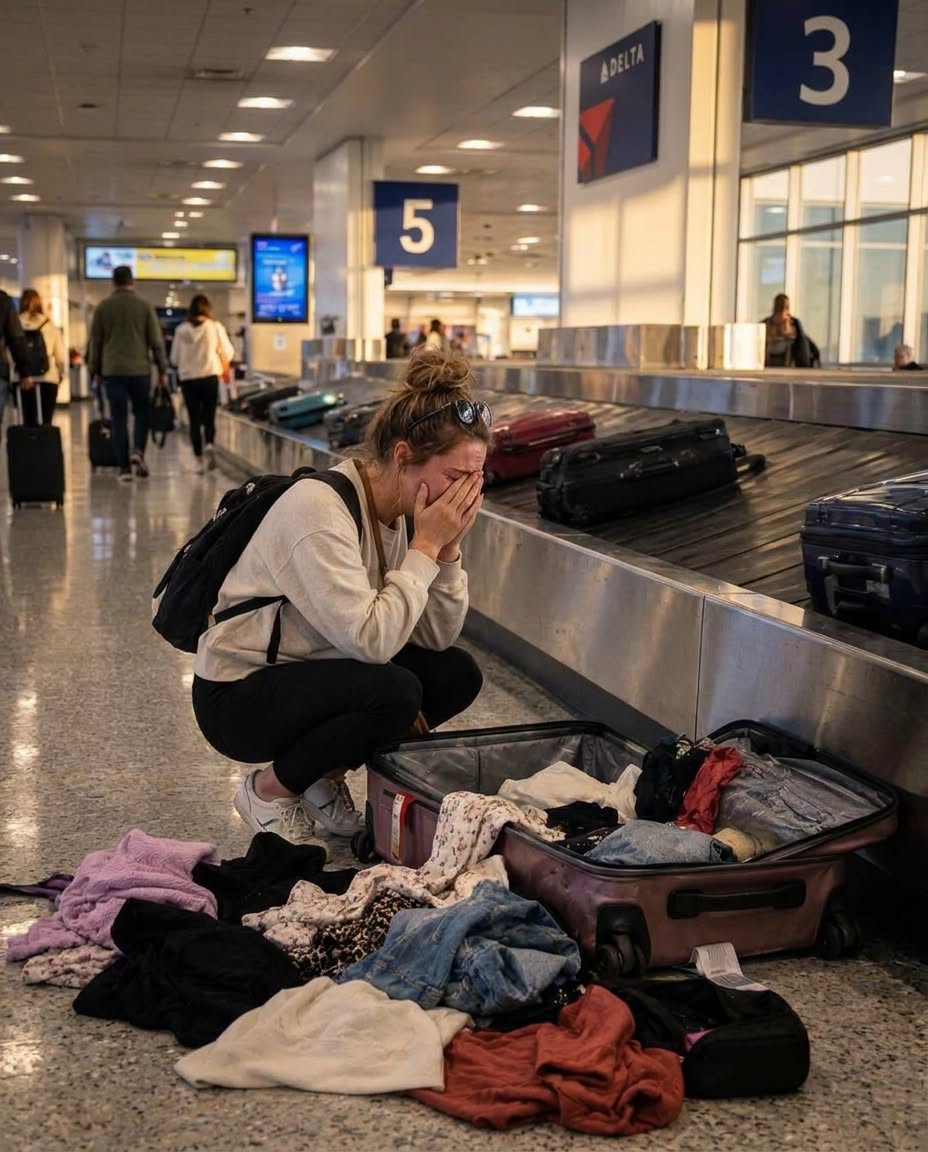
“My flight lands at five. Can someone please pick me up?” I typed into the family group chat before the plane had even reached the gate at Portland International Airport. I had buried my husband, James, that morning in a hillside cemetery in northern Portugal after a brain aneurysm killed him without warning, and I was carrying home two black suitcases filled with the clothes he would never wear again. My brother Troy answered first: We’re overwhelmed today. Just get an Uber. My mother followed with, Why didn’t you plan this more carefully? You know Tuesdays are difficult for everyone. She and Dad already had dinner plans with friends. I stared at the messages until they blurred, then wrote the only two words I had energy for: No problem. At baggage claim, one suitcase burst open and James’s shirts, shoes, paperback, and navy anniversary tie spilled across the floor while strangers stepped around me. A woman in pink hospital scrubs knelt without asking, folded his clothes, strapped the broken case shut with one of her own luggage bands, and quietly asked whether somebody was coming to get me. I lied and said yes.
James and I had gone to Portugal because of a building-safety conference, intending to revisit Ponte de Lima, the village where we had honeymooned eight years earlier. Instead, he complained of a crushing headache one afternoon, lay down in our hotel room, and never woke. When I called home begging someone to come, my mother reminded me how expensive last-minute flights were, Troy supposedly had work and children to manage, and everyone reassured me with the phrase they had used my entire life: “You’re capable. You’ll handle it.” So I handled the foreign hospital, the paperwork, the funeral home, and the decision to bury James above the river after remembering something he had once told me: if he died first, he did not want to be shipped home like freight; he wanted “somewhere with a view.” Back in Portland, my Uber driver Hassan carried both suitcases to my dark porch and waited almost a minute before leaving because something about me worried him. Inside, I curled into James’s battered brown chair without turning on the lights. Three weeks earlier, he had installed a monitored natural-gas detection system after repeatedly reporting a faint rotten-egg smell around our house and basement. The utility had found nothing. James, a city building inspector who distrusted the phrase “within normal range,” installed sensors anyway and programmed emergency contacts: me, himself, Troy, my mother, and our eighty-one-year-old neighbor Ruth.
I woke close to midnight to a screaming alarm and an electronic voice ordering me to leave immediately. The house reeked of gas. My hand reached automatically toward the light switch, and I stopped only because I heard James’s voice in my head: Never touch a switch when you smell gas. One spark is enough. My phone showed a critical basement alert and a note James had typed into the system: Amelia—don’t touch anything. Don’t look for the leak. Leave everything. Get out and call me. The words “call me” nearly broke me. I tried to drag James’s suitcase toward the door because it contained almost everything physical I still had of him, but dizziness overtook me. Then Ruth unlocked the door with her spare key, dragged me onto the lawn, and shouted for help. The monitoring company had called Troy twice; he declined both unknown numbers. My mother’s phone sat silent in her purse while she ate lemon cake at dinner. Ruth answered. At nearly the same moment, Hassan—who had driven two blocks away before deciding something felt wrong—smelled gas through his car window and called 911, telling the dispatcher there was a woman alone in a dark house nearby. Fire crews evacuated fourteen homes. Four had gas readings high enough that investigators later said a single electrical spark could have caused a catastrophic explosion.
The leak came from a corroded gas main beneath the street, exactly where James had repeatedly reported trouble. His monitored system, written complaints, Ruth’s quick response, and Hassan’s call gave firefighters enough time to get thirty-one residents out safely. A news crew captured footage of Captain Reyes, one of the firefighters, carrying James’s damaged suitcase from the house and setting it beside me as I lay on the wet grass wearing an oxygen mask and clutching his navy tie. The following evening, the local broadcast told the story: the building inspector who had died abroad had installed the alarm that saved his neighborhood after the utility dismissed his warnings, while his widow had returned from burying him and come home alone. Then Ruth looked directly into the camera and explained that James had placed my brother and mother on the emergency list because he believed family should be the first people called—and neither had answered. Within minutes, my phone exploded. Mom wanted to know why I had not told them things were “this serious.” Troy admitted that when he told me to take an Uber, he had actually been sitting at home avoiding airport traffic because he did not know what to say to a grieving sister. I finally told them what I should have said years earlier: being capable did not mean I never needed anyone. I had asked for one ride after burying my husband. A nurse, an Uber driver, an elderly neighbor, and firefighters had shown me more care in twenty-four hours than the people who kept insisting that blood automatically made them family.
They did not fix thirty-five years of absence overnight. My mother began calling every morning, sometimes with nothing more useful to offer than the weather. Dad started coming on Saturdays with his toolbox and eventually repaired the crooked porch light James had always meant to fix. Troy appeared six weeks later on a Tuesday—the same day of the week he had once been “too overwhelmed” to drive to the airport—and gave me a map of Portugal with a red heart drawn over Ponte de Lima. He asked to accompany me on the first anniversary of James’s death before I had to ask him. Mom, Dad, Troy, and Ruth all came. A year later, our return flight landed in Portland at five o’clock on a Tuesday. At baggage claim, I found Kelsey and the children, neighbors, Captain Reyes, Ruth’s sister, and Hassan waiting beside my family. The same battered suitcase came around the carousel with the stranger’s elastic strap still wrapped around it. Troy lifted it onto the cart before I could reach for it. “I’ve got it,” he said. This time, I let him. I used to think family was the list of names you were born with. James taught me something better. Family is the list of people who answer when the alarm goes off—and sometimes, if you are fortunate, the people who failed you can still learn how to pick up.

