
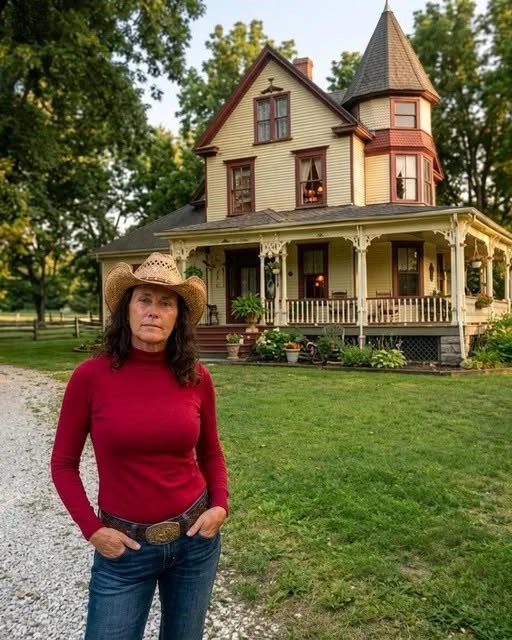
The key my father left me would not turn in the lock, no matter how hard I tried. Rainwater dripped from my coat as I stood on the porch of the unfamiliar house, staring at the freshly painted door and wondering whether the attorney had given me the wrong address. Before I could knock, the door swung open and a gray-haired woman stepped outside, her expression sharp and guarded. “You need to leave,” she said, blocking the entrance with both hands. I held up the deed and explained that my late father, Richard Bennett, had left the property to me in his will. Her face tightened as she told me she had lived there for twenty years, paid every bill, repaired the roof, and had no intention of moving. Then she looked directly into my eyes, and the small dimple in her left cheek felt strangely familiar.
Until that week, I believed I understood everything about my father’s life. He had raised me alone after telling me that my mother passed away when I was a baby, and I never had a reason to question him. His final years had been difficult, with nearly $74,000 in medical expenses, unpaid credit cards, and overdue payments on the modest home we shared. That property was heading toward repossession, so I entered the will reading expecting nothing but bills and painful memories. Instead, the notary handed me documents for a second house valued at approximately $310,000, located almost two hours away. Dad had owned it for decades, yet I had never heard him mention the address or the woman living there. Her name was Deborah Hayes, and when I called my lawyer, he confirmed that the deed still listed my father as the legal owner. Believing the property might be my only chance to recover financially, I told Deborah I would remain there until we found a solution.
Sharing the house quickly became a contest of patience. Deborah banged pots late at night, shut off the water while I was getting ready for work, and moved my keys, shoes, and phone charger into places where I would never think to look. On Monday morning, I found the clothes I had left drying outside lying in a muddy pile near the porch. I carried them into the kitchen and demanded to know why she treated me like an intruder when I had done nothing to her. Deborah set down her teacup and said the house had never been intended for me because my father had already taken everything else she loved. Then she pulled a tiny silver bracelet from her pocket, and my hands began trembling when I saw my name and date of birth engraved across it. “Your father told you I was gone, didn’t he?” she whispered. “My name is Deborah, Emily—and I am your mother.”
The attorney arrived minutes later with paperwork to begin removing Deborah from the property, but I could no longer sign it without understanding the truth. Deborah admitted that she had left Dad when I was two years old, believing another man could offer her a better life. That relationship ended quickly, but when she returned, Dad refused to rebuild their marriage, and the court awarded him custody after a bitter legal dispute. He later allowed Deborah to live in the second house, though he kept the deed in his name and never told me she was there. Records showed she had covered the property insurance, replaced the plumbing, paid more than $38,000 for repairs, and made every mortgage payment after Dad’s income declined. My attorney explained that although the house appeared in Dad’s estate, Deborah could argue that decades of payments and improvements gave her a strong ownership claim. She had also treated the property as her life’s only investment, while Dad had apparently left the legal situation unresolved on purpose. At the hearing, the court reviewed receipts, tax records, bank statements, and correspondence between my parents before ruling that Deborah had earned the right to remain in the home.
Losing the property frightened me because I had counted on selling it to settle Dad’s remaining debts and rebuild my savings. Still, as I packed my suitcase, I realized the house had given me something no inheritance document could measure. Deborah stopped me at the front door and said she had spent years regretting the choices that separated us, but she did not expect forgiveness simply because we shared the same blood. She offered me the spare bedroom and asked for an opportunity to tell me about the years my father had erased from our history. I stayed, cautiously at first, and we began sorting through old photographs, letters, and memories neither of us had been allowed to share. Over time, the house became less like disputed property and more like a place where two strangers learned how to become family. My father had left behind secrets that caused real pain, but the final thing I received from his estate was not a building—it was the truth about where I came from and the chance to decide what happened next.

