
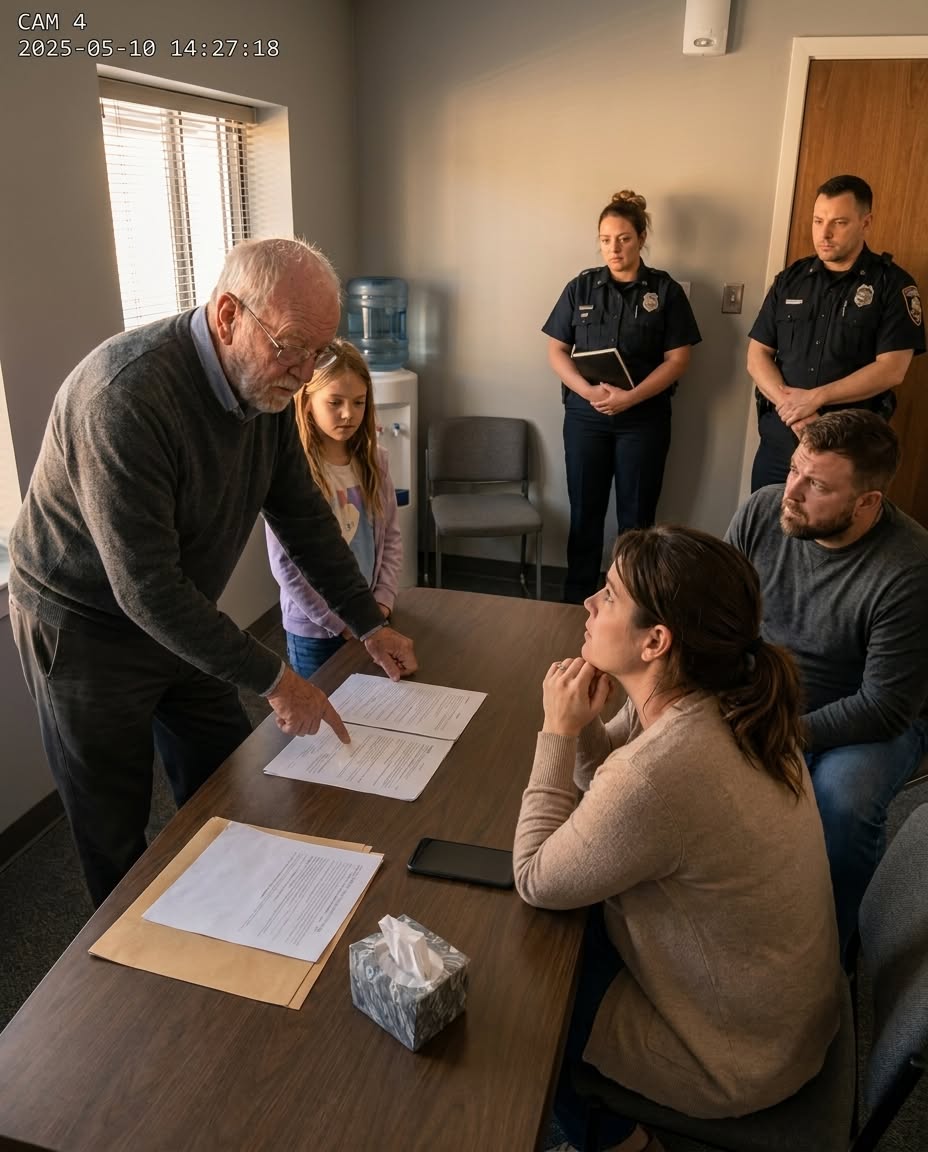
At 2:13 in the morning, Thomas Bennett’s phone began vibrating against the nightstand, pulling him from a shallow sleep. His fourteen-year-old granddaughter Lily was on the line, breathing so unevenly that he sat upright before she finished saying his name. She whispered that her stepmother had hit her, then told police Lily had attacked first. Her father Mark believed Veronica, and Lily was terrified that speaking up would cost her the only parent she had left. Thomas pulled on his jeans, grabbed his coat and cane, and asked only which station she was in. Twenty minutes later, he entered Ridgeway Precinct and found Lily in an interview room with a swollen cheek, a split lip, and her sleeves pulled over trembling hands. When Officer Grayson heard Thomas Bennett’s name, his expression changed—because the man standing before him was not simply an angry grandfather, but the retired investigator who had once trained half the precinct to distrust polished stories and follow evidence instead.
After Lily’s mother died, Thomas watched his son retreat into grief and gradually surrender household decisions to Veronica. She appeared thoughtful in public, remembered birthdays, and spoke softly around neighbors, but Lily grew quieter each month. Thomas noticed the corrected posture, controlled meals, criticism of her clothing, and the way Mark looked to Veronica before answering even simple questions. None of it was enough by itself to prove abuse, so he watched and kept records without making accusations he could not support. At the station, Veronica wore a torn white sleeve and displayed a neat scratch on her neck while claiming Lily had become violent. Mark sat beside her, exhausted and uncertain, treating his daughter’s injuries like competing testimony rather than a reason to protect her.
Thomas asked officers to preserve the initial call, body-camera footage, witness statements, intake notes, and security video from the house. Veronica immediately claimed the hallway camera had been broken for months, even though nobody had said which camera they meant. Then a young officer produced Lily’s cracked phone, explaining that she had started recording before the confrontation moved into the kitchen. The audio captured Lily begging her stepmother to stop, followed by Veronica’s threat that Mark would choose her and help police remove Lily from the home. The recording also captured the impact, Lily’s denial that she touched anyone, and Veronica promising to make the child appear responsible. When the video was later recovered, it showed Veronica grabbing Lily, forcing her into the wall, and tearing her own sleeve afterward to stage the scene—and from that moment, the story was no longer a family dispute but evidence.
Lily was medically examined, her injuries documented, and the recording, camera footage, timestamps, and revised police report entered into the official case file. Temporary protective conditions removed Veronica from the home, while a family court order placed Lily with Thomas and restricted contact until the investigation progressed. Mark began counseling and accepted that guilt did not restore trust or create an automatic right to forgiveness. In court, Veronica’s attorney described the incident as a misunderstanding, but the judge reviewed the medical records, changing statements, phone audio, and home-security footage before rejecting that argument. Mark testified that Lily should remain with her grandfather until she chose otherwise, while Thomas worked with an attorney, victim advocate, insurance representatives, and school officials to secure her medical care, education, and future estate protections. The legal process moved slowly, but the evidence stayed consistent even as Veronica’s explanations changed.
Months later, Lily agreed to have Sunday dinner with Mark after the locks were changed and Veronica was gone. Thomas attended because that was Lily’s condition, and Mark accepted it without complaint. The hallway camera remained above the kitchen archway because Lily was not ready for it to be removed, and her father simply said okay. There was no dramatic reconciliation, only spaghetti, careful conversation, and boundaries respected without argument. Thomas kept the 2:13 a.m. call in his phone long after the court hearings ended. He did not preserve it to remember the fear. He kept it because when a frightened child finally reached for someone, he answered—and refused to let the adults around her turn her pain into a story in which she was the villain.

