
“I’m sorry, ma’am, but the entire balance was withdrawn several months ago.” The teller at Lakeside Credit Union said it gently, but the words still seemed to knock the air out of the room. I was standing there in my nursing scrubs after a night shift, gripping the counter with one hand and Grandma’s last birthday card with the other. Inside the card was the same thing she had tucked into every birthday card since I was four: a deposit slip, this one for $1,000, marked For your future. The teller turned her monitor toward me and showed me twenty-two years of deposits, interest, and a final balance of $26,418.37. Then came one withdrawal for the entire amount, dated March 14. Beside it were the words Diane Mercer — acting under power of attorney. Diane Mercer was my mother, and March 14 was the only day she had visited Grandma in the hospital.
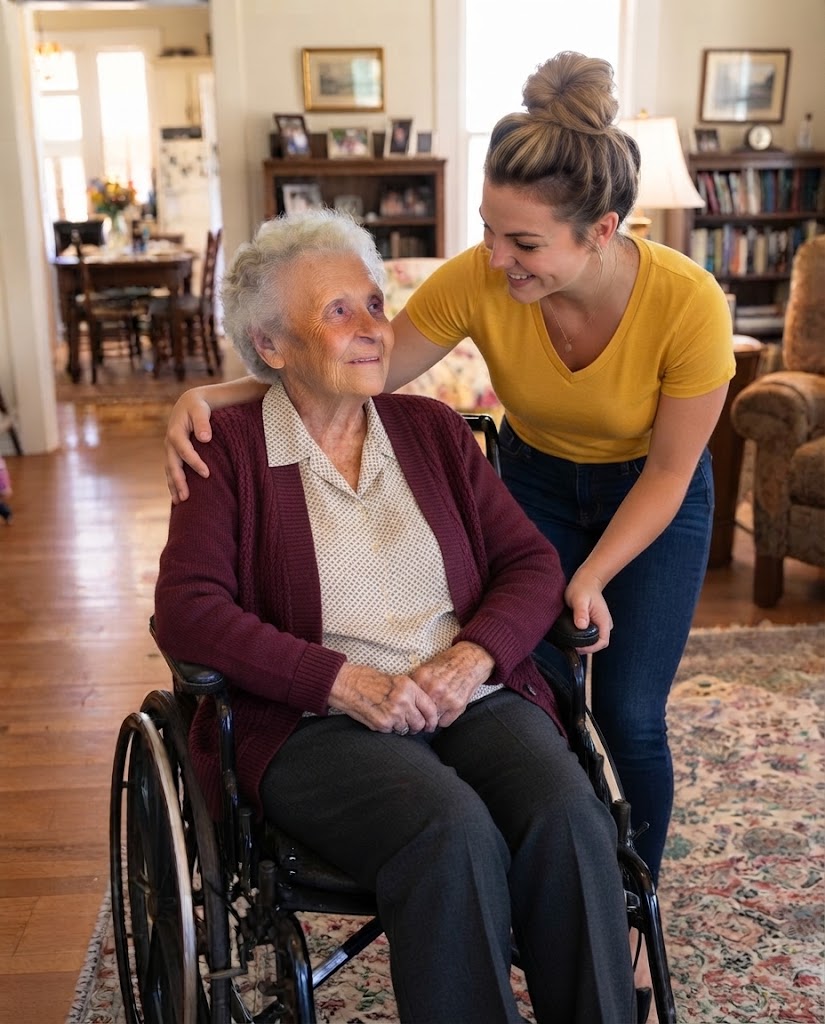
My mother had left me with Grandma when I was four and never really came back. She remarried, had two more daughters, and built another family forty minutes away while Grandma became mine: teacher, parent, nurse, disciplinarian, and safe place. She lived frugally enough to make thrift look like an art form—patched the same wool coat for six winters, kept the thermostat low, clipped coupons, and sometimes postponed her own appointments—yet every March she put another thousand dollars into my account. She told me it was a floor under my feet for the day she could no longer catch me. When pancreatic cancer spread to her liver, I paused nursing school and became her primary caregiver, working extra hospital shifts to cover medications and unpaid bills. Once, desperate for just a few hundred dollars, I called my mother. She told me she had “her own family to think about.” Five months later, she appeared at Grandma’s bedside with tulips and a notary named Gary, claiming she needed signatures so she could help with insurance and expenses. Grandma had just received increased morphine and was so confused that after my mother left, she asked me who the woman had been. Two weeks later, Mom posted a photograph of a new white SUV with a red bow on it.
Margaret Holloway, Grandma’s oldest friend and the attorney who had prepared her estate documents, helped me reconstruct what happened. The medical record for March 14 stated that Grandma was oriented to self only, did not recognize her daughter, and could not identify the year. A power of attorney carries fiduciary duties; it authorizes an agent to act for the principal’s benefit, not to convert assets for personal use. We contacted the credit union’s fraud officer and the county financial-crimes unit, and a detective opened an elder financial-exploitation investigation. The notary quickly admitted he had relied on my mother’s assurances rather than independently assessing Grandma’s capacity. Margaret sent a formal demand for the return of all $26,418.37, and I made sure my mother received it at the bank where she worked as an assistant branch manager. Along with the demand letter, I sent Grandma’s patched brown coat, twenty-two birthday cards with deposit slips still tucked inside, the bank statement showing the withdrawal, and the nursing note documenting Grandma’s incapacity. On top was one sentence: She patched this coat for six winters so you could buy an SUV. My mother called me screaming about what I had done to her career. I asked what she had done to hers.
Seven days later, Mom came to Grandma’s house carrying a cashier’s check for the full amount. Her bank had fired her after learning about the investigation. Her husband Rick had sold the SUV and drawn from his retirement account to restore the funds; my younger sisters had returned the laptops bought with the money. Mom finally admitted the theft had not really been about financial need. She had sat in Grandma’s hospital room watching a dying woman brighten when I walked in with her favorite yogurt and felt every old resentment return at once. She believed Grandma had given me the love she had wanted herself. Then I gave her something Margaret had saved for me: a letter Grandma wrote before becoming seriously ill. In it, Grandma admitted she had been cruel to my mother when she became pregnant at nineteen, had told her she had ruined her life, and regretted those words for twenty-six years. She did not ask me to forgive Mom. She only reminded me that Diane had once been her frightened little girl too. I told the authorities the money had been restored and that I did not want prison. My mother ultimately pleaded to a misdemeanor, received probation, a fine, and community service. Gary lost his notary commission. The money returned to the account, and I went back to nursing school.
I finished the program wearing Grandma’s brown coat over my white scrubs, professionally relined but with every old patch left exactly where she had sewn it. Mom sat alone in the back row at my pinning ceremony. We did not become close overnight, and we still are not; forgiveness turned out to be less like opening a door than learning which doors could safely remain unlocked. I now work in oncology at the same hospital where Grandma spent much of her final year, and my half-sister Kayla has slowly become one of the people I love most. When she turned seventeen, I bought her a cheap birthday card with a cartoon dog wearing sunglasses. Inside I wrote, For your future. Love you more than all the stars. Then I opened a savings account for her and deposited $1,000, exactly as Grandma had done for me. Kayla hooked her pinky around mine and promised to leave it for school. Behind her, my mother stood in the doorway crying because she knew exactly where the ritual came from. People ask what Grandma left me and expect an answer measured in dollars. The real inheritance was the habit of sacrificing a little now so someone you love can stand more securely later. That is the part no power of attorney can withdraw.

