
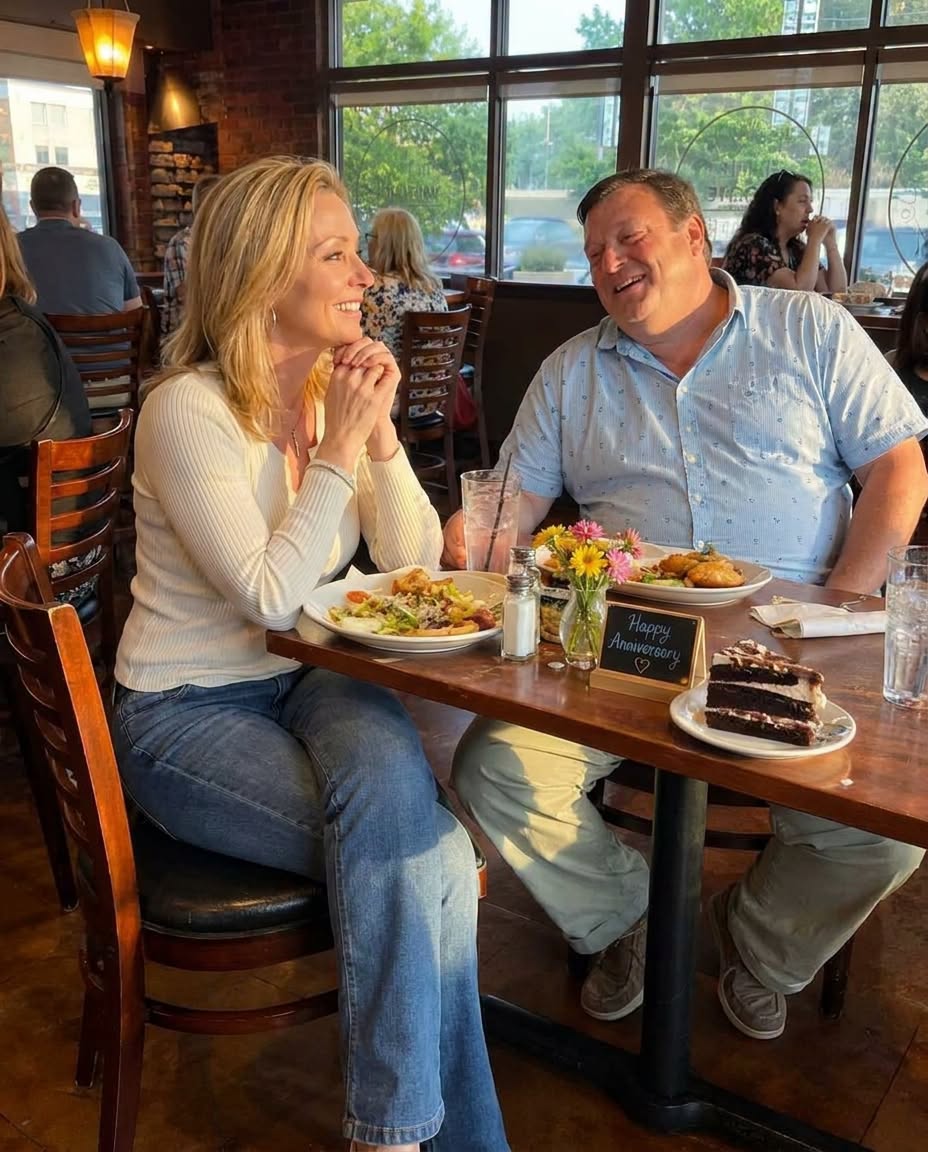
The candlelight was still flickering between us when my husband leaned back in his chair and suggested opening our marriage. We were celebrating ten years together, dressed for a night that was supposed to honor the life we had built, and Michael spoke as casually as if he were proposing a different restaurant for next weekend. His reasoning made the insult worse: I was always tired from the children and the house, he explained, so perhaps letting him “have fun” with other women would take some pressure off me. For a moment I imagined throwing my drink in his face and walking out. Then something inside me went completely still. I lifted my glass, smiled, and said, “Fine. We can open the marriage.” His face lit up—until I added, “But I have one condition.”
For ten years, I had carried most of the invisible machinery of our family while telling myself that this was simply what marriage looked like. I handled the children’s schedules, school pickups, meals, laundry, medical appointments, birthdays, groceries, bedtime routines, household planning, and the mental load of remembering what needed to happen before anyone else noticed it needed doing. Michael worked, came home, and enjoyed a life that functioned smoothly because I made it function. What his proposal revealed was not really a desire for a modern arrangement between equals. He wanted additional freedom while leaving every existing responsibility exactly where it already sat—with me. So I agreed under one rule: if the marriage was open, our lives had to be equally open. Half the childcare, half the housework, half the cooking, half the appointments, half the planning—everything divided evenly, because I could not have the same freedom he wanted while continuing to perform nearly all the labor that made him free in the first place. “Equal freedom requires equal work,” I told him. He hesitated, then agreed because refusing would have exposed what he had actually been asking for.
The experiment began the next morning, and I did nothing dramatic. I simply stopped completing his half. I made breakfast for myself and the children but left him to make his own. I handled our daughter’s gymnastics while he became responsible for our son’s soccer game—and immediately forgot the cleats, the water bottle, and breakfast because those details had never existed in his world as work someone consciously performed. Within weeks, Michael was cooking, cleaning, supervising homework, handling bedtime, folding laundry, and discovering why I had been exhausted for years. The open marriage he had imagined never materialized because he suddenly had no spare time to pursue anyone. I, meanwhile, reclaimed mine. I reconnected with friends and began taking a pottery class every Tuesday night while Michael handled dinner, baths, and bedtime. I did not use my freedom to date other men; I used it to rediscover the woman I had been before every hour of her life became household infrastructure. Two months later, I came home from pottery to find Michael sitting alone at the kitchen table, head in his hands, finally ready to admit what reality had taught him.
He told me he had never truly wanted an equal open marriage; he had wanted permission to cheat without losing the comfort of the life I maintained. Doing half the domestic and parenting work had shown him that I was not tired because I had somehow failed as a wife. I was tired because I had been carrying the workload of two adults while he treated the difference as leisure. More importantly, he had watched me become happier as my own time returned, and that frightened him because he finally understood that I did not need him in the dependent way he had assumed. We agreed not to open the marriage at all. Instead, we rebuilt it. We began holding weekly conversations about the division of household labor, treating responsibilities almost like an operating agreement so they could not quietly drift back onto my side. My Tuesday pottery class became non-negotiable, not something Michael “allowed” but part of the permanent structure of my own life. There were setbacks, and old habits occasionally returned, but the difference was that we could now identify the imbalance within days instead of allowing it to accumulate invisibly for years.
Eight years later, our house is filled with pottery I made on those Tuesday nights. The earliest bowls are crooked and uneven; the newer ones are strong, balanced, and beautiful, and I keep all of them because together they show me exactly when I began returning to myself. Michael and I never became the effortless couple we once pretended to be. What we built instead requires more attention, more honesty, and more work from both of us, but it is a marriage between two people rather than one person supported by another’s invisible labor. His anniversary proposal had been meant to open the door to other women. What it actually opened was a question we should have asked years earlier: who carries the weight of this life, and why? Once that question was finally spoken aloud, neither of us could pretend not to see the answer again.

