
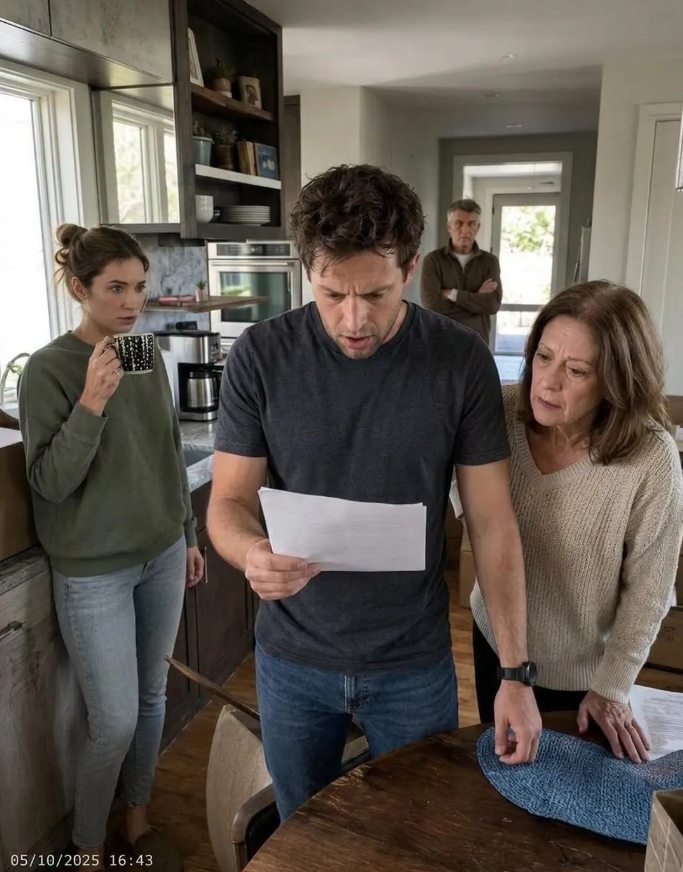
The certified envelope arrived while my mother-in-law was reorganizing my kitchen and discussing plans to turn my office into her husband’s hobby room. My husband, Ryan, signed for it with an annoyed expression, expecting another insurance notice or routine bill. Seconds later, the color drained from his face as he read the first page. We had been married for nine years, but the three-bedroom house outside Denver had been mine long before the wedding, purchased for $315,000 with savings from my software career. Two weeks earlier, Ryan had announced that his parents, Frank and Linda, were moving in permanently, then told me my opinion did not matter. Their rental truck arrived that Saturday carrying enough furniture for a complete relocation, and within days Linda had removed my decorations, moved my favorite lamp into storage, and begun treating every room as her own.
I initially tried to convince myself Ryan was simply overwhelmed by his parents’ financial problems. Then a notification appeared on his tablet from a woman named Vanessa: “Soon, we won’t have to hide anymore.” The messages revealed a yearlong relationship, secret hotel stays, and a plan to pressure me into leaving my own home. Ryan had told Vanessa that I avoided conflict and would eventually surrender once his parents made the house uncomfortable enough. Even worse, Frank and Linda knew about the plan and had discussed when Vanessa could move in after I left. I photographed every message and took the evidence to Rebecca Lawson, the attorney who had already reviewed my property records. She prepared divorce papers, formal occupancy notices, and one certified package—and Ryan was now standing in my kitchen holding it.
The documents confirmed that the home was my separate property, with only my name on the deed, mortgage records, and title insurance policy. Ryan had lived there as my spouse, but he had no automatic ownership interest and no authority to transfer possession to his parents. Rebecca also preserved the messages in case they became relevant in court and reviewed my investment accounts, retirement plans, and estate documents to ensure nothing else had been changed without permission. Ryan’s confidence collapsed when I placed the screenshots beside the certified notice. Linda called my decision cruel, but she could not explain why helping her son force me out had seemed acceptable. Three weeks later, Ryan’s own attorney confirmed there was no legal claim to the house. Frank and Linda were given a reasonable deadline to move, and Ryan followed shortly afterward when the separation terms were finalized.
After the trucks left, I found my lamp in storage and returned it to the living room. I rehung my grandmother’s photograph above the fireplace and turned the former guest room into a quiet reading space. The divorce was painful because I had genuinely loved Ryan, but love could not repair a marriage where respect had been replaced by strategy. Six months later, he asked to meet and offered the first honest apology I had ever heard from him. He admitted he had mistaken my patience for weakness and assumed I would tolerate anything to keep the marriage intact. I forgave him, but I did not invite him back. The envelope had not ended my marriage by itself; it simply put in writing what Ryan had refused to understand—my home, my voice, and my future were never his to give away.

