
When my mother-in-law suggested that our son join her annual summer retreat for the grandchildren, I hesitated longer than I care to admit. On the surface, it sounded like a generous and loving offer. Two full weeks at her expansive lakeside property, surrounded by cousins, fresh air, and the kind of freedom children rarely experience anymore. She framed it as a rite of passage, something all the grandchildren eventually did once they were “old enough.”
My husband, Daniel, spoke about those summers with a kind of reverence. His voice softened whenever he mentioned them, as if the memories themselves were sacred. He told stories of long afternoons by the water, canoe races at sunset, whispered jokes after bedtime, and a sense of belonging that lingered long after summer ended. Listening to him, it was easy to imagine those weeks as magical.
Our son, Caleb, had just turned six a few months earlier. He was bright, sensitive, and deeply curious about the world. He was still very much a child who needed reassurance. When we told him about the invitation, his eyes lit up instantly. The idea of staying with his older cousins, of being included in something “big,” made him beam with pride.
I smiled and encouraged his excitement, but underneath, my unease lingered.
Caleb had never been away from us for more than a night. He still asked for extra hugs before bed. He still needed his favorite blanket folded just right. He still climbed into our bed after bad dreams. I worried about how he would handle two weeks without us, but Daniel reminded me gently that growth often comes with discomfort.
“My mom’s done this for years,” he assured me. “She’s strict, yes, but she knows how to manage kids. Caleb will be fine. He’ll come back more confident.”
Against my instincts, I agreed.
I packed carefully, tucking love into every corner of his suitcase. His softest pajamas. His worn storybook with dog-eared pages. His little stuffed fox, the one he insisted could not be replaced by any other toy. I knelt in front of him before he left, brushing his hair from his eyes and reminding him that he could call me anytime, day or night.
“I know,” he said bravely. “I’ll be okay.”
Watching him climb into his grandmother’s car and wave enthusiastically until they disappeared down the street, I told myself this was normal. Necessary, even.
That night, the house felt hollow. I kept glancing toward his room, half-expecting to hear his footsteps or his voice calling out for water. Daniel wrapped an arm around me and reminded me that this was part of raising a child, to let go a little, even when it hurt.
The next evening, my phone rang.
The caller ID showed my mother-in-law’s name. I smiled instinctively, expecting cheerful updates or laughter in the background.
Instead, when I answered, all I heard was crying.
“Mama?” Caleb’s voice was thin and shaking, barely recognizable. “Mama, please. I want to come home.”
My heart seized. “Caleb? Sweetheart, what’s wrong?”
“I don’t like it here,” he sobbed. “Grandma yells. She’s mad all the time. I want to come home. Please come get me.”
Before I could ask another question, the call abruptly disconnected.
My hands trembled as I called back. No answer.
Again.
Still nothing.
On the fourth attempt, my mother-in-law finally picked up. Her tone was sharp and irritated, as though I had interrupted something far more important than a frightened child.
“He’s fine,” she said curtly. “He’s overreacting. You’ve made him far too soft.”
“I need to speak to my son,” I said, struggling to keep my voice steady.
“No. He’s already disrupted enough. He needs to learn boundaries.”
The line went dead.
I stared at my phone as disbelief and fear crashed over me at once. Daniel had heard everything. He did not hesitate for a second.
“We’re going,” he said. “Now.”
The drive to the estate took nearly two hours, and every mile felt unbearable. My mind raced through worst-case scenarios. What had happened in less than a day to reduce my cheerful, eager child to desperate tears? Why had she refused to let him speak to me again?
When we arrived, the property was eerily quiet. There were no children playing and no laughter drifting through the open air. The house itself loomed large and imposing, its windows dark despite the afternoon sun.
I knocked hard. No answer.
When the door finally opened, my mother-in-law stood there, her expression cold.
“What are you doing here?” she demanded.
“I’m here for my son,” I said, pushing past her without waiting for permission.
Inside, the air felt heavy. Upstairs, I heard a faint noise, a sniffle, a muffled sob. I followed it to a guest room at the end of the hall.
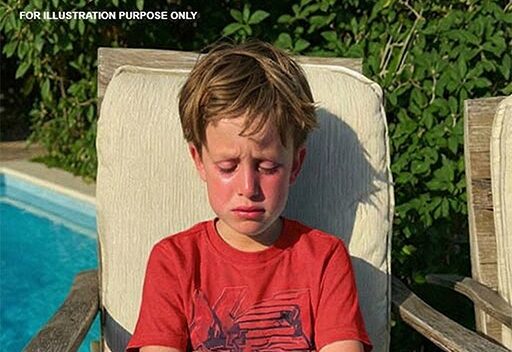
Caleb was curled up on the bed, clutching his stuffed fox as if it were a lifeline. His eyes were red and swollen, his face streaked with dried tears.
The moment he saw me, he ran into my arms.
“Mama,” he cried. “Take me home.”
I held him tightly, my own tears falling freely. I felt his body shaking and felt the fear still clinging to him.
Behind us, my mother-in-law crossed her arms.
“He’s been impossible,” she said dismissively. “Refusing to cooperate. Crying constantly.”
“What did you do to him?” I asked, my voice shaking with controlled rage.
She scoffed. “I treated him like a child who needs discipline. He cries when told no. He refuses food. He asked to call you instead of participating. That kind of behavior won’t be tolerated here.”
Daniel stepped forward then, his voice calm but edged with pain. “That behavior is fear,” he said. “And I recognize it.”
Her eyes narrowed. “You turned out just fine.”
“No,” he replied quietly. “I learned to hide.”
We left without another word.
In the car, Caleb refused to let go of my hand. He whispered repeatedly, “Don’t make me go back.” Each time, I promised him I never would.
At home, we tucked him into bed and sat with him until his breathing slowed, until sleep finally claimed him.
Over the following days, he slowly began to open up.
He told us she yelled when he cried at night.
That she called him spoiled.
That she forced him to sit at the table until he finished food that made him gag.
That she locked the playroom when he “misbehaved,” leaving him alone while the other children laughed outside.
Listening to him broke something inside me.
Weeks later, my mother-in-law called, furious. She accused us of humiliation, of disrespect, and of undermining her authority.
Daniel listened quietly before responding.
“My job is not to make my son tough,” he said. “It’s to make him safe.”
She hung up without another word.
Our relationship with her changed that day, perhaps permanently. But as I watched Caleb laugh again, run freely, and sleep peacefully, I knew the cost was worth it.
Because no tradition matters more than a child’s trust.
And no place that breaks that trust deserves to be called family.

