
The spare key struck the kitchen counter with a faint metallic click, but the room went completely still. My mother stood at the sink gripping a coffee mug while November rain crawled down the windows behind her. “If living here makes you so unhappy, get out and never come back,” she said, her voice cold and controlled. My father remained in his recliner, staring at the evening news as though he had not heard a word. I waited for one of them to stop me, apologize, or at least say my name, but only the kettle broke the silence. So I lifted my overnight bag, walked through the hallway lined with family photographs, and closed the front door gently behind me.
My name is Claire, and for nearly six years, I had quietly kept my parents’ household running. After my mother’s hospital stay, I discovered that my father had fallen two months behind on their $1,780 mortgage, so I covered it with money from my project-management salary. What began as temporary help became automatic payments for the mortgage, utilities, property taxes, prescriptions, groceries, and occasional home repairs. I paid nearly $2,600 each month while postponing vacations, driving an aging sedan, and sleeping in my childhood bedroom because moving home seemed practical. My younger brother, David, lived three states away with his wife and children, and although he called on birthdays, no one told him how serious the financial situation had become. My parents thanked him for sending photographs, while the work I did every day gradually became something they expected without acknowledging.
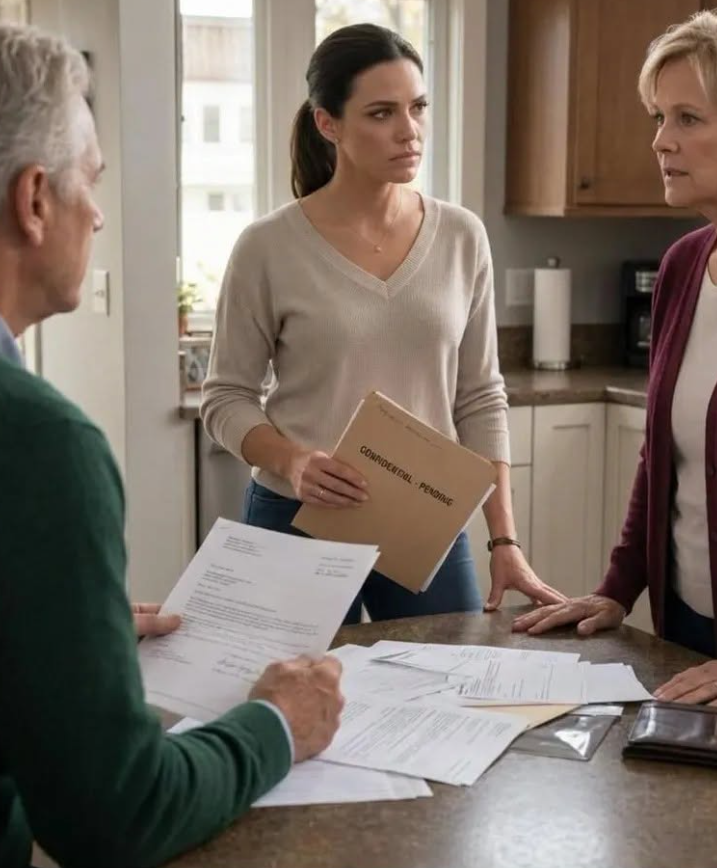
Twenty-six days after I left, Dad called while I was drinking tea in the small apartment I had rented above a bakery. He did not ask whether I was safe or whether I planned to come home; he said the mortgage payment had failed. When I explained that I had canceled every automatic transfer connected to their household, his voice dropped. “Your mother was angry,” he said. “She didn’t mean it.” I reminded him that he had sat nearby and said nothing, and after a long silence, he finally admitted they had assumed I would continue paying even after moving out. A week later, they invited me over, claiming the visit was not about money, but the dining table was covered with overdue notices, bank letters, medical bills, and tax statements. Then Dad walked toward me holding the spare key—and what he said next changed the meaning of that house forever.
He told me they had met with a housing counselor, created a budget, and started refinancing the mortgage instead of waiting for me to rescue them. Dad had accepted consulting work, Mom planned to teach part-time at the community center, and David had agreed to contribute every month. They had also spoken with an attorney to review their estate documents and make sure the house, insurance policies, and remaining investment accounts were properly organized without placing everything on my shoulders. For years, they had treated every financial problem like a case that would somehow settle itself before reaching court, while I quietly protected the home from the consequences. Mom admitted that needing me had become so convenient that she had confused my help with an obligation. When Dad offered me the key and said the house would always be my home, I folded his fingers around it and told them I wanted to be invited inside as their daughter—not responsible for keeping the property alive.
I did not move back, restart the payments, or become their unpaid household manager again. Instead, I visited for occasional dinners, helped only when they asked respectfully, and allowed them to handle problems they were capable of solving themselves. David began reviewing bills with Dad on Sundays, Mom learned to manage her own online accounts, and my parents slowly stopped measuring love by how quickly I fixed their emergencies. A year later, I purchased a modest one-bedroom condo with large windows and a narrow balcony where I planted basil. When my parents visited, Dad noticed the blue dish beside my door and jokingly asked whether they would receive a spare key. I smiled and said no, and this time he understood: I had not abandoned my family—I had simply stopped disappearing inside everything I did for them.