
At 2:17 on a rain-soaked Tuesday afternoon, Rebecca Patterson received a call from an insurance agent asking about a 200-guest wedding scheduled at her lake house. The ceremony would cover the lakeside lawn, the reception would fill the main house and two rented tents, and twelve members of the wedding party planned to stay overnight. Rebecca had authorized none of it. Her younger sister Rachel had listed herself as co-owner, signed a liability waiver, and instructed the planner not to contact Rebecca because she supposedly became overwhelmed and created unnecessary conflict. The lake house, however, was not shared family property. Rebecca’s name was the only one on the deed, mortgage release, tax records, and insurance policy. By the time the agent finished explaining that Rachel had already committed approximately $85,000 to vendors, Rebecca understood that this was not a misunderstanding—it was a carefully organized attempt to erase the legal owner from her own property.
Their grandfather Walter had divided his estate equally among four grandchildren, but he gave Rebecca the money to purchase the lake house alone. In a private letter, he explained that property belonging to everyone often became property protected by no one, eventually fought over or sold. He trusted Rebecca to keep the house open to relatives on her own terms while carrying the unpopular responsibility of saying no when necessary. For three years, she had hosted holidays, birthdays, and family weekends there and had never refused anyone who asked. Rachel did not ask because doing so would have required acknowledging Rebecca’s ownership. Instead, she told the planner that the home was shared equally, signed six documents claiming legal authority, paid a $22,000 deposit, and arranged for a locksmith to change the side-door lock while Rebecca was working four hours away.
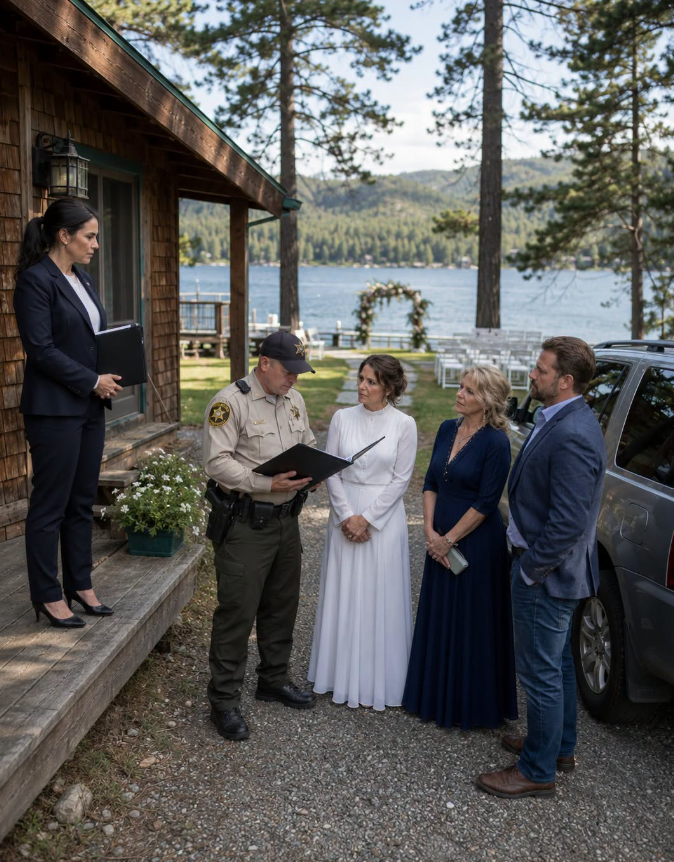
Rebecca opened the security application and watched her mother, Rachel, the groom, the planner, and a locksmith arrive at the property. Rather than argue, she sent the deed, closing statement, survey, insurance records, and her grandfather’s letter to every institution involved. She notified the county sheriff that unauthorized people were attempting to alter the locks, asked her attorney to forward certified ownership documents, and alerted the bank that the deposit check supported a contract containing a false ownership declaration. Within twenty minutes, the insurance application was frozen, the planner’s venue authorization was invalidated, and the check was flagged for review. Then a sheriff’s vehicle rolled onto the gravel drive, and Rachel smiled as though official authority had arrived to support her—until the deputy opened the deed and read the only name printed on it.
The deputy confirmed that nobody had permission to enter, change locks, or host an event without Rebecca’s authorization. The wedding was moved to a vineyard at nearly twice the original cost, while vendors retained several deposits because Rachel had signed contracts under false pretenses. The planner and insurer documented the inaccurate declarations, and the tent company considered legal action before deciding the expense was not worthwhile. Rebecca’s attorney ensured that no liability, insurance claim, vendor debt, or property damage could be transferred to her. Her mother stopped speaking to her for seven months and accused Rebecca of humiliating the family, but Rebecca refused to apologize for protecting her home and estate. She sent her mother Walter’s handwritten letter with one sentence of her own: she would have approved the wedding if Rachel had simply asked, but refusing to ask had been Rachel’s choice, not Rebecca’s cruelty.
Two years later, after Rachel’s marriage began to fail, she called and quietly asked whether she could spend a weekend at the lake house. Rebecca said yes. Sitting on the dock their grandfather had built, Rachel finally admitted that she had lied about Rebecca being difficult because she could not tolerate asking permission to use something that belonged solely to her sister. She also acknowledged that if the property had been divided among everyone, she likely would have sold her share and destroyed the very place Walter wanted preserved. From then on, Rachel asked before every visit, and Rebecca continued saying yes. The deed gave Rebecca ownership, but her grandfather’s letter gave that ownership a purpose: keeping the door open when possible and strong enough to remain closed when necessary.

