
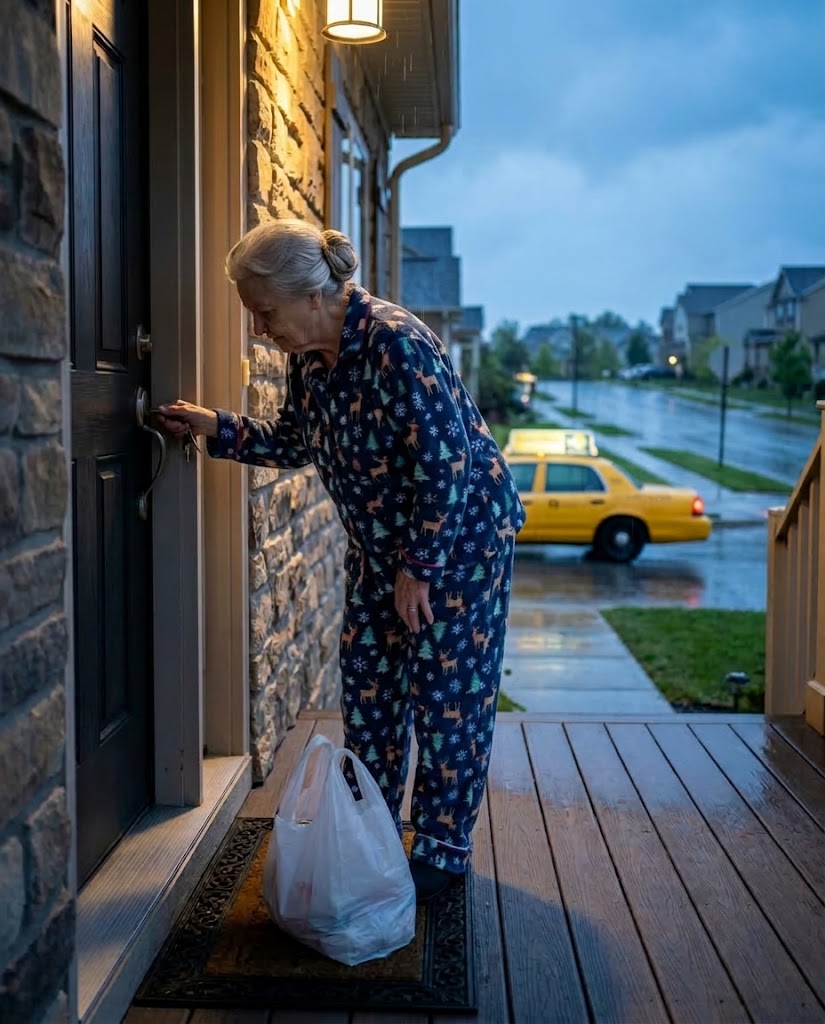
My key would not turn. I had been discharged from St. Luke’s less than an hour earlier after fourteen days in the hospital for a heart attack, and I was standing on my own porch in the cold with a plastic bag of clothes in one hand and the brass key Harold and I had carried for forty-five years in the other. The lock was new—shiny silver, with a keypad—and a typed note had been taped to the oak door: THIS IS MY HOUSE NOW. DAD LEFT IT TO ME. THERE IS NO ROOM HERE FOR FREELOADERS. GO FIND A NURSING HOME. — KEVIN. My son had promised to collect me at noon. I had called him ten times from the hospital before finally taking a taxi home, terrified something had happened to him. Instead, his car and his wife Jessica’s were sitting safely in my driveway, the television glowing through the living-room window. I stood there with the discharge papers still in my bag and realized that while I had been recovering from two coronary stents, Kevin had not forgotten me at all. He had made a plan.
Harold had been dead eight months, but he had seen the danger years earlier. Kevin’s gambling had started with sports bets and grown into tens of thousands of dollars in debt, and I had spent years quietly giving him money behind Harold’s back because I thought rescue was what mothers did. Harold knew. Five years before his death, after being diagnosed with lung cancer, he took me to our attorney, Paul Henderson, and transferred his entire interest in our Linden Street house directly to me through a recorded deed. He did it while fully competent and very much alive because, as he told Paul, “I know our son. And I love him. But I know him.” The house had therefore been mine alone for five years, regardless of anything Kevin imagined the will might say. Harold also left Paul with instructions: if Kevin ever tried to take the property from me, Paul was to come immediately. So instead of knocking, I called him. Twelve minutes later Paul arrived with a locksmith and two police officers. They verified the recorded deed, drilled out Kevin’s new lock, and opened my own front door while my son stood inside wearing Harold’s flannel shirt and insisting the house belonged to him.
The house was only the beginning. While I was hospitalized and heavily medicated, Kevin had persuaded me to sign what he called “insurance paperwork.” It was actually a durable power of attorney. Paul had already obtained a statement from my cardiologist documenting that on the day I signed it, I was too impaired to understand a legal instrument, giving us strong grounds to treat the document as invalid. Using it anyway, Kevin had withdrawn $41,000 from my savings in five transactions and sold my 2019 Buick for $8,000 without a valid transfer of title. He had also changed the locks, begun speaking with a realtor about selling the house, and collected brochures for nursing facilities where he apparently intended to place me after the sale. When police asked whether I wanted immediate charges, I said not that night. Kevin admitted most of the money was already gone—paid to gambling creditors or lost trying to win it back—and that he had planned to use the house to clear the rest of his debts. “And me?” I asked. “Where was I supposed to be?” He looked at the porch floor and whispered, “In a home.” I gave him my old brass key, the one that no longer fit because of the lock he installed. “Keep it,” I said. “Remember what you locked out.”
I chose restitution over immediate incarceration. Through Paul, I pursued repayment of the $41,000 and the $8,000 vehicle loss, and Kevin signed an agreement requiring $49,000 in restitution at $200 a month. He slept in his car for a time, then entered a men’s shelter and finally attended the Gamblers Anonymous meetings Harold had begged him to attend years earlier. He found work changing tires and began learning what it meant to come home with aching hands after a day of physical labor. Months later, when I believed he had begun trying rather than merely apologizing, I let him read the sealed letter Harold had written five years earlier: For Kevin. Only if he tries. Harold told him plainly that the house had been put in my name not to punish him but to protect me, because I would never protect myself from my own child. “You’re going to have to fall all the way down,” he wrote. “So hit it. And then get up.” His final instruction was smaller and somehow harder: come to your mother without asking for anything, fix something, mow the lawn, change the furnace filter. Kevin read the letter at my kitchen table and cried for his father in a way I had never seen before. Before leaving that afternoon, he went downstairs and changed the furnace filter Harold correctly predicted I would forget.
A year later, Kevin still comes every Sunday at two. He fixes things badly at first and usually better the second time. He has not placed a bet in fourteen months, still attends meetings twice a week, works as an assistant manager at the tire shop, lives in a small apartment, and sends the $200 payment on schedule every month. Last month, on my seventy-third birthday, I took one of the new brass keys the locksmith had given me and placed it in his hand. I was careful about what it meant. “I’m not giving you the house,” I told him. “The house is mine, and after I die it goes through the trust.” What I was giving him was access in case my heart failed again and I needed someone who would actually come through the door. He attached the new key to his keychain beside the old one I had given him on the porch. One key does not open anything anymore; he keeps it to remember the day he shut his mother out. The other opens my front door. I am not pretending those two keys cancel each other out. They do not. But trust is not the same thing as forgetting. Sometimes it is simply deciding that a person has shown up often enough to be given one small piece back.

