
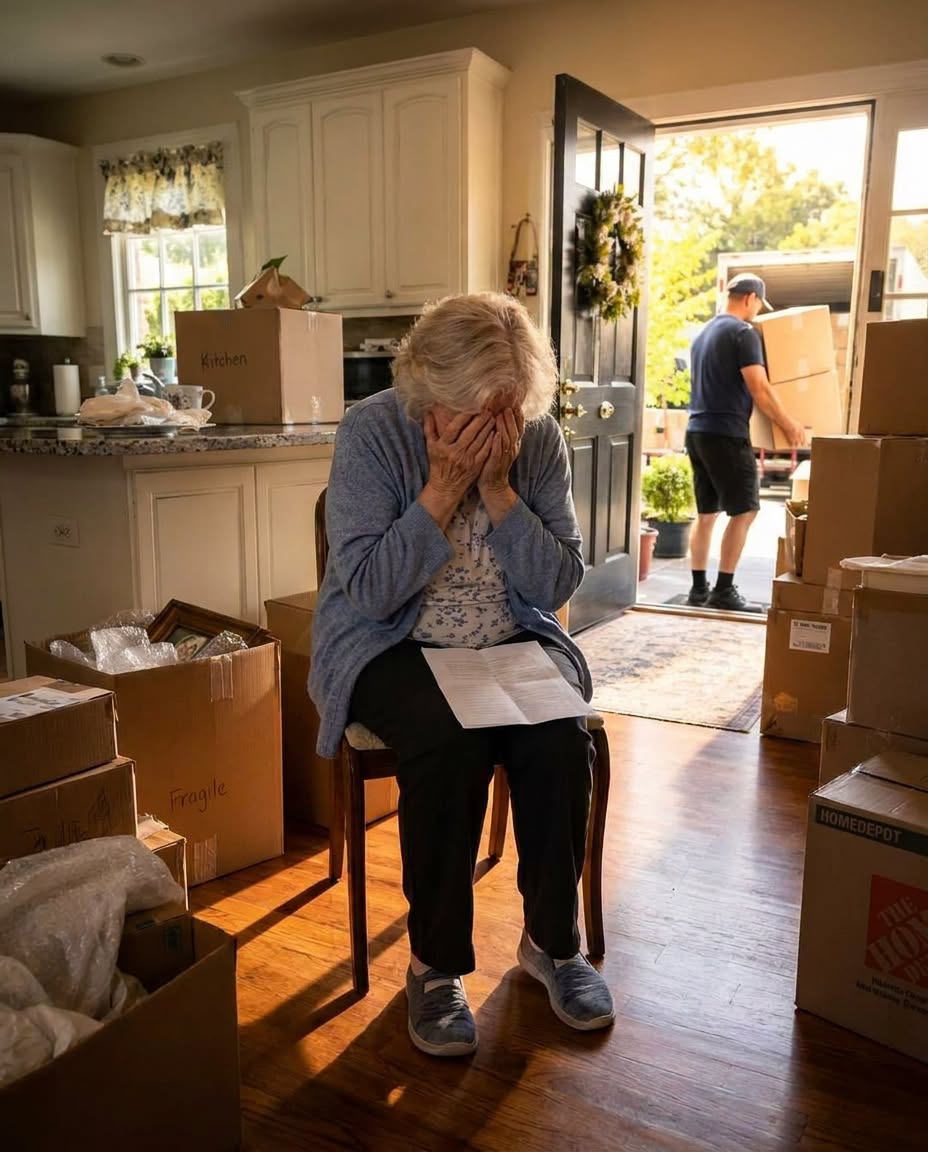
The house was so quiet on Thanksgiving morning that I could hear the refrigerator humming from the hallway. Daniel’s SUV was gone, Rebecca’s car was gone, the grandchildren’s backpacks were gone, and the suitcases had disappeared from the top shelf of the master closet. On the refrigerator, beneath the ceramic turkey Jack had made me in second grade, was a note explaining that they had decided to spend Thanksgiving in Hawaii without me because, at seventy-three, I would probably be better off staying home and resting. Two containers of grocery-store chicken soup were waiting in the freezer. I read the note twice, closed the freezer door, and sat at the dining table I had paid for four years earlier. I did not call my son. By eight the next morning, a moving truck was backing into his Scottsdale driveway.
Four years earlier, after my husband Arthur died suddenly, Daniel had convinced me to sell our longtime Illinois home and move to Arizona so I would never have to live alone. When he and Rebecca found a house they could not quite afford, I contributed $80,000 toward the down payment from Arthur’s life-insurance proceeds and later bought much of the furniture and appliances: the refrigerator, washer, dryer, sofas, dining set, curtains, lamps, patio furniture, and the expensive coffee machine Rebecca loved. Slowly, I became less a mother living with family and more the unpaid infrastructure holding their household together. I picked up the grandchildren, cooked dinner, paid for groceries, drove to activities, and quietly surrendered plans of my own whenever Rebecca said something might be too tiring for me. Then one evening I overheard her tell her sister that what they really needed was not me but my money, the childcare, and the things I paid for. I spent six months pretending I had misunderstood her—until the Hawaii note made pretending impossible.
Arthur had always teased me for keeping receipts, but that morning the blue folder in my nightstand felt like a map back to myself. I made a list of every household item I had personally purchased and matched each one to documentation. Then I hired a moving company and told the crew to take only those specific items, leaving everything bought by Daniel and Rebecca or belonging to the children untouched. I also accepted an offer from my friend Dolores to rent a small two-bedroom condo near her retirement community. Before leaving, I wrote across the top of Rebecca’s Thanksgiving note, “Thank you for showing me who my real family truly is.” The hardest moment came when my fourteen-year-old granddaughter Emily texted from Hawaii asking why I had chosen not to come. I told her the truth without making her responsible for it: I would have loved to go, but nobody had asked me. When the family returned a week later to an almost-empty kitchen and laundry room, Daniel finally understood that I had not robbed his house. I had simply stopped furnishing a life in which I was valued mainly for what I provided.
Daniel came to my condo two days later looking exhausted and ashamed. He admitted the family was carrying serious debt and that the Hawaii trip itself had gone on a credit card; excluding me had been easier and cheaper, and the soup had allowed him to tell himself I had been “taken care of.” I told him I would not move back. I would remain Emily and Jack’s grandmother, attend their games, braid hair before volleyball, and welcome them every week—but I would no longer serve as the family’s automatic babysitter, housekeeper, grocery account, or financial safety net. Rebecca’s apology took longer and was imperfect, but eventually she admitted that money anxiety had caused her to reduce me to a line in the household budget. Daniel began inviting me to meals instead of assigning me work. They replaced their own appliances, bought secondhand furniture, and learned what their household actually cost when someone else was no longer silently paying the difference. Our relationship did not reset; it changed because the terms finally became visible.
The following spring, Dolores and I went to Maui on our own. The flight was long and I did get tired, but nobody decided for me what I could handle. At sunrise one morning, I stood ankle-deep in the Pacific holding my shoes and thought about the trip Arthur and I had always postponed until “next year.” I sent Daniel a photograph with the message, “Not too tired,” and he replied, “That’s my mom.” By the next Thanksgiving, the big dining table barely fit inside my little condo, which turned out to be useful because Dolores, neighbors, the moving-company owner and his mother, Daniel, Rebecca, Emily, Jack, and several people I had chosen as family were all coming to dinner. Emily called the night before and asked if she could arrive early to help. I reminded her she was a guest. “I know,” she said. “I want to.” After four years of being useful, I finally understood the difference: being needed is something people assume; being wanted is something they ask.