
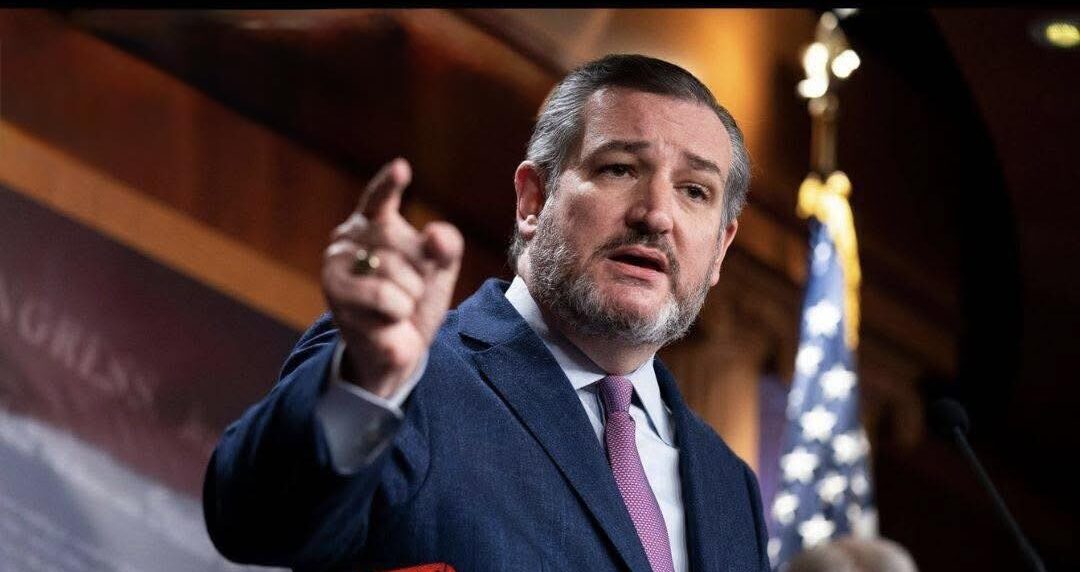
Washington thrives on spectacle, but even by Capitol Hill standards, Senator Ted Cruz set off a political and legal shockwave this week. During a Senate hearing that quickly veered from procedural debate into constitutional confrontation, the Texas Republican openly called for the impeachment of two sitting federal judges, arguing that they had crossed a line from judicial interpretation into outright abuse of power.
The judges in question—James Boasberg and Deborah Boardman—have long drawn criticism from conservative legal circles. But Cruz’s remarks marked a significant escalation. Rather than simply condemning individual rulings, he framed their actions as a threat to the constitutional order itself, invoking the most serious remedy available against a federal judge: impeachment.
The move immediately reignited a simmering debate over “judicial activism,” the limits of lifetime tenure, and whether Congress has been too reluctant to confront judges who critics say operate as unaccountable policymakers.
Cruz’s Argument: Impeachment Is Not Limited to Criminal Acts
Cruz, a former Supreme Court clerk and longtime member of the Senate Judiciary Committee, grounded his argument in constitutional history rather than partisan outrage. He acknowledged upfront that impeaching federal judges is rare—only a small number have faced impeachment since the nation’s founding—but emphasized that rarity does not mean impossibility.
According to Cruz, the Constitution’s impeachment standard was deliberately written to encompass more than criminal wrongdoing. While bribery, corruption, and fraud are obvious grounds, the framers also feared something more subtle and potentially more dangerous: judges who undermine public trust, exceed their constitutional authority, or use the bench to impose personal ideology.
In Cruz’s telling, impeachment exists precisely for moments when the judiciary stops acting as an impartial arbiter and instead becomes an unelected political force.
That framing was not accidental. It directly challenges the common defense that controversial rulings are shielded from accountability so long as they do not violate criminal law.
The Judges at the Center of the Storm
Judge James Boasberg
Boasberg has repeatedly drawn conservative ire for rulings that critics say interfere with executive authority, particularly in areas involving national security and immigration enforcement. His use of gag orders and procedural constraints in politically sensitive cases has been characterized by opponents as overreach that limits transparency and suppresses lawful executive action.
Cruz argued that such measures go beyond normal judicial discretion, especially when they appear to function as political roadblocks rather than neutral case management tools.
Supporters of Boasberg counter that judges must sometimes impose limits to preserve fairness and prevent abuse. But Cruz dismissed that defense, saying that intent matters less than effect when judicial actions consistently align with one ideological outcome.
Judge Deborah Boardman
Boardman has become an even more controversial figure among conservatives, largely due to a sentencing decision in a case involving an individual who attempted to assassinate a sitting Supreme Court justice. The sentence, which many observers described as shockingly lenient, sparked outrage across the political spectrum.
To Cruz and others, the ruling symbolized a deeper problem: a justice system that appears increasingly indulgent toward politically sympathetic defendants while applying harsher standards elsewhere.
Cruz did not accuse Boardman of criminal misconduct. Instead, he argued that her decision reflected a catastrophic failure of judgment that undermined public confidence in the judiciary’s ability to protect democratic institutions and public officials.
A Broader Warning About Judicial Power
Cruz’s remarks were not limited to two judges. They were a warning shot aimed at the judiciary as an institution.
He argued that lifetime tenure, while designed to protect independence, was never intended to grant immunity from accountability. When judges begin shaping national policy through rulings that effectively rewrite laws or block lawful executive actions, Cruz said, Congress has a duty to respond.
This argument taps into a growing frustration on the right. Many conservatives believe the courts have become a substitute legislature, issuing sweeping rulings that affect immigration, education, healthcare, and energy policy without democratic input.
From that perspective, impeachment is not an attack on judicial independence—it is a constitutional safety valve.
Democrats Cry “Authoritarianism,” Republicans Cry “Hypocrisy”
Democrats quickly accused Cruz of attempting to intimidate the judiciary and undermine the separation of powers. Several lawmakers warned that normalizing impeachment threats over unpopular rulings could destabilize the legal system and erode judicial independence.
But Republicans fired back with a pointed rebuttal: the same lawmakers now defending judicial immunity previously championed impeachment proceedings against President Donald Trump—twice—without criminal convictions and, in many cases, without clear factual grounding.
Cruz himself alluded to that history, suggesting that standards of impeachment seem to expand or contract depending on political convenience.
If impeachment can be pursued based on alleged “abuse of power” in the executive branch, Cruz argued, then the judiciary cannot claim exemption from the same constitutional principle.
The Political Reality: Impeachment Is Unlikely
Despite the intensity of Cruz’s remarks, few observers believe impeachment proceedings will actually succeed.
Under the Constitution, impeachment must begin in the House of Representatives. While House Republicans have shown increased willingness to challenge judicial authority, even initiating proceedings would require leadership buy-in and political capital.
Conviction in the Senate would be even more difficult. Removing a federal judge requires a two-thirds majority—meaning a substantial number of Democrats would have to vote to convict. That outcome is widely viewed as implausible.
Even allies of Cruz concede that the effort faces steep odds. But they argue that success was never the sole objective.
Shifting the Overton Window
Supporters of Cruz see his call for impeachment as a strategic move to shift the conversation. By openly discussing impeachment, he forces a debate that many lawmakers have avoided: what happens when judges routinely shape policy with little regard for democratic accountability?
Even if no impeachment vote occurs, the pressure itself may have consequences. Judges are acutely aware of institutional legitimacy, and sustained scrutiny can influence how aggressively they wield their authority.
In that sense, Cruz’s remarks may be less about immediate removal and more about reasserting congressional oversight over a branch many conservatives believe has gone unchecked for decades.
A Judiciary Under Growing Scrutiny
Public trust in institutions—including the courts—has declined sharply in recent years. High-profile rulings, perceived ideological bias, and inconsistent sentencing have all contributed to skepticism.
Cruz’s argument resonates with voters who feel that the justice system operates under different rules depending on politics. Whether one agrees with his conclusions or not, the concerns he raised reflect a real and growing unease.
The question is not simply whether Boasberg or Boardman acted improperly. It is whether the current system has adequate mechanisms to correct judicial behavior that, while legal, may still be destructive.
What Comes Next
No impeachment articles have yet been filed. House leadership has not committed to any formal action. But the issue is unlikely to disappear.
Judicial accountability is rapidly becoming a central theme in conservative politics, alongside border security, executive authority, and administrative reform. Cruz’s remarks ensure that debate will continue—both inside Congress and among voters.
Whether that debate ultimately strengthens or destabilizes the judiciary depends on how it is handled. Accountability and independence must coexist, but striking that balance has never been easy.
What is clear is this: the era of unquestioned judicial deference is over. And Ted Cruz has made sure everyone in Washington knows it.

