
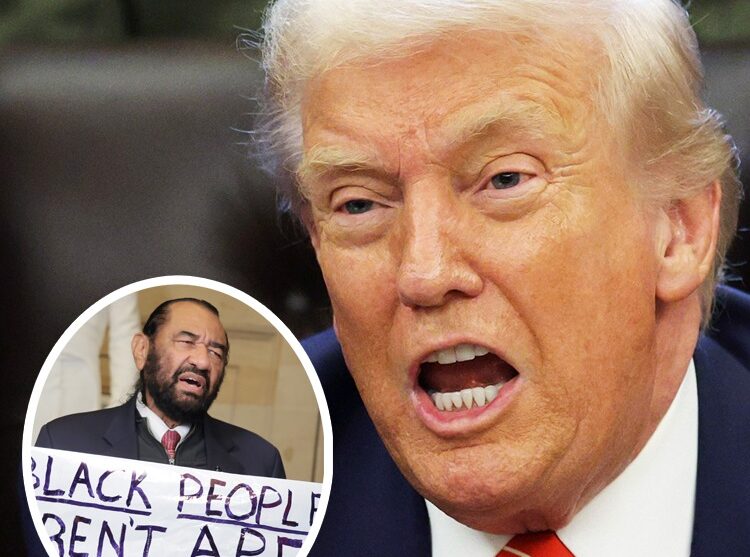
Donald Trump entered to applause, while Al Green exited amid chaos. The Texas congressman’s protest sign quickly became the center of attention on the House floor.
Green’s demonstration responded to a controversial social media post by Trump referencing Barack Obama and Michelle Obama. The moment transformed simmering online outrage into a direct confrontation inside Congress.
Holding a sign reading “Black People Aren’t Apes,” Green forced the issue into the same physical space as the president. His action ensured the remark could not quietly disappear into the rapid cycle of political controversy.
Republicans moved quickly to intervene. Some lawmakers attempted to take the sign, while security stepped in as tensions escalated. The chamber shifted from ceremony to conflict within minutes.
Green later said the protest was deliberate, not impulsive. He described it as a calculated stand against what he called “invidious discrimination” and rhetoric he believes must be publicly challenged.
According to Green, civil disobedience inside political institutions carries risks by design. Removal, criticism, or censure are consequences he considers part of drawing attention to injustice.
The confrontation has fueled renewed debate about decorum versus protest. Supporters argue his action highlighted racism that might otherwise fade, while critics say it disrupted a formal national event.
As discussions of possible censure continue, Green’s message remains consistent. He argues that some language demands immediate confrontation, even at personal or political cost — and even when that means standing alone in a room determined to move on.

