
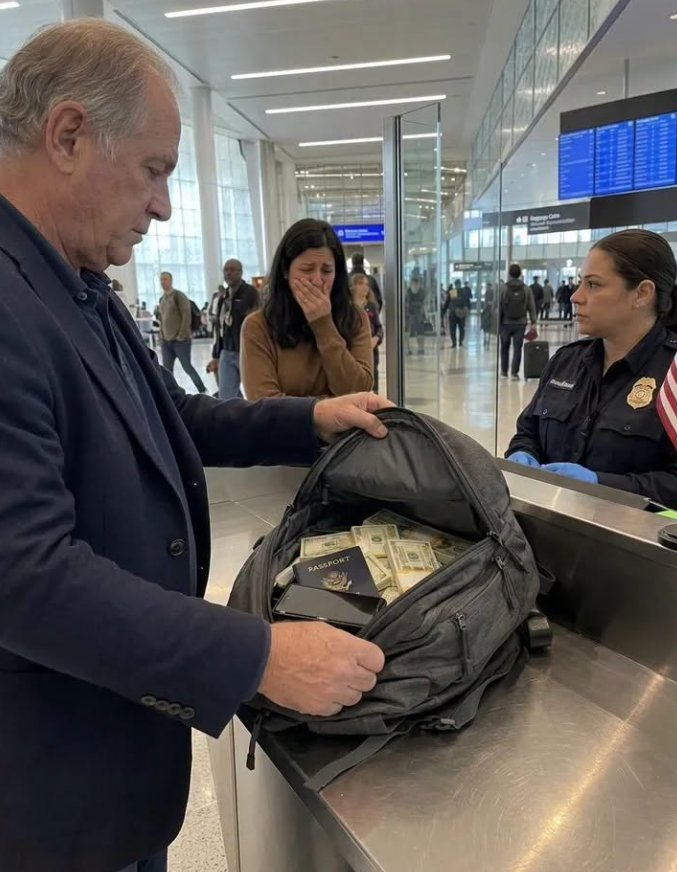
At 8:40 the morning after my son’s funeral, an airport employee called and said David had checked in for a flight at five o’clock. I stood in my silent East Nashville kitchen, gripping the phone while the refrigerator hummed behind me. David had been forty-one, and I had watched his casket lowered the previous afternoon, so I knew he had not walked through Terminal C that morning. The employee explained that someone had activated his reservation and left a navy carry-on marked with my name and number. I drove twenty-two miles to Nashville International with both hands locked around the steering wheel. Inside the bag were David’s passport, $20,000 in carefully stacked cash, financial records, and a small voice recorder bearing a yellow note: “Dad, press play.” Before I reached the end of the first recording, my daughter-in-law Tara appeared beside my car—and the look on her face told me she already knew what I had found.
I had spent thirty-one years as a Davidson County court reporter, listening closely while people told the truth, avoided it, or reshaped it into something easier to defend. Tara had moved through the funeral with perfect composure, while her adult son Brett settled comfortably into the house I had built in 1989. On the recording, Tara spoke with an unfamiliar man about money, starting over, and a plan David had supposedly discovered too late. She quickly claimed David had become involved with dangerous people, but one sentence caught my attention: she said she had not known he recorded the conversation. She never asked whose voice was on the tape or denied that it was hers. That night, instead of confronting her, I listened to every file and studied the timestamps. The longer recording had been made in my own kitchen eleven days before David’s passing, and a second file contained my son’s voice explaining why he had secretly prepared the bag.
David said that over twenty-six months, nearly $274,000 had disappeared from his commercial HVAC company through a fake supplier called Brightline Mechanical Supply. The business was registered to Tara’s brother, Curtis Mahaffey, a man David had never been introduced to despite eleven years of marriage. David had hired forensic accountant Priya Raghunathan after finding payments hidden among ordinary purchases, cash withdrawals, and transfers from a home equity line. Priya later discovered two additional accounts and something even more troubling: a $1.2 million life insurance policy had recently been opened in David’s name, with Tara listed as beneficiary. The application claimed David was five feet nine inches tall, although my son had stood six feet two since high school. Someone else had completed the required medical appointment—and David’s recording captured a man quietly counting the months until the policy would be less likely to receive immediate scrutiny.
Priya and I took everything to Yolanda Briggs, a prosecutor I had known during my years at court, and her economic-crimes team began tracing the evidence without alerting Tara. Records showed the policy application came from Curtis’s address, while the insurance examiner identified him as the man who had appeared for the appointment. Bank statements connected Brightline to hundreds of thousands of dollars taken from David’s company and two other contractors. Tara’s phone history revealed more than one hundred calls with Curtis during the weeks before David died. An attorney reviewed the company accounts, mortgage documents, investment records, estate papers, and insurance application while investigators preserved every digital file David had collected. After additional medical review raised serious questions about his final days, Tara and Curtis were arrested and later faced court proceedings for financial crimes and their role in David’s death. Curtis cooperated with prosecutors, Tara accepted a plea before trial, and the fraudulent policy was canceled before any payment could be made.
At sentencing, I did not spend my statement describing Tara or the money she had taken. I told the court about David—the careful six-year-old who once asked why people stopped at empty intersections, the young man who built a company from one used van, and the employer who quietly used his savings to protect eleven workers during a difficult year. Months later, I finally emptied the last pocket of his carry-on and found a handwritten letter asking me not to let the investigation become the final chapter of my own life. He told me to repair the porch railing I had postponed since 2011, go fishing, and call my elderly sister Judy. I repaired the railing that weekend, although one piece still sits slightly uneven, and I chose not to correct it. I am seventy now, and whenever the house becomes quiet enough to hear the refrigerator from two rooms away, I place my hand on that imperfect rail and remember that my son left me more than evidence—he left me instructions for continuing to live.

