
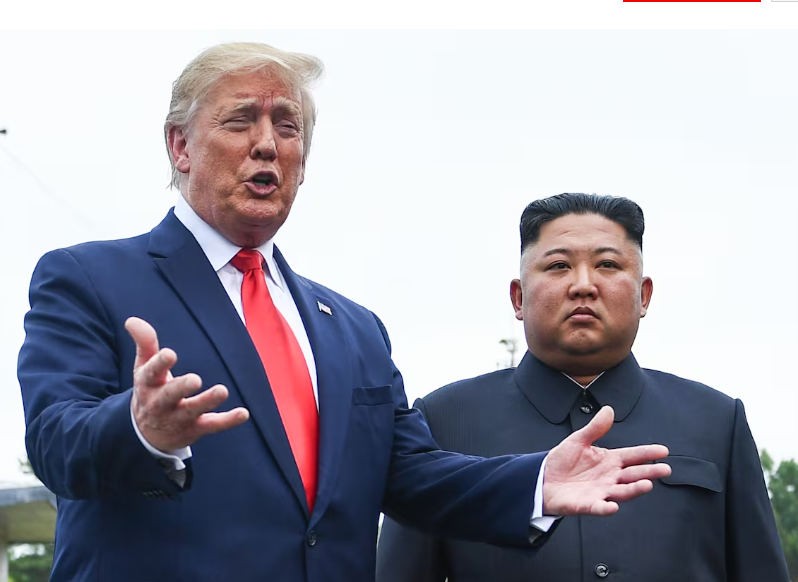
In a recently revealed covert operation, former U.S. President Donald Trump personally authorized a secret mission in early 2019 that involved deploying a SEAL Team 6 unit into North Korean territory. The objective of the mission was to install a listening device to intercept high-level communications involving North Korean leader Kim Jong Un, particularly during the tense nuclear negotiations between Washington and Pyongyang.
However, the mission ended in disaster when the SEALs encountered what appeared to be a civilian fishing vessel. Mistaking the situation as a potential threat, the operatives opened fire, killing two to three North Korean civilians who were later confirmed to be harvesting shellfish. In an attempt to cover up the incident, the team tried to sink the boat and quickly withdrew from the area.
Despite the failure of the mission and the loss of civilian life, several members of the unit were later promoted, and no formal report was submitted to Congressional intelligence committees. This has raised serious concerns about transparency, legal oversight, and the use of military force in politically sensitive regions.
The incident was kept classified for years and has only now come to light through investigative reporting. It underscores the risks and ethical challenges of covert operations, particularly in hostile environments like North Korea.

