
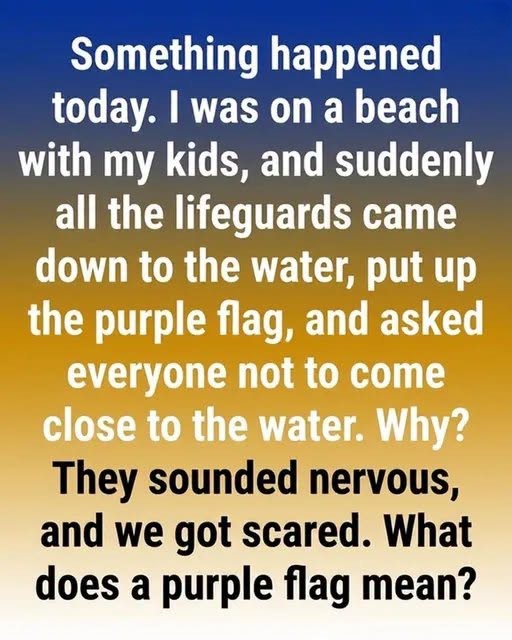
A day at the beach is all about relaxing, swimming, and enjoying the ocean, but paying attention to the warning flags along the shoreline is just as important as checking the weather. While many people recognize green, yellow, and red flags as indicators of water conditions, a purple flag often raises questions. Unlike the other colors, it doesn’t warn about waves or currents. Instead, it alerts visitors to something beneath the surface. Although it may seem concerning at first glance, the flag is simply a way to keep beachgoers informed so they can make smart decisions before entering the water. Understanding what it means can help you enjoy your time at the beach with greater confidence and peace of mind.
A purple flag signals that potentially harmful marine life has been spotted nearby. This may include jellyfish, stingrays, or other sea creatures capable of causing stings or minor injuries if they are accidentally disturbed. The important thing to remember is that a purple flag does not usually mean the beach is closed or that swimming is prohibited. In many cases, people can still safely enjoy the water by exercising a little extra caution. Before heading into the ocean, it’s always a good idea to speak with the lifeguards on duty. They monitor conditions throughout the day and can explain what marine life has been seen, where activity is most common, and whether any specific areas should be avoided.
Taking a few simple precautions can make a big difference. If you’re walking into shallow water, gently shuffling your feet along the sandy bottom can alert stingrays to your presence, giving them time to swim away instead of reacting defensively. Wearing protective swimwear, such as a rash guard, can also help reduce skin exposure if jellyfish are in the area. Parents should pay close attention to young children, who may not recognize potential hazards or understand the importance of avoiding unfamiliar marine life. It’s also helpful to have basic first-aid supplies available for treating minor stings or irritation quickly, allowing you to respond calmly if an unexpected encounter occurs.
The real purpose of the purple flag is not to create fear but to encourage awareness. Beaches use this warning system so visitors can enjoy the ocean while staying informed about changing conditions. By respecting the flag, listening to lifeguard advice, and taking a few practical safety measures, you can continue to swim, explore, and relax with greater confidence. The ocean is home to incredible wildlife, and occasional encounters with marine animals are simply part of the natural environment. Knowing what the purple flag represents allows you to appreciate that environment responsibly while making your beach experience both enjoyable and safe.

