
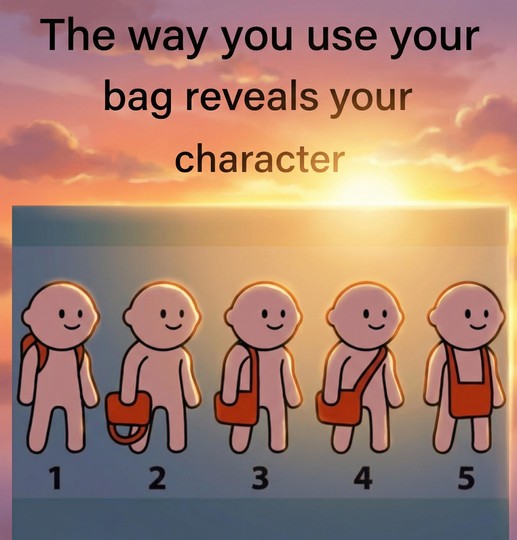
It’s something most people never think twice about, yet you do it every day without realizing it—the way you carry your bag. Whether slung over your shoulder, strapped across your chest, or balanced carefully in your hand, this small habit often reflects more than simple convenience. It can quietly hint at how you move through life, how you handle responsibility, and how you connect with the world around you. While it’s all meant in good fun, these everyday choices can reveal surprisingly relatable traits.
People who favor backpacks often value freedom and flexibility. Carrying a bag on the back keeps the body balanced and the hands free, which appeals to those who enjoy staying active and open to new experiences. Backpack users are often forward thinkers who like to plan ahead but still adapt easily when plans change. Their confident, energetic approach can be motivating, making them natural leaders or friends who encourage others to step outside their comfort zones.
Those who carry bags by hand often appreciate structure and awareness. This style suggests someone who likes to stay in control and prefers to keep personal items within easy reach. Hand carriers are commonly detail-focused and reliable, noticing small things others might miss. They tend to value organization and preparedness, which makes them dependable in both work and personal relationships. Their grounded presence often brings a sense of stability to the people around them.
Shoulder and crossbody bag users usually seek a balance between comfort and practicality. A shoulder bag often suits thoughtful individuals who enjoy observing their surroundings and moving at a steady pace. Crossbody carriers, on the other hand, prioritize security and ease, keeping essentials close while staying mobile. People who carry bags in front may think quickly and creatively, preferring to have everything visible and accessible. While these interpretations are lighthearted, they show how even the simplest habits can reflect the many ways people express their personalities in everyday life.

