
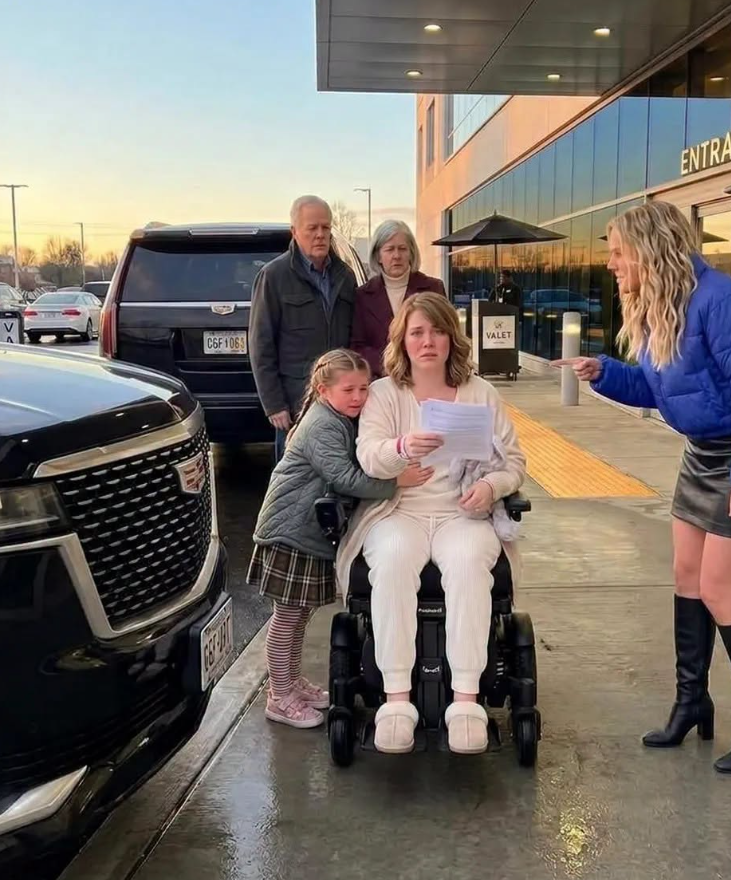
My six-year-old daughter’s voice came through the phone so faintly that I nearly missed the words. I was recovering in a hospital bed after emergency surgery when Lily began crying and begged me not to send her away. Behind her, I heard my sister Madison insist that she was only teaching the child to understand her place in our family. Then Lily offered to sleep in the garage so that future babies could have her bedroom. My husband, Daniel, reached for the phone, but I held it tightly and forced myself to remain calm. I told Madison to place Lily in the guest room, stop speaking to her, and wait for further instructions. The moment the call ended, I contacted the one person my family never expected me to involve—our attorney.
Daniel and I had adopted Lily two years earlier after she had spent much of her early childhood moving between foster homes. It took nine months before she felt safe enough to call me “Mommy,” and even then, she worried she had used the word incorrectly. My parents, Richard and Elaine, smiled beside her in photographs, but privately they treated her as temporary, while Madison repeatedly asked whether we planned to have “real children.” When my appendix ruptured and the infection required several days at St. Mary’s Hospital in Portland, my parents volunteered to keep Lily, and I was too weak to argue. They had contributed exactly $0 toward raising her, yet they still believed they had the authority to decide where she belonged. Our seventy-two-year-old neighbor, Mrs. Alvarez, had shown Lily more genuine affection than they ever had, keeping coloring books in her kitchen and allowing her to water the roses. That difference became painfully clear when Lily called me from my parents’ house and apologized for taking up space in a family that was supposed to be hers.
Before sunrise, a police officer had escorted Lily safely home, where Mrs. Alvarez wrapped her in a blanket and made pancakes. Daniel arranged for our locks to be changed, while I removed my parents from every account and emergency authorization they could access. Madison was taken off Lily’s medical information, school pickup list, and family communication channels. At 7:12 the next morning, my mother called thirty-one times, but neither Daniel nor I answered. Madison sent a furious recording claiming we were destroying the family over a child who was not related by blood, apparently unaware that our attorney was preserving every word. Then my father sent only four words—“You embarrassed your mother”—without asking whether Lily was safe or whether I was recovering. By breakfast, my relatives finally realized that I had not started an argument from my hospital bed—I had quietly removed every piece of power they held over my daughter.
Our attorney, Caroline Reeves, arrived at the hospital carrying a leather folder filled with documents. She treated the situation with the same precision she would bring to an insurance dispute, mortgage review, investment account, estate plan, or court petition. My parents’ emergency guardianship was revoked, our wills were updated, and Daniel’s brother Mark and his wife Jenna were named as Lily’s guardians if anything happened to us. Caroline also prepared written notice ordering my family not to contact Lily directly and later filed for a protective order after Madison attempted to obtain information from her school. In court, Madison claimed she loved her niece, but the judge asked why she had repeatedly described Lily as less than a real child. She had no convincing answer, and the order was approved. My mother appeared at the hospital with flowers and later came to our home demanding forgiveness, but she still blamed Lily’s fear on a misunderstanding. I finally told her that I was not choosing a stranger over my family—I was choosing my daughter over adults who had deliberately made her feel unwanted.
Healing took longer than changing the locks. Lily began hiding crackers and granola bars beneath her pillow because she feared food, rooms, and parents could disappear without warning. We found a child psychologist, created a snack shelf she could use without permission, and repeated the same promise every night: she was our daughter forever, whether we had no other children or enough children to fill a house with bunk beds. Gradually, her drawings changed from locked houses and empty bedrooms to pictures of the three of us standing beneath a yellow sun. Nearly a year later, she celebrated her seventh birthday in our backyard with friends, pink balloons, chocolate cake, and Mrs. Alvarez’s homemade tamales. After blowing out the candles, Lily whispered that she had wished to remain with us forever. I told her she had not needed to spend a wish on something already guaranteed, and she smiled because, for the first time, she believed me.

