
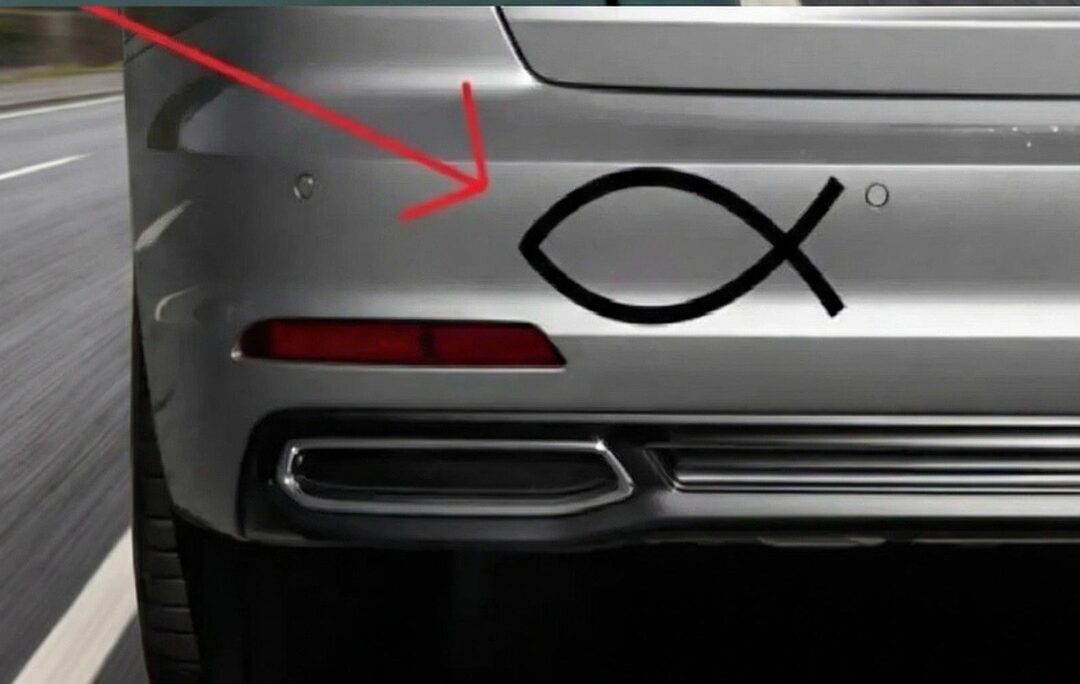
You may have spotted it while waiting at a red light — a small fish-shaped emblem attached to the back of a car. It’s simple, metallic, and easy to overlook, yet it often sparks curiosity. For some, it appears to be just another decorative badge. For others, it carries a meaning that stretches back thousands of years. While it now travels modern highways, the symbol itself has a long and meaningful history.
The fish emblem is commonly associated with early Christian communities. Historically, it was used as a subtle symbol of faith and shared belief during times when open expression was not always easy. Over time, it became widely recognized as a representation of Christian identity, built around values such as compassion, humility, patience, and respect. Though small in size, the symbol carries a message that emphasizes character and connection rather than status or display.
In today’s world, many people place the fish symbol on their vehicles as a quiet expression of their beliefs. For some drivers, it serves as a personal reminder to act thoughtfully and responsibly — especially in moments that test patience, like heavy traffic or stressful commutes. It does not offer protection, guarantee safety, or signal superiority. Instead, it reflects an intention to approach daily life, including driving, with kindness and self-control.
Beyond its religious roots, the fish emblem has also become a form of personal expression. Just as bumper stickers, decals, or custom plates allow drivers to share a small piece of who they are, this symbol adds individuality to an otherwise ordinary vehicle. On busy roads filled with similar cars, small details help people feel seen and understood. Ultimately, whether viewed as a sign of faith, a reminder of values, or simply a personal choice, the small silver fish stands as a quiet symbol of identity. It gently reminds us that every driver on the road is a human being with beliefs, responsibilities, and the opportunity to contribute to a safer, more respectful shared space.

