
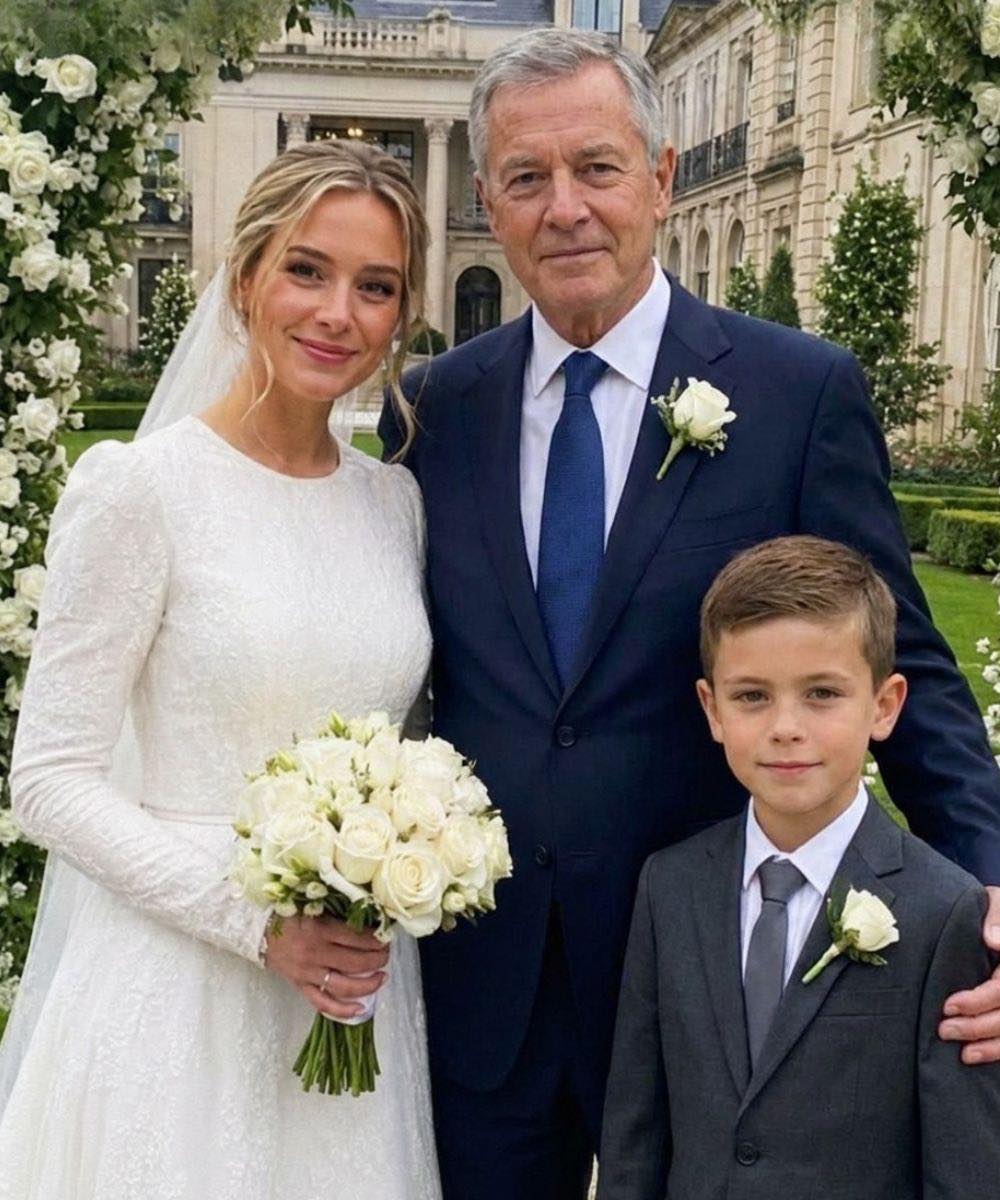
I married an eighty-one-year-old millionaire so my little boy could have the surgery that might save his life.
I believed I had traded away my own future to protect his. But on our wedding night, Arthur locked the office door behind us and said, “The doctors already have their payment. Now it’s time you understand what you actually agreed to.”
I sat beside my son’s hospital bed, watching him sleep and begging silently for a miracle.
Noah was eight years old, smaller than most children his age. His father had left before Noah was even born. I was six months pregnant when he admitted he wasn’t ready to be a parent, packed a bag, and disappeared before I had even bought a crib.
People told me I should give the baby away.
I refused.
I raised Noah on my own. It was exhausting, but somehow, we survived. Then doctors found a serious problem with his heart, and suddenly the fragile world I had built around us came crashing down.
A few hours after one appointment, the doctor pulled me aside.
“Ma’am, Noah’s condition is getting worse. He needs surgery within six months, or the damage may become permanent.”
“How much?” I whispered.
“With the procedure, hospital stay, and treatment included… close to two hundred thousand dollars.”
My stomach turned.
“I clean offices at night and care for elderly patients during the day,” I said, barely able to speak. “I don’t have that kind of money. No one I know has that kind of money.”
“I’m sorry,” he said. “There are payment plans, but—”
“Payment plans won’t save my child in six months.”
He lowered his eyes. There was nothing else he could say.
Noah was sent home two days later with more medicine, more rules, and a warning not to wait too long.
Three weeks later, I found what felt like a miracle.
A wealthy family needed a caregiver for an elderly woman recovering from a stroke. The salary was twice anything I had ever earned.
When I arrived at the mansion, a woman in a gray uniform led me through a long hallway.
“Miss Eleanor is in the sunroom,” she said. “She doesn’t talk much since the stroke. We read to her most days. She likes that.”
“And the family?” I asked.
She paused. “You’ll meet them soon enough. Just try not to be nearby when they start arguing.”
“Arguing about what?”
“Money,” she said flatly. “Always money.”
Within a week, I understood the household.
Arthur, Eleanor’s brother and the man who had hired me, was eighty-one, widowed, sharp-eyed, and suspicious of everyone. He was still walking with a cane, but the staff whispered that his health was failing.
His daughter, Vivien, smiled like honey and looked at people with eyes so cold they made my skin prickle.
Vivien came almost every afternoon, always dressed perfectly, pearls clicking at her throat, a lawyer usually following close behind.
“Daddy, we just need your signature,” she would say sweetly. “It’s about Eleanor’s care plan. We found a more affordable facility.”
“Eleanor stays here,” Arthur answered.
“Daddy, be reasonable. She barely knows where she is anymore. And after you’re gone—”
“She knows exactly where she is, Vivien. She understands more than any of you think.”
One afternoon, Vivien noticed me standing in the doorway with Eleanor’s tea tray.
“And who is this?”
“Eleanor’s caregiver,” Arthur replied. “She’s been here for a month.”
“Hm.” Her gaze moved over me slowly, like a cat studying something it might eventually attack. “How nice.”
A few weeks later, the hospital called while I was reading to Eleanor. I excused myself and stepped into the hallway.
My hands were already trembling before I answered.
“Ma’am, we need Noah back this afternoon for updated scans and testing.”
“Yes,” I said quickly. “Yes, we’ll be there.”
After I hung up, I pressed my forehead against the cool wallpaper and tried to breathe.
When I turned around, Arthur was at the end of the hall in his robe, leaning on his cane, watching me carefully.
“Who keeps calling you and making your hands shake?” he asked quietly.
I realized then that while I had been watching his children fight over his fortune, Arthur had been watching me far more closely than I knew.
“The hospital,” I admitted. “My son needs heart surgery. Urgently.”
“Ah.” Arthur’s expression softened. “I’m sorry.” He tapped a hand against his own chest. “My heart is failing too. Soon enough, I’ll need a caregiver myself.”
“I’m sorry, sir. If there’s anything I can—”
“Arthur,” he corrected gently. “Call me Arthur.”
The next morning, the hospital called again.
“Ma’am, Noah’s latest test results came back. We need to move his surgery forward and begin pre-op treatment immediately. Can you confirm payment by Friday?”
I held the phone so tightly my fingers hurt.
“Friday? I—I need more time.”
But there was no more time.
I ended the call and sank onto the marble floor in Arthur’s hallway. Ten minutes later, he found me there, his cane tapping softly against the tile.
“What happened?” he asked.
“My son,” I whispered. “They’re moving the surgery up. I can’t pay for it. I’ll never be able to pay for it.”
He was silent for a long moment.
Then he said something so shocking I thought I had misunderstood him.
“Marry me. Your son gets his surgery, and I get a wife my children can’t control.”
I shook my head as tears spilled down my face. “I won’t become that woman.”
“Not even to save your son?”
I left the mansion that night with his words echoing inside my head.
Around midnight, I had to rush Noah back to the hospital. The doctors stabilized him, but their warning was clear: surgery could not wait much longer.
The next morning, I called Arthur from the hospital parking lot.
“If I say yes, the money goes to the hospital today.”
“Done,” he said.
I closed my eyes.
“Then yes. I’ll marry you.”
Noah was admitted for pre-op treatment that afternoon. Soon, color returned to his cheeks, and the doctor said he could attend the wedding as long as he didn’t stay long and came straight back afterward.
White roses lined the mansion’s grand staircase. Reporters crowded outside the gates, taking pictures of “the millionaire’s mystery bride.”
I wore a simple ivory dress Arthur’s tailor had rushed overnight.
Noah stood beside me in a navy suit, smiling as if something wonderful was happening. He had no idea I had agreed to the marriage only to save him.
Arthur’s children glared at me throughout the ceremony and left as quickly as they could.
That night, Arthur led me into his office and closed the door behind us.
“The doctors already have their money,” he said. “Now you can finally learn what you really signed up for.”
My stomach dropped as he slid a thick folder across the polished desk.
“Open it,” he said quietly.
With trembling hands, I lifted the cover.
The folder was filled with legal documents. On the first page, my name appeared in bold black letters beside Eleanor’s.
“You are now Eleanor’s legal guardian,” Arthur said. “And the executor of my entire estate. I’ve changed my will so that you receive the largest share.”
I stared at him, unable to breathe properly.
“Why would you do this?”
“Because I know what my children are planning,” he said. “And I refuse to let them win.”
“I know they’ve been fighting over the inheritance,” I said softly.
Arthur nodded. “They’re dividing my estate as if I’m already dead. But it’s worse than that. Vivien wants to send Eleanor to the cheapest facility she can find. I heard her call my sister ‘a burden draining the inheritance.’”
I covered my mouth with one hand.
“My children are waiting for me to die so they can profit from it and throw Eleanor away,” he continued. “But you don’t think like them. You—”
The office door suddenly slammed open.
Vivien stormed inside with two men in dark suits behind her, briefcases swinging at their sides.
“Vivien, what are you doing?” Arthur demanded.
She pointed at me. “You gold digger. I know exactly what you’re doing, and I won’t let you manipulate my father into signing away his fortune. My lawyers have already prepared a petition. Elder abuse. Undue influence.”
One of the men stepped forward with papers in his hand.
“You should read these carefully.”
“And there’s more,” Vivien said, smiling now. “I’ve already spoken to someone at social services. A woman who marries a dying millionaire for money raises serious questions about her child’s welfare.”
My blood went cold.
“Don’t you dare bring my son into this.”
“Then disappear quietly,” she snapped. “Or I’ll make sure your little boy is taken before the week is over.”
“Vivien, stop this,” Arthur said, his voice cracking.
“You stop, Father. You’ve embarrassed this family enough.”
“I said stop—”
Arthur’s hand flew to his chest. His face drained of color, then turned gray. He stumbled forward against the desk.
Then he collapsed onto the carpet.
“Someone call an ambulance!” I screamed, dropping beside him. “Arthur, stay with me. Please stay with me.”
His lips moved faintly.
“The Bible,” he whispered. “Eleanor’s Bible… read it…”
“What?”
Vivien stood frozen for one second before turning sharply to her lawyers.
“Get the documents. Now.”
I rose to my feet and placed myself between them and the desk.
“You will not touch a single paper in this room.”
For the first time in my life, I wasn’t trembling because I was afraid.
I was trembling because I was furious.
“Move,” Vivien hissed.
“Your father is lying on this floor fighting for his life, and you’re reaching for paperwork,” I said. “You want to accuse someone of elder abuse? Look at yourself, Vivien.”
Sirens wailed in the distance. Someone on the staff must have heard the shouting and called for help.
Arthur was admitted to the ICU that night.
One week later, I faced Vivien in court. Arthur’s lawyer, Mr. Hensley, stood beside me with a leather folder held tightly against his chest.
“Your Honor,” Vivien said, “this woman married my dying father for his money. She manipulated a vulnerable old man.”
“Your Honor,” Mr. Hensley said calmly, “may I submit documents signed by Mr. Arthur W. before the marriage?”
The judge nodded.
“These are guardianship papers for Eleanor,” Hensley explained. “And this is a sealed letter Mr. W. instructed me to deliver only if his daughter filed suit.”
Vivien’s face went pale.
“That letter is not admissible.”
“It is notarized,” Hensley said. “And it concerns Eleanor’s care.”
The judge opened it slowly and began to read.
“My daughter Vivien has been preparing transfer papers for my sister, Eleanor, without Eleanor’s consent. She intends to move her from my home into the cheapest facility available, then use the savings to strengthen her claim over my estate.”
“That’s a lie!” Vivien shouted. “Eleanor doesn’t even understand what’s happening.”
Hensley reached back into his folder.
“Then perhaps Ms. Vivien can explain the letters Eleanor hid inside her Bible. Written over the last six months. Dated. Signed. Witnessed by two household staff members.”
Vivien went still.
Hensley handed the letters to the clerk.
The judge read them in silence.
Then he looked up at Vivien.
“These letters state that Eleanor repeatedly refused to leave her brother’s home,” he said. “They also state that you attempted to pressure her into signing documents after her stroke.”
“I was trying to be practical,” Vivien snapped.
Hensley slid another document forward.
“We also have the unsigned transfer packet from the facility, along with emails showing Ms. Vivien requested the lowest-cost placement available before Mr. Arthur W. had even passed.”
The judge folded his hands.
“I find no evidence that Mrs. W. manipulated Mr. Arthur W. I do, however, find clear evidence that Ms. Vivien W. attempted to override Eleanor’s stated wishes for financial gain.”
Vivien opened her mouth, but no words came out.
“Mrs. W. will remain Eleanor’s legal guardian,” the judge continued. “Ms. Vivien W. is removed from any authority regarding Eleanor’s care. I am also referring these documents for review in probate court.”
The gavel fell.
Three weeks later, Noah squeezed my hand in the hospital hallway. His scar was healing, and his cheeks were pink again.
“Mom,” he whispered, “are we finally safe?”
I kissed his forehead.
“Yes, baby,” I said. “We’re finally safe.”
Arthur passed away peacefully that winter. Eleanor lived four more gentle years under my care.
And the foundation I later built in their names now pays for surgeries for mothers who once stood exactly where I had stood—terrified, ashamed, and one impossible decision away from losing everything.

