
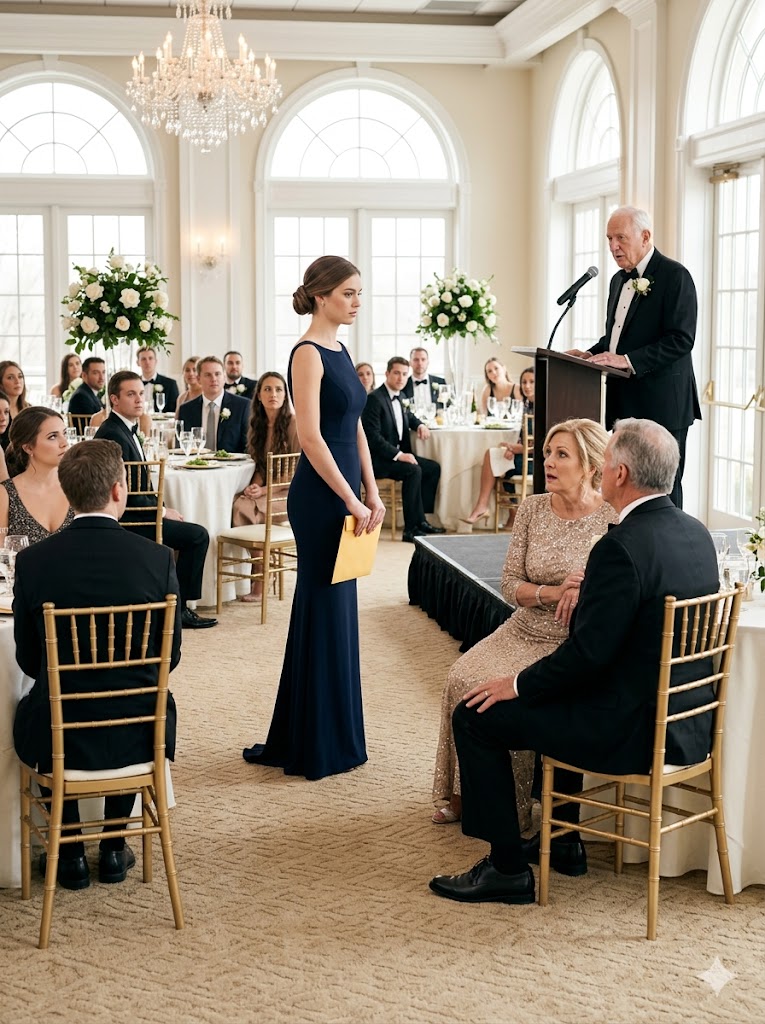
The Father Who Gave Everything
My name is Arthur Miller. I am seventy-one years old, a retired electrical technician from Pennsylvania, and for most of my life I believed sacrifice was the purest form of love.
I grew up poor enough to understand what instability feels like. Winters meant patched coats, overdue bills, and parents carrying worries they never spoke aloud. When I became a man, I promised myself my own family would never live under that kind of fear.
So I worked. Long shifts on frozen power lines. Storm repairs in dangerous weather. Weekends away from home. Anything it took to provide stability for my wife, Eleanor, and our son, Julian.
Back then, I thought every hour I gave away would someday return as closeness, gratitude, and family loyalty. I did not yet understand that love without wisdom can slowly become a door people learn to walk through without knocking.
Eleanor used to warn me gently that I gave Julian too much.
“Love him,” she would say, “but don’t remove every consequence from his life.”
I heard her, but I rarely listened fully. A father often mistakes rescuing for protecting. When Julian needed tuition money, I sold my classic car — the only thing I had ever owned purely for myself.
Later, I transferred half my land so he and his wife, Tiffany, could build the large home they dreamed about. I told myself it was all for family. I told myself one day he would understand.
But sacrifice is not always remembered by the person receiving it. Sometimes, when gifts come too easily, gratitude becomes expectation. And expectation, left unchecked, can quietly harden into entitlement.Everything changed after Eleanor died suddenly in 2020.
Grief reveals people differently. Some grow softer. Others become impatient with pain that interrupts their comfort. At her funeral, Julian seemed emotionally absent, checking his phone repeatedly while I stood barely able to remain upright through the service.
I told myself people mourn differently. I wanted to believe that explanation because the alternative felt too painful.
Not long afterward, he began pressuring me to sell my home to help cover his debts. When I resisted, he suggested I move into a small shed behind his property “temporarily.”
He did not shout. He did not sound cruel. That almost made it worse. His tone carried the coldness of practicality without tenderness, as if my life had become a problem to be rearranged.Over time, more followed.
Loans I co-signed. Promises that disappeared. Savings drained slowly through emergencies that never truly ended. Eventually, my credit collapsed after Julian defaulted on a large television financing agreement he had begged me to help secure.
Still, I kept trying.
That is the difficult thing about parental love. A father does not stop seeing the child he once carried simply because the grown man standing before him has changed.
I kept searching for the boy who once reached for my hand. I kept hoping that if I gave enough, endured enough, forgave enough, he would wake up and remember who I was.
But mercy without boundaries does not always soften another person. Sometimes it only teaches them that your pain has no price.The breaking point came during the holidays in 2024.
Julian informed me I was no longer invited to Christmas dinner because, as Tiffany put it, “the atmosphere needed less tension this year.”
I spent Christmas alone in the quiet house Eleanor once filled with warmth. Her chair sat empty. The rooms felt larger than they had ever felt before. I kept thinking about all the holidays I had worked extra shifts so Julian could have gifts under the tree.
On New Year’s Eve, despite everything, I convinced myself reconciliation might still be possible.
Just before midnight, I walked the short distance to Julian’s brightly lit house. I intended only to wish them peace for the coming year. Even after all the humiliation, some part of me still wanted to be his father.Before I knocked, I heard Julian inside raising a toast.
“To finally having a year without my burdensome father hanging over us.”
People laughed.
Not awkwardly. Not nervously. Freely.
There are moments when humiliation burns so deeply that anger becomes strangely quiet afterward. Standing outside in the cold, I realized I had spent years protecting people who no longer saw me as a father.
To them, I was not the man who had sacrificed comfort, youth, savings, and dignity. I was an inconvenience. A reminder. A burden attached to obligation.
I walked away from that door with something inside me broken, but also strangely awake. For the first time, I understood that pain can become a mirror when denial finally ends.What I did next came from pain, but also from wounded pride.
I hired a local sound truck operator named Gary and recorded a message recounting the years of sacrifice, the debts, the betrayal, and the toast I had overheard outside the house.
The truck parked near the party and broadcast my words loudly enough for neighbors and guests to hear.
The effect was immediate.
Guests left quickly. Julian rushed outside humiliated and furious. By morning, the neighborhood knew everything.
For a short while, I told myself the exposure brought peace. I told myself he deserved to feel a fraction of what he had made me feel.
But the heart is not healed simply because another person is embarrassed. Public humiliation may satisfy wounded dignity briefly, yet it rarely mends the grief underneath.My son’s behavior was wrong. Deeply wrong. Cruelty disguised as convenience leaves lasting scars. But pain answered entirely through humiliation often multiplies sorrow instead of resolving it.
The true turning point came later, not through revenge, but through withdrawal from the cycle itself.
Neighbors who witnessed everything began checking on me. Mrs. Gable brought meals sometimes. Mr. Thompson invited me for coffee. I started spending less time replaying betrayal and more time rebuilding ordinary human connection outside the role of “father who keeps sacrificing.”
Slowly, I understood what Eleanor had tried to teach me years earlier: love without boundaries eventually stops nourishing either person. It becomes a quiet arrangement where one gives endlessly while the other forgets the cost entirely.
I still grieve my son, though he is alive.
But grief changes when illusion finally falls away. You stop begging people to become who they repeatedly choose not to be. You stop measuring your worth by whether they appreciate your sacrifices.
And eventually, if you are fortunate, you discover that peace does not come from destroying someone publicly.
It comes from no longer abandoning yourself privately.