
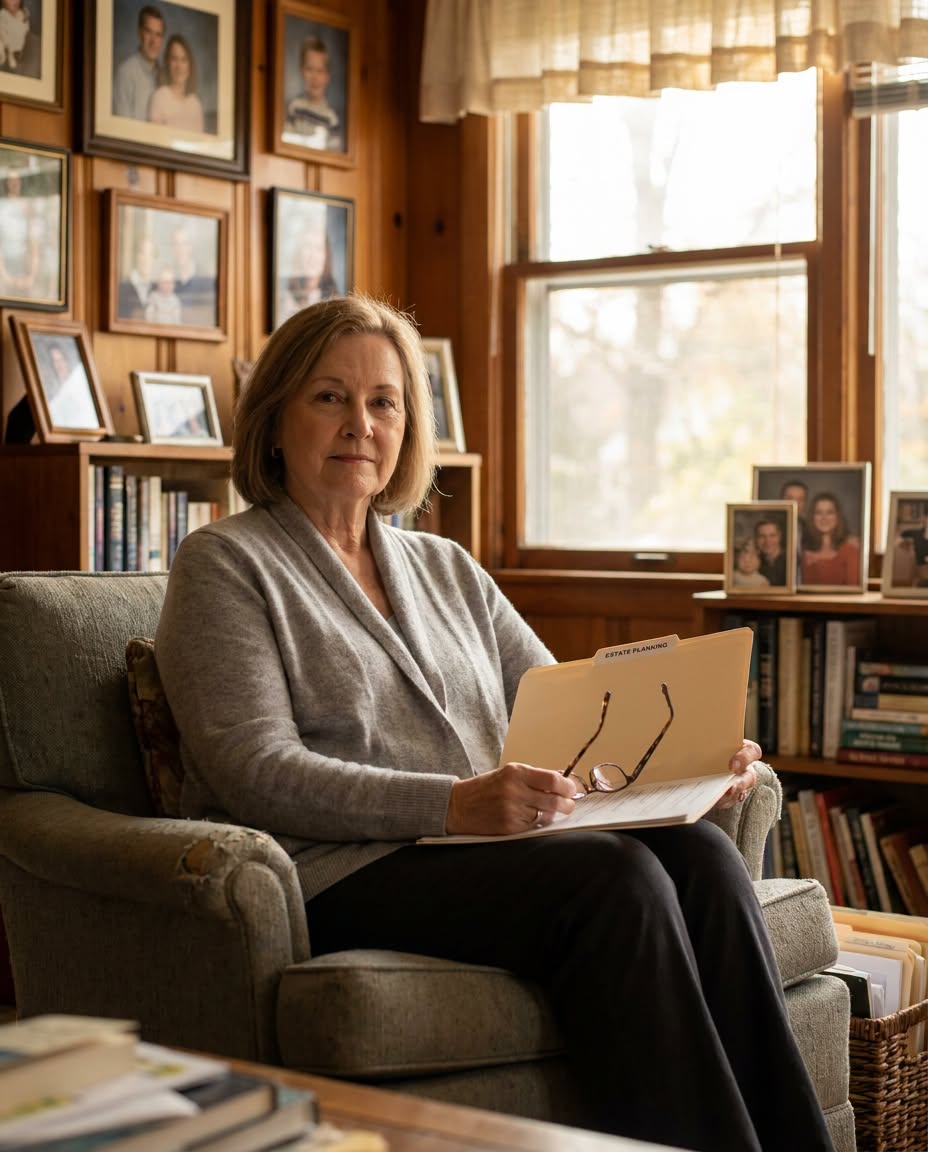
The brochures arrived at Sunday dinner in a neat stack beside my water glass, each one showing the same carefully staged photos of elderly people smiling in common rooms with large windows and potted plants. My daughter-in-law Brynn set them down and said, “We found some really nice assisted living options, Helen. You’d have so much less to worry about.” I looked at the glossy images of chair yoga classes and bingo tournaments while my son Daniel used the voice people reserve for breaking bad news gently. “Mom, the house is too much. The stairs. The yard. You’re alone here.” I’m sixty-seven years old. I’ve lived in the same house in Decatur, Illinois, for forty-three years. My late husband Tom built the back deck with his own hands in 1986. The rose bushes in the garden were planted the year Daniel graduated high school. And the stairs they were worried about were the same stairs I had climbed every single day since 1981. I wasn’t confused, frail, or incapable. I was quiet. And Brynn had decided quiet meant helpless. That evening, after thanking them for dinner and driving home in the 2006 Camry they’d been suggesting I stop driving, I called Maureen Glennon, my estate attorney, and said five words that changed the entire conversation: “They’re trying to sell my house.”
Tom died eleven years ago after forty-one years of marriage, thirty-seven of those years spent working as a union electrician and investing every extra dollar with the discipline of someone who had grown up during a recession and never forgot what instability felt like. He wasn’t flashy. He bought dividend stocks in 1979 and held them through every market cycle, reinvested every payout, and kept spiral notebooks full of calculations in his desk drawer that I found after he passed. He left me a portfolio worth $1.8 million. I kept working it the same way he had taught me — quietly, carefully, without new cars or European vacations or announcements at family dinners. By the time Daniel and Brynn handed me those assisted living brochures, the portfolio had grown to $4.2 million. I owned my house outright. I had no debt. My monthly income from dividends and Social Security exceeded my expenses comfortably. And my son, who visited twice a month and never once asked whether I needed help, had decided I was too old to manage my own life.
Maureen scheduled a family meeting for the following Sunday at my dining room table. She arrived early, placed a thick folder at the head of the table, and waited while Daniel and Brynn walked in looking confused about why a stranger was sitting in my house. “Mom, who’s this?” Daniel asked. I told him Maureen was my estate attorney, and Brynn’s face shifted in a way that told me she had just understood this was not a casual visit. Maureen opened the folder and said she was there to review my financial position so that future conversations about my living arrangements could be based on facts rather than assumptions. She placed a portfolio summary on the table — one page showing $4.2 million in managed investments, the house value at $320,000, zero debt, and monthly income that exceeded my expenses. Daniel stared at the page like it was written in another language. Brynn leaned forward, then back, then forward again, and finally said in a voice that had lost all its confidence, “Is this real?” Maureen’s response was calm and factual: Helen did not require financial assistance, institutional care, or family members making decisions on her behalf. The silence that followed was the first honest moment we’d had in years, because it was the first time Daniel had to consider that his assumptions about me were wrong.
Daniel asked why I had never told him, and I said the truth: because he never asked if I needed help — he decided I did and made plans for my life without checking whether I wanted them. Brynn tried to explain they were “just trying to help,” but helping would have been asking what I needed, not deciding what I couldn’t manage and arriving with glossy brochures for a life I never agreed to. Maureen closed the folder and said something Daniel needed to hear from someone other than me: “Quiet does not mean incapable, and frugality does not mean poverty.” She left, and Daniel sat at the table holding the portfolio summary like it was evidence in a case he’d lost before realizing there was a trial. Over the following weeks, the assisted living brochures disappeared, and Daniel’s visits became different — less about solving problems I didn’t have and more about asking questions he should have asked years earlier. He wanted to know how Tom and I had built the portfolio, what I did with my days, whether I was lonely or just comfortable with quiet. The answers weren’t complicated. I managed my investments through Maureen and a financial advisor Tom had trusted. I volunteered at the library. I gardened. I read. I lived exactly the way I wanted to live, in the house Tom built, on terms I had chosen.
Daniel apologized more than once, and I accepted it because apologies are easier to give than assumptions are to unlearn. Brynn stopped suggesting I downsize, though I suspect she still wishes I lived somewhere that required less explanation to her friends. The house remains mine, the portfolio continues to grow, and the stairs I climb every day feel no different than they did when I was forty. Maureen updated my estate documents to ensure Daniel understands clearly what I own, how it’s structured, and what decisions he will be allowed to make only after I’m gone — which will not be soon, because despite what glossy brochures suggest, aging does not require permission, intervention, or a room with scheduled activities. Last month, Daniel brought his daughter Emma to visit, and she asked why I still lived in such an old house. I told her the truth: because your great-grandfather built the deck, because I planted the roses, because I choose to, and because no one gets to decide where I belong except me. Emma nodded like that made perfect sense, and I thought about how much easier life would be if adults asked questions the way children do — directly, without assuming they already know the answer.

