
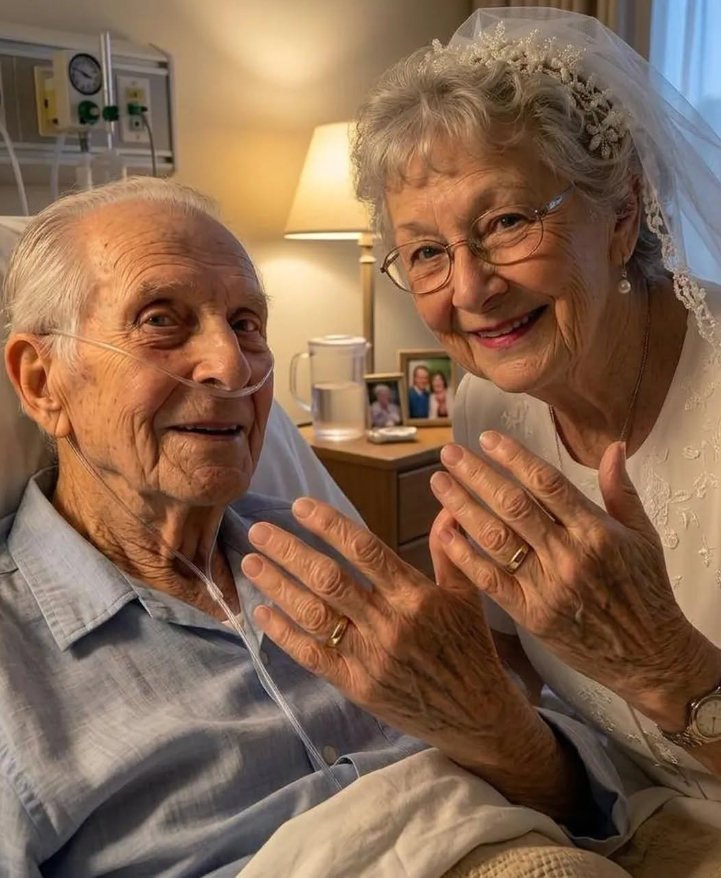
The morning after Thomas’s funeral, a quiet man in a gray suit stood outside my apartment holding a wooden box against his chest. Rainwater darkened his shoulders, and his expression made me grip the doorframe before he said a word. I recognized him as Walter, the attorney who had witnessed our hospital wedding only five weeks earlier. “Thomas instructed me to visit you today—not one day sooner,” he said as I let him inside. He placed the box on my kitchen table beside two unpaid utility bills and the instant coffee I had been stretching until payday. Then he looked directly at me and said, “Nancy, you walked straight into Thomas’s trap.” My hands began trembling because I could not imagine why the man I had loved for fifty-six years would need to trap anyone.
I had returned to my hometown at seventy-three after my pension stopped covering my $1,240 monthly rent, groceries, and medical insurance, forcing me to put on my nursing uniform again. I had never married or raised children because every relationship had been compared, fairly or not, with Thomas, the boy I left behind at seventeen when I accepted a college scholarship. We had promised to write, but pride and distance turned one painful goodbye into more than five decades of silence. Then I entered Room 220 at the hospital and found him waiting beneath a thin blanket, weakened by advanced cancer but still wearing the same gentle smile I remembered from high school. We spent several weeks talking about the lives we had lived separately, and he admitted that he had never married either. During that time, my cousin Raymond—who had barely contacted me in thirty years—began calling constantly to ask about my savings, my will, and whether anyone had authority over my financial affairs. When Thomas proposed from his hospital bed and called marrying me his final wish, I said yes before fear could steal one more year from us.
Our ceremony took place three days later with a nurse and Walter serving as witnesses. Afterward, Walter placed several documents on the rolling table, explaining that they would protect both Thomas’s wishes and my future, and I signed only after he walked me through each page. Raymond became furious when he learned about the marriage, insisting that Thomas was manipulating a lonely woman with a modest pension. One month later, Thomas passed peacefully while I held his hand, and at the funeral Raymond waited until everyone else had left before reminding me that he was my closest living relative. He mentioned our late Aunt Margaret, whose accounts he had managed before she died with almost nothing remaining, and told me we would soon discuss “my affairs.” Now, in my apartment, Walter opened Thomas’s final letter and read the first sentence aloud: “My darling Nancy, forgive me, but I set a trap—and you were never the person it was meant to catch.” Then he lifted the lid of the wooden box, and the truth waiting inside left me unable to speak.
Walter explained that Thomas had created a protected trust funded by his estate, including his family home, savings, and carefully managed investment accounts. The documents from our wedding named Walter—not Raymond—as my durable power of attorney if illness ever prevented me from making decisions, while also requiring independent legal review before anyone could change the trust. Thomas had kept the house free of a mortgage, maintained comprehensive insurance, and written an ironclad will that would be difficult to challenge in court. Inside the box were the deed, the trust papers, and fifty-five letters Thomas had written but never sent—one for nearly every year we had spent apart. His final note revealed that he had known Aunt Margaret through his family’s hardware store and had suspected Raymond was pressuring her for money long before she died. After learning that I had returned to town and Raymond had suddenly taken an interest in me, Thomas arranged to receive care on my hospital floor because he wanted to reconnect with me and place a legal shield around my future. The marriage had been real, his love had been real, and the trap was designed to expose Raymond the moment he tried to claim control.
Raymond arrived three days later, pounding on my door and threatening lawsuits, but Walter was already seated at my table with the documents organized in front of him. When my cousin called me a foolish old woman, I told him I was a woman who had finally been loved without conditions, and he had no place in my finances or my home. He left after Walter calmly explained that challenging the estate would reveal every claim, transfer, and financial record connected to Aunt Margaret. That spring, I moved into Thomas’s house, where I found his old photographs, his favorite chair, and a garden he had continued planting even after he became too weak to tend it. Every Sunday, I opened one of his letters and read it slowly over black coffee, sometimes laughing and sometimes grieving the years we had lost. Thomas could not give us back our youth, but before leaving, he made certain no one could take away my dignity, security, or right to choose my own future.

