
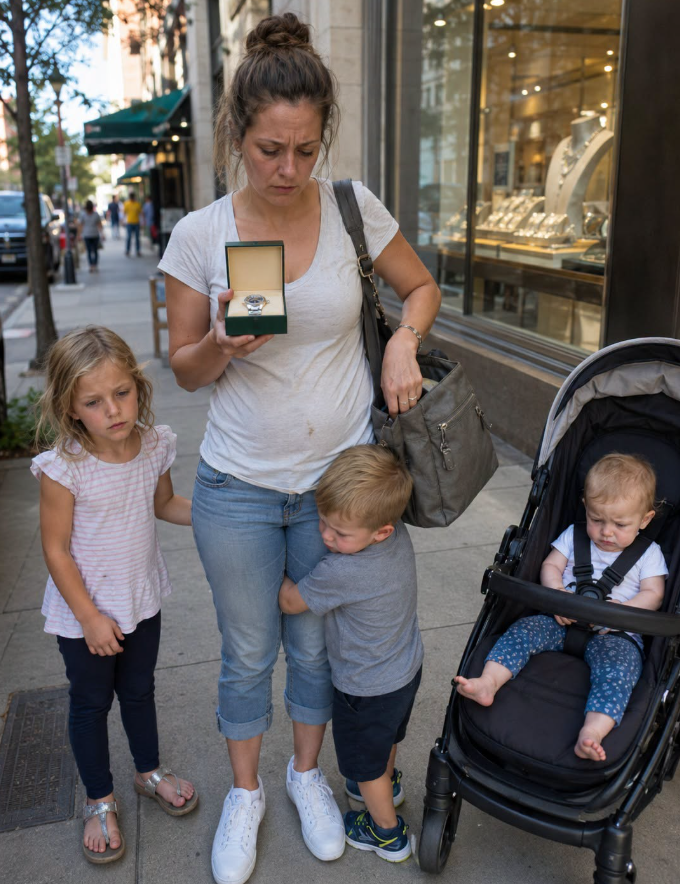
The jeweler barely looked up when I walked into his store with a stroller, a baby carrier, and a vintage watch inside my diaper bag. Fourteen days earlier, my husband Daniel had passed away unexpectedly at just 31 years old, leaving me with three children under five, unpaid bills, and a life I no longer recognized. The watch was one of the few valuable things we had left, a 1978 Rolex Submariner that had belonged to Daniel’s grandfather, Sung-Jin Pak, who bought it after building a successful engineering business after arriving in America with only $140. I knew the watch’s history because Daniel had treasured every detail about it, from the original receipt to the service records. But the man behind the counter only saw a tired young widow who looked desperate. He picked up the watch, barely examined it, and pushed it back toward me. “I’ll give you $50,” he said, “consider it help.”
I stared at him, trying to understand how quickly he had decided my situation without knowing anything about me. He never checked the serial number, never used a loupe, and never asked about the paperwork. He assumed the stroller, the exhaustion, and the grief meant I had no idea what I was holding. Instead of arguing, I quietly opened my diaper bag and placed a worn manila folder on the counter beside the watch. Inside were the original purchase documents, decades of service records, and an official appraisal that completely changed the expression on his face. As he read the first page, his confidence disappeared, and I watched him realize he had made a serious mistake.
The folder proved the Rolex was an authentic vintage piece with complete provenance and a market value far beyond his $50 offer. A certified appraiser had valued it at $21,500, and collectors considered its condition and history extremely desirable. I took the watch to another specialist, Philip Chae, who carefully inspected every detail before making an offer. He explained that the documentation, insurance history, and careful ownership records made it a rare investment piece rather than just an old watch. He offered me $18,000 immediately, while explaining that an estate sale through the right channels could potentially bring more. That money helped me catch up on mortgage payments, handle insurance expenses, and organize my finances while I worked through the legal paperwork connected to Daniel’s estate.
The experience stayed with me because the watch was never only about money. It represented the people who had cared for it before me and the memories attached to it. The first jeweler judged what he saw on the outside, but he never bothered to understand what was underneath. A few weeks later, my mother arrived to help with the children, and I finally felt like I could breathe again. I still missed Daniel every day, but I had learned something important: sometimes the things people underestimate carry the greatest value. The watch found a new owner who appreciated its story, and I found the strength to rebuild mine.

