
My phone chimed while I was drinking tea on my Louisville condo balcony, and one message from my daughter Sarah stopped me cold: “My wedding guests are staying at your farmhouse. Hire someone to clean the rooms by Wednesday.” She wasn’t asking permission; she was giving instructions for a house she apparently still believed belonged to me. For seven years after my husband Tom died, I had struggled to maintain our fifty-acre Kentucky property alone, covering rising taxes, repairs, a failing well pump, and thousands of dollars in upkeep on a fixed income. Sarah rarely asked how I was managing, yet she treated the farmhouse like a free resort for friends, parties, and photographs. Months earlier, I had finally sold the property and moved into a manageable two-bedroom condo. I had told Sarah and her fiancé David directly over dinner, but she dismissed me as “dramatic.” So when she ordered me to prepare the farmhouse for twenty-five wedding guests, I simply replied, “The property is unavailable.”
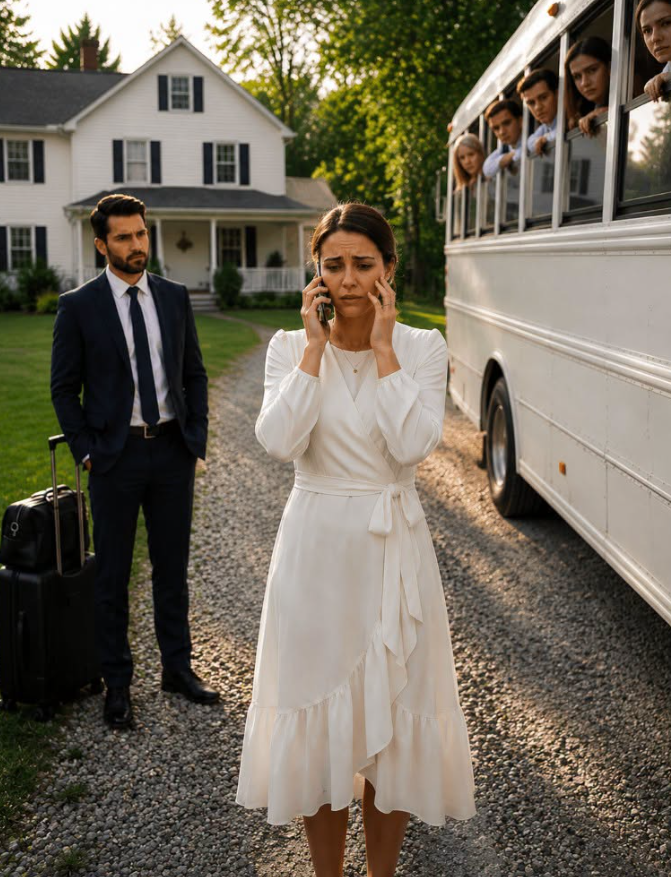
Sarah immediately answered, “You’ll make it available,” then warned me not to ruin her wedding. The problem was that there was nothing I could make available: the farmhouse had belonged since November to Arthur, a retired principal in his seventies who had paid a fair cash price and moved in with his rescue dogs, Boone and Petey. Still, Sarah planned a welcome dinner on his patio, promised accommodations to David’s relatives, and even sent a rental company to install a large wedding tent. When Arthur turned the workers away, Sarah called screaming that I had hired someone to block the driveway. I told her once more that Arthur was not an employee—he was the owner. Yet two days later, she arrived anyway with two charter buses full of wedding guests, and that was when the gate finally opened on the truth she had refused to hear.
Arthur calmly informed everyone that they were standing on private property and needed to move the buses before his mulch delivery arrived. Sarah called me from the driveway, demanding that I order him aside, while David insisted the whole situation must be some elaborate stunt. I explained that there was no attorney dispute, no hidden clause in an estate, and no court battle that could magically return the farmhouse to me. The sale had closed legally months earlier; the insurance, utilities, taxes, and every investment connected with maintaining the land were now Arthur’s responsibility. Even the old farm equipment Sarah once suggested I sell to fund a $2,000 catering deposit had transferred with the property. My mortgage worries and repair bills were finally behind me, and I refused to create new financial problems by paying for emergency hotel rooms. With the wedding only hours away, Sarah and David were forced to call hotels themselves, eventually finding a modest motel near the airport and delaying the ceremony more than two hours.
For three weeks afterward, Sarah said nothing, and I didn’t chase her. I went to book club, planted basil and mint on my balcony, and discovered how peaceful life could feel when every family emergency was no longer automatically mine to solve. Eventually she called and quietly admitted, “I guess I should have listened when you said you sold the place.” It wasn’t a perfect apology, but it was the first time she had acknowledged what happened without blaming me. When she asked to come over for dinner, I suggested coffee downtown another month instead—neutral ground, with boundaries I could actually keep. Later that afternoon, Arthur sent me a photograph of Boone and Petey sleeping in the sunshine on the farmhouse porch beside a new rocking chair. Looking at it, I realized the house was exactly where it belonged, the memories were still mine, and for the first time in years, so was my time.

