
The crutch slipped on the wet kitchen floor just as Talia reached for the birthday cake, and for one terrifying second her broken leg took the full weight her doctor had forbidden her to put on it. Her mother-in-law Diane caught her beneath the arms before she hit the tile, but the glass cake plate slammed onto the counter and split the frosting clean through the middle. Donald came running in from the pool, dripping in new swim trunks, cocktail still in hand. He looked past his injured wife, past his sixty-something mother struggling to hold her upright, and stared at the cake. “Please tell me we can fix that,” he said. Diane’s face changed. When she told him his wife had nearly fallen, Donald shrugged and replied, “But she didn’t,” then reminded Talia that thirty guests were waiting outside.
Three weeks earlier, Talia had fractured her leg falling from the back porch, and the doctor had ordered strict rest, elevation, and no weight-bearing while the bone began to heal. Donald had sat beside her during the appointment and nodded at every instruction, but his concern lasted barely two days before the old patterns returned. For twelve years, Talia had carried nearly all the invisible labor of their marriage—birthdays, gifts, calendars, meals, family obligations, parties, social arrangements—so efficiently that Donald had come to believe life simply organized itself around him. A week before his fortieth birthday, he announced he had invited thirty people for a pool party and expected appetizers, ribs, salads, cocktails, and Talia’s layered cake. She refused and proposed either a smaller dinner or catered food. They eventually agreed she would make only three appetizers and the cake while Donald handled everything else. Two days before the party, she discovered he had canceled the restaurant order because it was “too expensive,” bought piles of raw food instead, and simply assumed she would take over because, as he put it, “You always figure it out.”
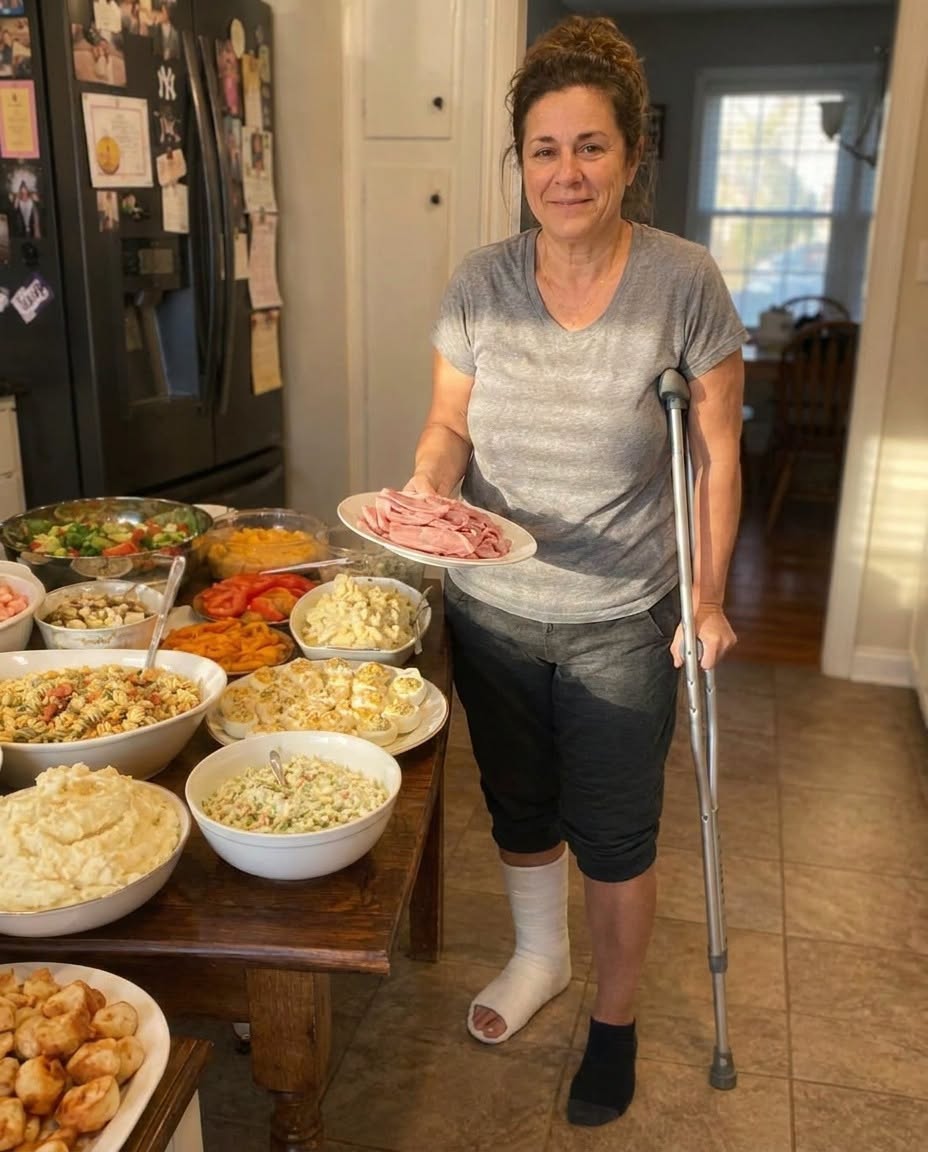
At four o’clock on the morning of the party, Talia got out of bed despite knowing she should not. Sitting in a rolling office chair, she spent hours preparing food while using her good leg and aching shoulders to move herself around the kitchen. Donald slept until nine, tasted one of the dips, announced that it needed salt, then disappeared outside to enjoy his own celebration. Worse, Talia overheard him telling guests that she had insisted on cooking everything because she “loved hosting” and that he could not have stopped her if he tried. One guest, Misha, came into the kitchen, looked carefully at Talia’s cast and exhaustion, and told her something no one had ever said before: “You don’t have to make this look normal for him.” Then Diane arrived. Donald had told his mother the party was catered and that Talia had happily chosen to make it elaborate. As Diane slowly learned the truth, she confessed that Donald’s father had treated her the same way for thirty years—expecting flawless holidays, helping only when others were watching, and relying on her silence to make everything appear effortless. “I taught him what marriage looked like,” she admitted. “I taught him there was one person who produced the comfort and another who enjoyed it.”
Minutes later came the fall, the cracked cake, and Donald’s indifference. This time, when he asked Talia whether she was okay, she did not give the automatic answer that had kept their marriage functioning for twelve years. “No,” she said. Diane walked outside, shut off the music, and ended the party herself. In front of the guests, she demanded that Donald explain why his wife had been cooking since four in the morning on a fractured leg. When he tried to repeat the story that Talia had volunteered, she corrected him publicly: she had asked him to cancel, cater, or reduce the guest list; he had agreed, broken the agreement, and then rewritten the story for his friends. Diane admitted her own role too, telling everyone that decades of silent endurance had taught her son to mistake women’s suffering for normal married life. Donald left that night to stay with his friend Theo. The next morning Talia set clear conditions before any reconciliation could even be discussed: practical help during her recovery, marriage counseling, full accountability without excuses, and the understanding that forgiveness was not guaranteed simply because he completed a list.
Before leaving the party, Diane had taken out the gift she originally intended for Donald: a handwritten family recipe book containing generations of women’s cooking. Instead of giving it to him, she placed it in Talia’s hands. “Tradition without care is just another burden dressed up as a gift,” she said. The next morning, with her leg finally elevated and someone else bringing her coffee, Talia understood why the book mattered. Those recipes represented decades of work women had been expected to perform beautifully and silently, with no evidence of what the work cost them. She decided she would cook from it someday—but only because she wanted to, for people who deserved the effort, never again because fear, shame, or expectation had cornered her into service. Donald had spent twelve years trusting that she would rather break herself than let the appearance of their marriage collapse in public. For the first time, she let the appearance collapse instead. What she protected afterward was not the party, the cake, or even the marriage. It was herself.