
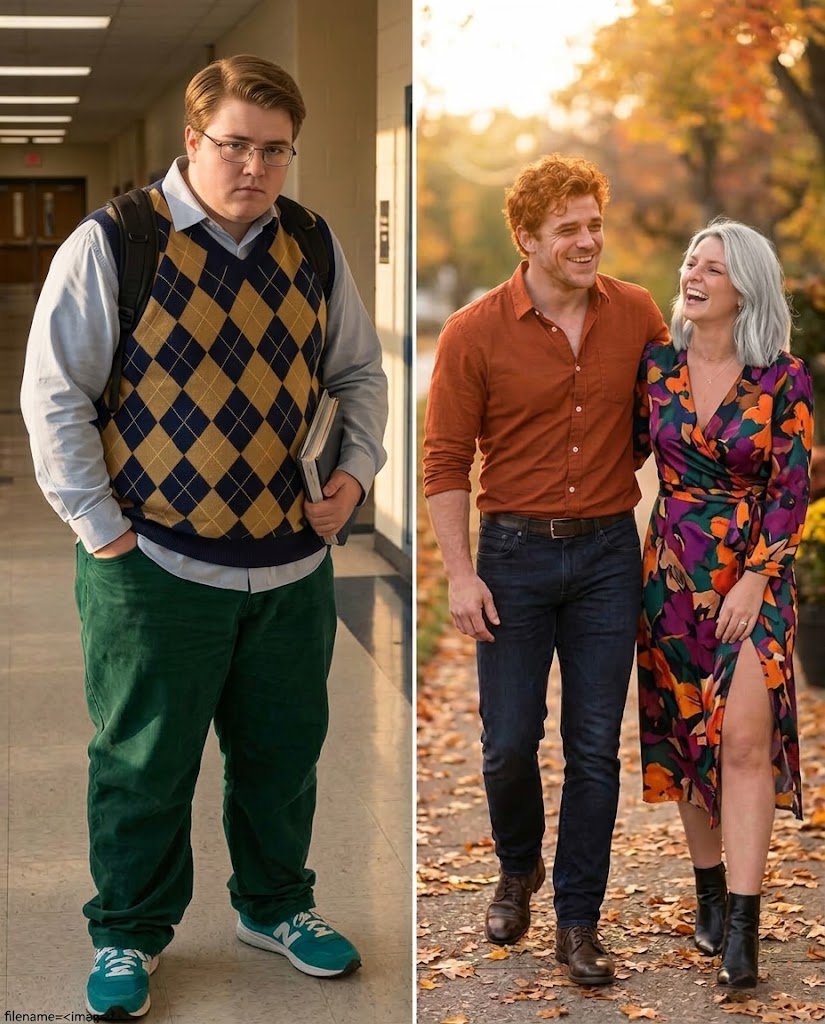
My thumb stopped in the middle of a swipe. Twelve years had passed since high school, but I recognized Madison immediately—the tilted smile, the polished blonde hair, the face that used to appear at the end of a hallway just before somebody laughed at me. I was thirty now, six-foot-three, fit, successful, and living in an apartment I had worked a decade to afford, yet for a few seconds I was sixteen again: oversized hoodie, lunch in the library, praying nobody noticed me. On impulse, I swiped right. The screen lit up almost instantly: IT’S A MATCH. Her first message said I had kind eyes and asked what I did for work. I laughed out loud because the same girl had once told an entire cafeteria my eyes looked like a sad cow’s. She did not recognize me at all.
Back then, Madison had been the prom queen everybody adored and the person who made school feel dangerous to me. She mocked my clothes, my weight, my awkwardness, and the way I carried myself, and she was good enough at it that everyone else usually laughed before I could decide whether to react. I survived by retreating into schoolwork. College became an exit; work became proof that I could build something nobody from that hallway controlled. Therapy helped with the rest. I lost weight, gained confidence, found friends I trusted, and eventually learned to look in a mirror without hearing other people’s voices. My friend Marcus warned me not to confuse curiosity with revenge when I told him about the match. He was right to ask what I wanted from it. Part of me wanted to see Madison’s face when she realized who I was. Another part wanted to know whether people really changed as much as my mother always insisted they did. I agreed to meet her for a drink.
At the wine bar, she was charming until the conversation drifted toward high school. Then, without knowing who sat across from her, Madison began telling me about “this huge weird kid” she and her friends used to torment for entertainment. She repeated two of the nicknames they had used for me and laughed as if the story had aged into something harmless. I asked whether she ever wondered what became of him, or whether the jokes might have landed harder than she understood. She shrugged. “Kids are kids. He needed to toughen up.” That answer told me more than an apology ever could. Then the date took another turn. She admitted she had researched my company after we matched, found a magazine feature about my work, and was hoping I might help her get into the industry. The warmth, the flattering questions, the instant connection—it was not entirely romantic interest. She wanted access. Sitting there, I realized the most important thing about Madison had not changed: she still seemed to measure people by what they could provide.
I waited until she finished talking and repeated the old nicknames back to her, word for word. The recognition was immediate. Her face lost its color. I told her my name and let the silence do the rest. She apologized quickly, said we had been kids, then began explaining that she was having a difficult year and really did need professional help. I told her I was not interested in punishing her, but I was not going to open doors for her either. “You didn’t match with me,” I said. “You matched with my job title.” More importantly, I told her the boy she had mocked had spent years becoming someone who no longer needed her approval, attention, or regret. That was the boundary I needed—not revenge, not humiliation, and not some elaborate public reckoning. I paid my half of the bill, wished her well, and left.
Outside, the air felt cooler than it had when I arrived, and my chest felt unexpectedly quiet. I had spent years imagining that closure would look dramatic: an apology, a confession, maybe the perfect sentence delivered to the person who once made me feel small. It turned out to be much simpler. Madison’s opinion no longer had any practical value in my life. Her failure to recognize me had seemed like the twist when we matched, but the real change was that I finally recognized myself without needing her to. When Marcus called to ask how the date went, I told him, “She never had any power over me. I just didn’t know it yet.” Then I deleted the app. Not because I was done with dating, but because for one night, at least, I had stopped looking backward to find out who I had become.

