
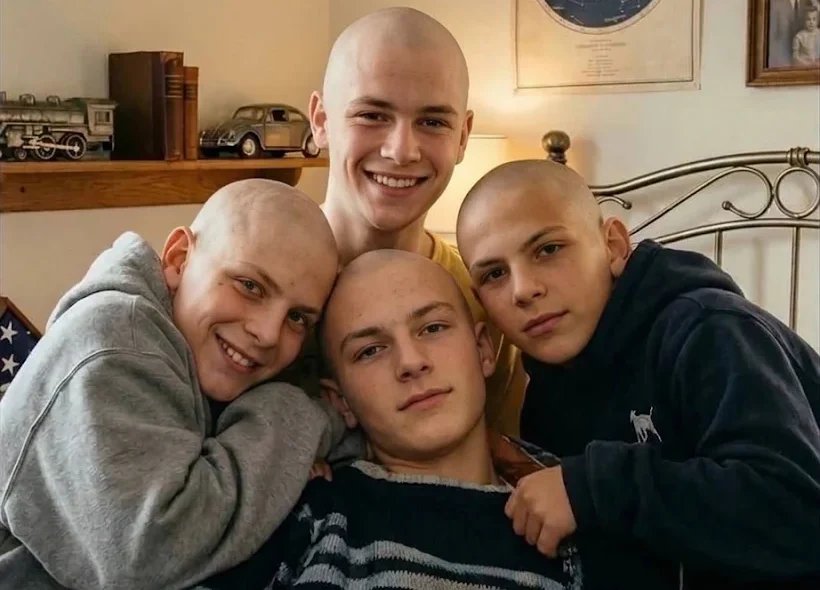
The electric clippers buzzed through our bathroom as three nervous 13-year-old boys prepared to surprise a friend battling cancer. Hair covered the floor, and Ryan couldn’t stop making jokes about our terrible new looks. Jake went next, and I followed, convinced we were doing something extraordinary. Our classmate Daniel had lost his hair during chemotherapy and feared returning to school. We wanted him to know he wouldn’t face that moment alone. When his mother, Margaret, opened the door the following morning, she stared at our shaved heads and began crying. Daniel hugged us all, and for years, I believed I understood exactly why that morning mattered.
Seventeen years later, Daniel invited us to his 30th birthday dinner. We hadn’t all been together in years, and the reunion began with familiar jokes and laughter. Then Daniel revealed that his mother had passed away three months earlier. While sorting through her belongings, he’d discovered our childhood photograph and several handwritten letters. One was addressed to Ryan, who suddenly became unusually quiet. As Daniel explained what his mother had been dealing with during his cancer treatment, Ryan admitted there was something we’d never known about the day we shaved our heads. And when he finally unfolded Margaret’s letter, everything we remembered about that morning changed.
Ryan explained that his stepfather had cut his hair unevenly as punishment after an argument about how he treated Ryan’s mother. His constant jokes had concealed fear and embarrassment. Shaving his head had been both an act of friendship and an escape from hiding what happened at home. But Margaret’s letter revealed something even more important. While managing Daniel’s medical appointments, treatment concerns, and insurance paperwork, she had quietly helped Ryan’s mother find support. She drove her to meetings with a counselor and people who could explain her legal options, including whether an attorney or court protection might be necessary. With assistance from relatives, Ryan and his mother eventually moved somewhere safe. Margaret had never treated their hardship as a financial burden or an unwanted responsibility. She understood that protecting a family was a greater investment than anything money could purchase.
Ryan read the letter through tears. For seventeen years, he’d believed his mother had managed everything without realizing how much help she’d received. Margaret had written that courage wasn’t the absence of fear; sometimes it meant asking someone for help despite being frightened. Later that evening, we visited her grave together. Daniel remembered the mother who had carried him through illness, while Ryan remembered the woman who had helped his family find safety. Jake and I stood beside them, realizing how little we’d understood as children. We’d thought our shaved heads were the greatest gift we could offer. But that birthday reunion reminded us that friendship can mean noticing the struggles someone cannot explain. And the woman who quietly taught us that lesson was Margaret, whose kindness continued bringing four old friends together long after she was gone.