
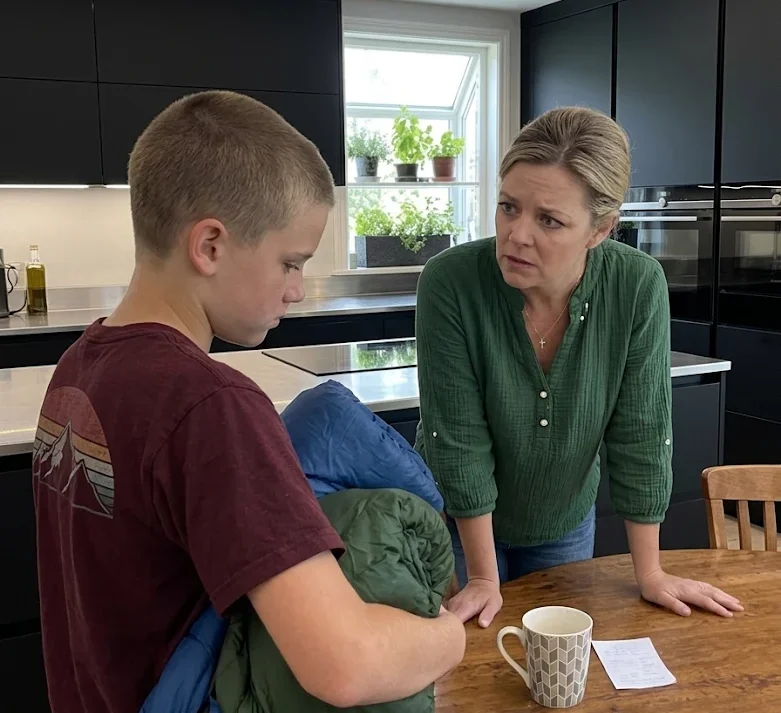
At 4:37 on a Sunday morning, April Donnelly heard the kitchen door open. When she switched on the light, her nine-year-old son, Finn, was standing there in his pajamas, carrying two dusty sleeping bags. His knees were covered in dirt, his jacket was damp, and one shoe was wrapped in a plastic shopping bag. April immediately noticed the familiar red sleeping bag with the name OWEN written across it. Owen was Finn’s best friend, a boy who had been part of their family for years. April had always believed the boys were spending their Friday nights watching movies and playing video games at Owen’s house. But when she asked where Owen was, Finn lowered his eyes and quietly answered, “He’s still inside the car.”
April struggled to understand what she was hearing. Finn explained that Owen had been spending the weekends in an old Buick parked behind his house because his stepfather, Wade, wouldn’t let him sleep inside. The situation had continued for nearly eight weekends while Owen’s mother, Beth, worked overnight shifts at Mercy Hospital. Finn had stayed beside his friend because Owen was frightened and didn’t want to be alone. But that particular morning, an orange notice left on the car’s windshield warned that the vehicle could be towed after 6 a.m. Finn also revealed that Owen’s asthma had been getting worse, and his inhaler was nearly empty. Then came another shocking detail: Wade had told both mothers completely different stories about where the boys were staying. April grabbed her keys, called Beth, and drove toward Walmart, where the Buick had been left. What she discovered in that parking lot would expose a much bigger deception.
When April opened the Buick’s back door, she found Owen wrapped in a thin blanket, shivering and struggling to breathe. His mother immediately joined them by phone, and April called 911 when she recognized the seriousness of his breathing difficulties. Paramedics arrived and took Owen to Mercy Hospital for treatment. Meanwhile, a responding police officer began investigating the circumstances surrounding the boys’ overnight stays. The investigation uncovered an online vacation-rental listing advertising Beth’s three-bedroom home for $289 per night. Wade had allegedly been renting out the property on weekends without Beth’s knowledge, collecting money while telling her that Owen was staying with April. He had also told April that Finn was welcome at his house. Investigators later connected the arrangement to Wade’s financial problems, including substantial gambling-related debts. The case eventually reached court, where an attorney representing Wade argued that financial pressure had influenced his decisions. However, the judge considered the conditions the children had endured, the evidence presented, and the risks involved. Wade pleaded guilty to child-endangerment charges and received a prison sentence, probation, and an order prohibiting contact with either boy.
In the months that followed, Beth and Owen began rebuilding their lives in a new home, while both boys received support from a counselor. Beth changed her work schedule, and the families remained close. One evening, April discovered a folded piece of notebook paper hidden inside Owen’s red sleeping bag. It contained a handwritten list titled “Things Finn Did.” Each entry described a different weekend: sharing pretzels, telling stories about Finn’s father, holding hands during difficult nights, and counting breaths when Owen struggled with his asthma. The final entry described the night Finn walked home in the darkness to get his mother. At the bottom, Owen had written, “Finn is my best friend. He’s braver than any grown-up I know.” April carefully returned the note to the sleeping bag. Today, the boys still enjoy camping together, but now their sleeping bags are placed inside a tent in April’s backyard, with both mothers nearby. The two sleeping bags that once represented a frightening secret have become a reminder of a friendship that endured, and of the night one little boy finally found the courage to ask an adult for help.