
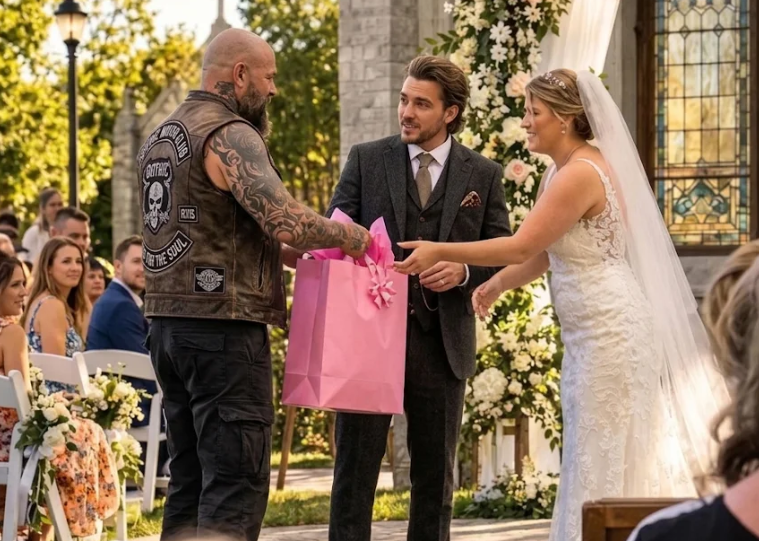
The motorcycle engine suddenly interrupted the wedding ceremony, sending guests turning toward the driveway. A towering, bearded man in a black leather vest stepped forward, carrying a small pink gift bag. My daughter’s fiancé immediately demanded that someone stop him, but Florence quietly told her father not to interfere. I had no idea who the stranger was or why he had chosen such an important moment to appear. What I did know was that my daughter had seemed distracted all morning, repeatedly looking toward the entrance instead of focusing on the ceremony. Then the stranger reached her, held out the bag, and said something that made her forget the nearly 200 guests waiting to see her get married.
Four days earlier, I had noticed Florence barely touching her breakfast while repeatedly checking her phone. When I asked whether she was having second thoughts, she blamed wedding stress. She and Jeremy had been together since college, and our family had always believed they made a wonderful couple. But over the years, Florence had gradually stopped choosing many of the things she once loved. She had given up her preferred outdoor ceremony, replaced the wildflowers she wanted with roses, and agreed to wear expensive white heels instead of her favorite red sneakers. The biker, whose name was Frankie, had known Florence since her college days, when he worked at a neighborhood auto repair shop. He had recently seen her again after she brought her car in for service. Now, as he stood before her wedding guests, he delivered a message that left everyone wondering what was inside the bag.
Florence opened it and pulled out a worn pair of red sneakers. I recognized them immediately. She had bought them with her first paycheck and worn them for years, even after the soles became badly worn. Frankie explained that he had noticed the shoes in a donation bag at his shop and asked Florence whether she truly wanted to give them away. His question had stayed with her. She later told us she had arranged for him to bring the sneakers to the ceremony because she feared she would go through with the wedding without ever admitting how uncertain she felt. In the bridal room, she explained that Jeremy often had a reason for rejecting her choices, until she began saying, “Whatever you think.” When she finally spoke honestly with him, she admitted she was no longer sure she wanted to marry him. The expensive venue, wedding payments, and waiting guests could not answer that question for her. After a difficult conversation, Florence made her decision: she would not exchange vows that day.
Most guests eventually left, while close family stayed for an unexpected meal together. Jeremy remained nearby, and Florence told him she needed time to understand what she wanted from their relationship. There were no dramatic speeches or easy answers, only a difficult decision made before a commitment neither person could simply undo. Later, I found the expensive wedding heels in the bridal room and carried them outside. Florence was sitting with her father, laughing quietly, her red sneakers visible beneath her wedding dress. I held up the heels and asked what she wanted me to do with them. She simply said, “Put them in the car.” This time, I didn’t offer advice or try to change her answer. I placed the shoes on the back seat and looked toward my daughter. The wedding had not gone as planned, but she had finally made a choice without waiting for someone else to approve it.