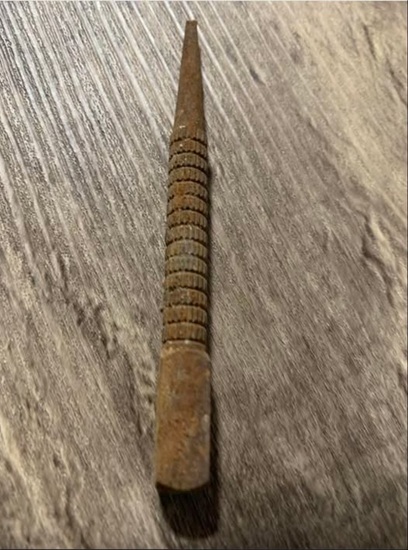
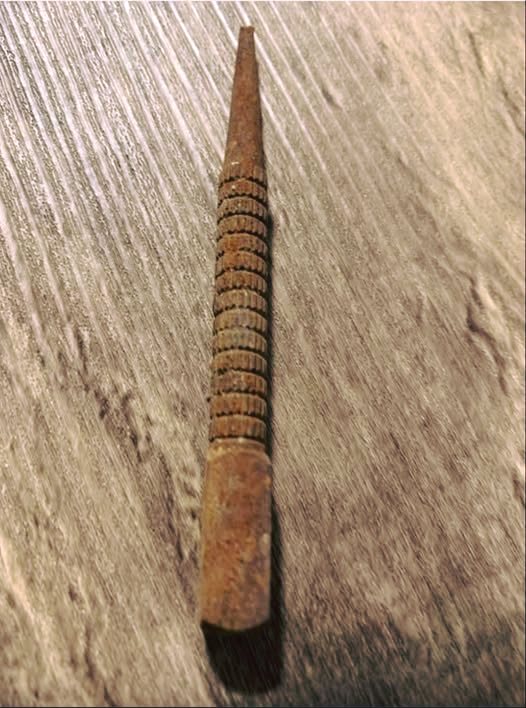
Sometimes, you come across an object in a toolbox or workshop that seems so simple that you almost overlook it. It doesn’t look powerful like a drill or impressive like a saw, yet it plays a crucial role in finishing work. Many people even pause and ask what it is used for, especially when they first see it sitting quietly among more complex tools. This small object is known as the nail punch, also commonly called a nail set, and it has a long history rooted in craftsmanship and precision work.
At its core, the nail punch is a simple handheld tool designed to push nails slightly below the surface of wood or other materials. It works by placing its pointed tip directly on the nail head and striking the blunt end with a hammer. This controlled force drives the nail deeper without damaging the surrounding surface. Although it looks basic, it allows carpenters to achieve smooth, professional finishes that would otherwise be difficult to obtain with a hammer alone.
The origins of this tool trace back to early human craftsmanship, where primitive builders needed ways to secure materials neatly and efficiently. In ancient times, early forms of nail-driving techniques involved stones, chisels, or sharpened metal pieces. These early tools were not refined, but they served the same essential purpose: pushing fasteners below the surface of wood to create a cleaner finish. Over time, this concept evolved into more precise and specialized tools like the modern nail punch.
As woodworking developed through the centuries, especially during the Industrial Revolution, the need for standardized tools increased significantly. Factories began producing nails in large quantities, and carpenters required reliable instruments to match this new scale of production. The nail punch became a staple in toolkits because it provided consistency and accuracy. It allowed workers to complete fine woodworking tasks efficiently, especially in furniture making, cabinetry, and construction finishing work.
A nail punch typically has a simple but carefully engineered design. It is usually cylindrical, made from strong materials such as hardened steel or titanium, allowing it to withstand repeated hammer strikes. One end is tapered into a fine point that matches different nail head sizes, while the opposite end is flat and designed for impact. This structure ensures both durability and precision, making it suitable for repeated professional use in demanding environments.
In modern woodworking, the nail punch plays an essential role in finishing work. Once a nail is driven slightly below the surface, the small hole left behind can be filled with wood putty or filler. This process creates a smooth, seamless surface that can be painted or stained without visible nail marks. It is especially important in high-quality carpentry, where appearance and durability must go hand in hand.
Another important benefit of using a nail punch is the protection it offers to materials. When nails are left exposed or hammered unevenly, they can damage surfaces or cause splitting in wood. By setting the nail below the surface, the tool reduces the risk of wear, corrosion, and long-term structural issues. This makes finished products not only more attractive but also more durable over time.
Today’s nail punches have evolved significantly from their early versions. Modern designs often include ergonomic grips that reduce hand strain during extended use. Some sets are color-coded or laser-marked to indicate different sizes, making them easier to identify quickly on the job. There are also spring-loaded automatic versions that improve speed and reduce the physical effort required for repetitive tasks.
Despite the rise of electric tools and advanced machinery, the nail punch remains widely used. Its simplicity is one of its greatest strengths. Unlike power tools, it does not require electricity, batteries, or complex maintenance. It is reliable in all conditions and is especially valued by professionals who focus on detail-oriented finishing work, such as trim carpenters and furniture restorers.
Beyond professional use, the nail punch is also popular among DIY enthusiasts and hobbyists. Whether building small wooden projects, repairing furniture, or working on home improvements, it provides a level of precision that is difficult to achieve otherwise. Even in modern construction environments filled with advanced tools, this simple device continues to prove its value.
In many ways, the nail punch represents a perfect example of how simple tools can stand the test of time. While technology continues to advance, certain traditional tools remain essential because they solve specific problems efficiently and reliably. The nail punch may not attract attention, but it quietly plays a vital role in creating smooth, polished, and long-lasting woodwork.
Ultimately, this small tool reminds us that not every important invention needs to be complex. Sometimes, the most effective solutions are also the simplest. Whether in the hands of a professional carpenter or a weekend DIY builder, the nail punch continues to serve as an unsung hero of woodworking, ensuring that every finished surface looks clean, precise, and complete.