
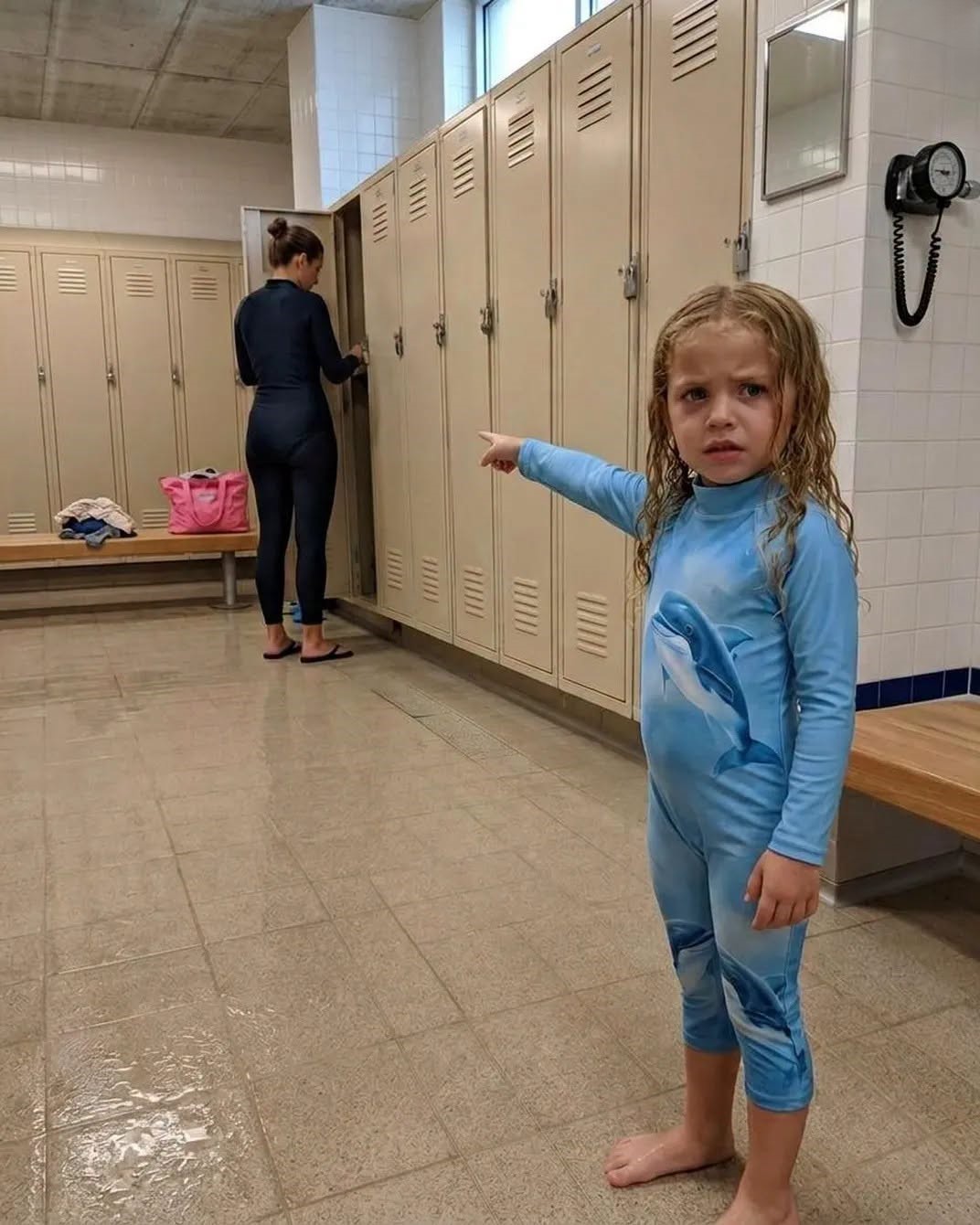
“Mommy, we have to save Daddy.” My five-year-old daughter, Zoe, tugged my arm so hard in the public pool changing room that her little fingers left marks on my skin. The air smelled like chlorine, sunscreen, and wet towels, and families moved around us in a blur of lockers, flip-flops, and squeaky tile. I tried to smile because children say strange things, especially when they are tired and excited. “Sweetheart, Daddy is in Seattle,” I whispered, reminding her of the trade conference Henry attended every year. But Zoe’s eyes stayed fixed on a woman near the far wall who was closing a locker with a loose padlock. “No, Mommy,” she said, her voice small but certain. “That lady put him in there.”
Eleven days earlier, I had driven Henry to the airport before sunrise, with Zoe asleep in the back seat and his leather weekend bag in the trunk. I had packed that bag myself, including his favorite navy jacket, the one with a coffee stain inside the lining and a small fabric label I had sewn into the collar after he kept leaving jackets behind. Henry Collins, stitched in my uneven blue thread. His company sent him to a Seattle trade conference every spring, and the trip was always the same: two weeks, hotel photos, sweet texts, and promises to bring back chocolate for Zoe. We were not rich, but our life felt steady, built on a $2,400 mortgage, careful grocery lists, and the kind of trust I thought was stronger than paperwork. Henry had always been gentle, dependable, and private, especially about his family. Whenever I asked about his childhood, he smiled and said, “Long story,” and I loved him enough not to push.
Still, when Zoe mentioned the jacket, the room seemed to tilt. I told her to stay on the bench, then walked to the locker and lifted the loose latch with shaking fingers. Inside sat the navy jacket, folded neatly on the top shelf, with the same worn cuffs and the same faint coffee mark I knew by heart. I turned the collar over and saw my own stitching: Henry Collins. In the inside pocket, I found a second-notice utility bill addressed to D. Collins at 418 Linden Court, a quiet street only twelve minutes from our house. I took a photo, closed the locker, and followed the woman outside from a careful distance, Zoe’s hand tucked tightly in mine. She drove to a blue house with white shutters, where a man stepped onto the porch wearing my husband’s face, smiled at her, and kissed her like he belonged there.
For two days, Henry kept texting me from “Seattle” as if nothing had happened, while I replayed that porch scene until I could barely sleep. When he finally came home with airport chocolates and a sunburn, I put the photo of the jacket on the coffee table and asked one question: “Who is Daniel?” Henry’s face went pale before he sank onto the couch and told me the truth he should have trusted me with years earlier. Daniel was his identical twin brother, estranged for twelve years after a bitter dispute over their father’s estate, a family attorney, and a house that had become more burden than inheritance. The fight had involved court filings, insurance claims, an unpaid mortgage, and an investment Daniel believed Henry had mishandled, though Henry said grief had made both of them cruel and stubborn. Two weeks earlier, Daniel had come to Henry’s office hoping to reconnect, spilled coffee on his own jacket, and Henry had lent him the old navy one without thinking. The man at the blue house was not my husband hiding another life; he was the brother Henry had erased from ours.
That answer did not fix everything, but it changed what needed fixing. I told Henry I could forgive the confusion, and I could even apologize to Daniel for confronting him in panic, but I could not accept being married to only the parts of a man he found easy to show me. The next morning, Henry called Daniel from the porch and said his name out loud in our home for the first time. A week later, we met Daniel and his wife, Clara, for coffee, and Zoe proudly explained that she had been “a very quiet detective.” There were awkward pauses, old wounds, and more truth than comfort, but there was also relief in finally naming what had been hidden. I learned that love is not proven by avoiding hard questions. Sometimes it is proven by staying at the table long enough to hear the answers.

