
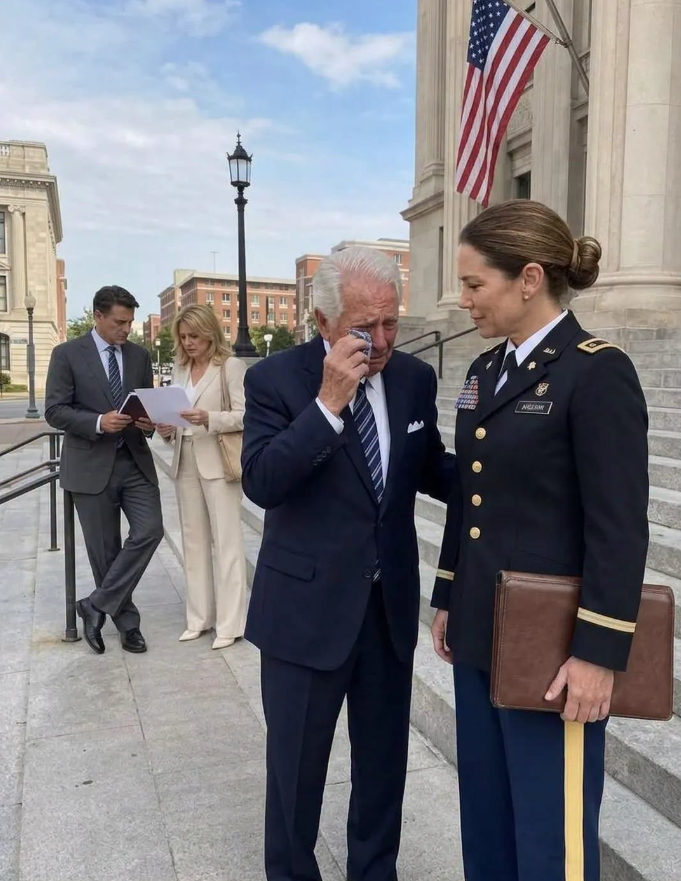
Vanessa arrived at my Tennessee rental on a Saturday morning wearing a cream blazer, with an attorney beside her and a legal letter in his hand. I still had garden soil on my knees when she announced they were there to discuss the $40 million trust my grandfather had left me. My name is Christine Parker, and after sixteen years in the Army, I had learned not to react before understanding the threat. Vanessa had married my father, Richard, only three months earlier, after he had spent twelve lonely years grieving my mother. Since the wedding, she had replaced his furniture, changed his financial adviser, and reorganized accounts so her name appeared first. Until an old family friend mentioned my inheritance at dinner, Vanessa had believed I was simply a colonel renting a modest house near the installation. Now she sat in my living room, smiling as her lawyer accused me of hiding money that supposedly belonged to my father.
The attorney, Preston Cole, placed a typed demand on my coffee table and claimed he represented my father’s interests. I left the paper untouched and asked one question: “Where is the document proving my father authorized you to come here?” Preston’s hand froze against his folder, and Vanessa’s polished smile disappeared. She insisted they were acting for my father’s protection, but neither of them could produce a signature, authorization letter, or even an email from him. I calmly told them the trust was separate from my father’s property and asked them to leave until they had legitimate proof. Preston looked at Vanessa like a man realizing his client had withheld something important, and before their car reached the road, I called the trustee who had protected my inheritance for decades. Then I drove to Asheville to ask my father the question Vanessa clearly hoped I never would.
Richard went pale when I described the visit because he had never hired Preston, approved the letter, or asked Vanessa to investigate my inheritance. Sitting at the unfamiliar kitchen table she had purchased, he admitted she had told him I was refusing to discuss the family estate. I gave him the names of an independent attorney and his former financial adviser, then encouraged him to examine every account himself. The review uncovered changes to joint savings, retirement insurance, and investment documents that could have affected his future security. His original adviser restored the accounts, while the attorney examined the house mortgage, estate plan, and every document Vanessa had touched. Preston later submitted a weak challenge to the trust, but Walter Hobbs answered with records showing my grandfather had created it solely for me years earlier. The matter never reached court because Vanessa’s claim collapsed as soon as someone demanded evidence instead of accepting her version of events.
My father did not immediately end his marriage, and I did not pressure him to do so. He required Vanessa to attend counseling, restored contact with old friends, and brought my mother’s walnut cabinet home from the storage unit where Vanessa had hidden it. Months later, I returned for Sunday dinner and found neighbors, golfing friends, and familiar photographs back in their proper places. Vanessa was quieter, careful around me, and she never mentioned the trust again. As Dad walked me to my car, he apologized for ignoring the warning signs and asked whether my grandfather’s money was secure. I told him the trust was protected by forty years of careful planning, but the money mattered less than the lesson behind it. My grandfather had once warned me to keep an ordinary life because wealth changes how people see you. Driving home through the dark hills, I understood he had not only left me a fortune—he had prepared me for the day someone came looking for it.

