
At 2:47 in the morning, the photo lit up Anna Jensen’s phone while she lay half-asleep on the couch in the quiet house she had kept running for six years. Her husband Ethan stood beneath the neon sign of a Las Vegas wedding chapel, grinning beside Rebecca, a coworker Anna had once welcomed into her home with spinach dip and polite conversation. Both of them held up marriage certificates like prizes. Beneath the image was Ethan’s message, sharp enough to empty the room of air: he had married Rebecca, had been seeing her for eight months, and thought Anna was boring and pathetic. Anna read it once, then again, waiting for the words to rearrange themselves into something less cruel. They did not. So she typed one word back — “Cool” — set the phone down, and let a strange, useful calm settle over her.
Anna had spent her marriage doing what she did best: managing details no one else noticed until they stopped working. As a project manager for a regional construction firm, she knew how to track moving parts, close gaps, fix problems, and keep a plan alive when reality shifted under it. At home, that meant paying bills, filing taxes, handling the mortgage, managing passwords, negotiating repairs, and absorbing every administrative burden Ethan found too tedious to carry. She had bought the house before the marriage, using her own credit, her own savings, and a mortgage that stayed in her name because Ethan’s credit had been damaged when they met. The joint accounts were organized under Anna as the primary holder for the same practical reason. Ethan had mistaken her competence for weakness, never understanding that the person who keeps a life running also knows exactly where every switch is.
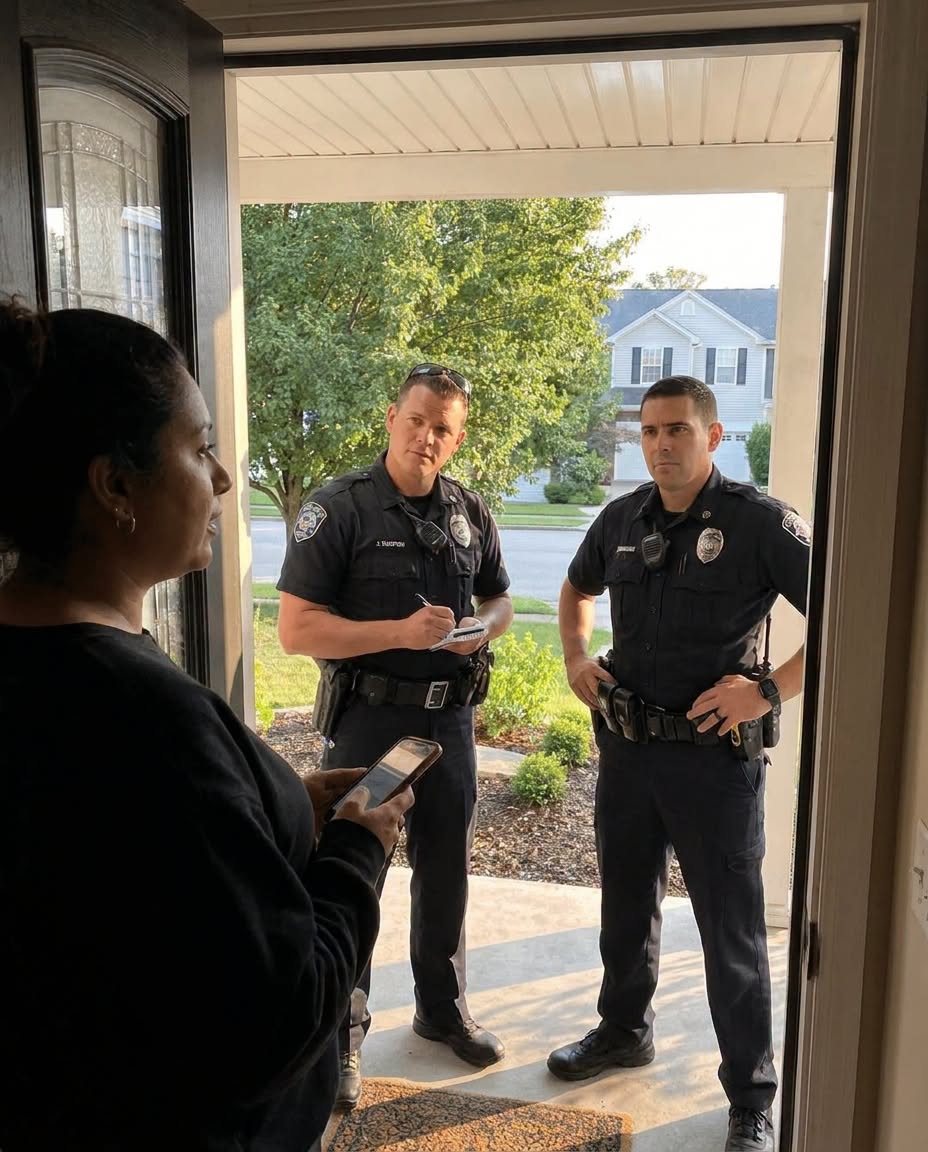
By 3:02 that morning, Anna had transferred the joint account balance into her personal account. By 3:09, she had canceled the credit cards tied to it. By 3:15, she had changed the smart lock, alarm system, garage code, banking passwords, email recovery options, and every account Ethan had used by convenience rather than right. At 3:30, she called an emergency locksmith and paid double to have every lock changed before sunrise. When Ethan called the police claiming she had locked him out of “his” home, Anna simply showed the officers the photo and the message from Vegas. The older officer looked at it, handed back her phone, and said it was not really a police matter. By afternoon, Ethan arrived with Rebecca, his mother Margaret, and his sister Lily, only to find his belongings boxed, labeled, and waiting in the garage.
Ethan had expected tears, bargaining, or at least a door that still opened for him. Instead, he found documentation. Anna owned the house, held the accounts, and had proof that Ethan and Rebecca had used joint funds for parts of the Las Vegas trip, including the wedding chapel and hotel. When Rebecca’s card declined for the moving truck, then Ethan’s did too, the whole fantasy began collapsing in the driveway. The smear campaign started within days, with Ethan’s family painting Anna as controlling and abusive, but she answered with screenshots of messages showing the affair, the planned financial transfers, and their expectation that she would be too busy managing everything to notice. Her attorney, Priya, built the divorce file around property records, account statements, timestamps, the Vegas marriage certificate, and evidence of harassment. In court, the judge granted the divorce, confirmed Anna’s ownership of the house and assets, ordered repayment of the transferred funds, and treated Ethan’s second wedding as exactly what it was: a legal and financial disaster of his own making.
Anna sold the house the following spring, not because she had lost it, but because she wanted a home chosen only by her. She bought a downtown condo with east-facing windows, designed the kitchen herself, hung the modern print Ethan had always disliked, and filled the space slowly with things that belonged to her life instead of their failed performance. Later, she framed a copy of Ethan’s Las Vegas marriage certificate and hung it on the wall, not as a monument to anger, but as proof of a lesson she never wanted to forget. Reliability is not weakness. Competence is not permission to be used. Ethan believed one cruel text from a neon chapel would destroy the woman who had quietly held everything together. He forgot she was also the woman who kept the records, knew the accounts, owned the house, and changed the locks before he ever thought to come back.