
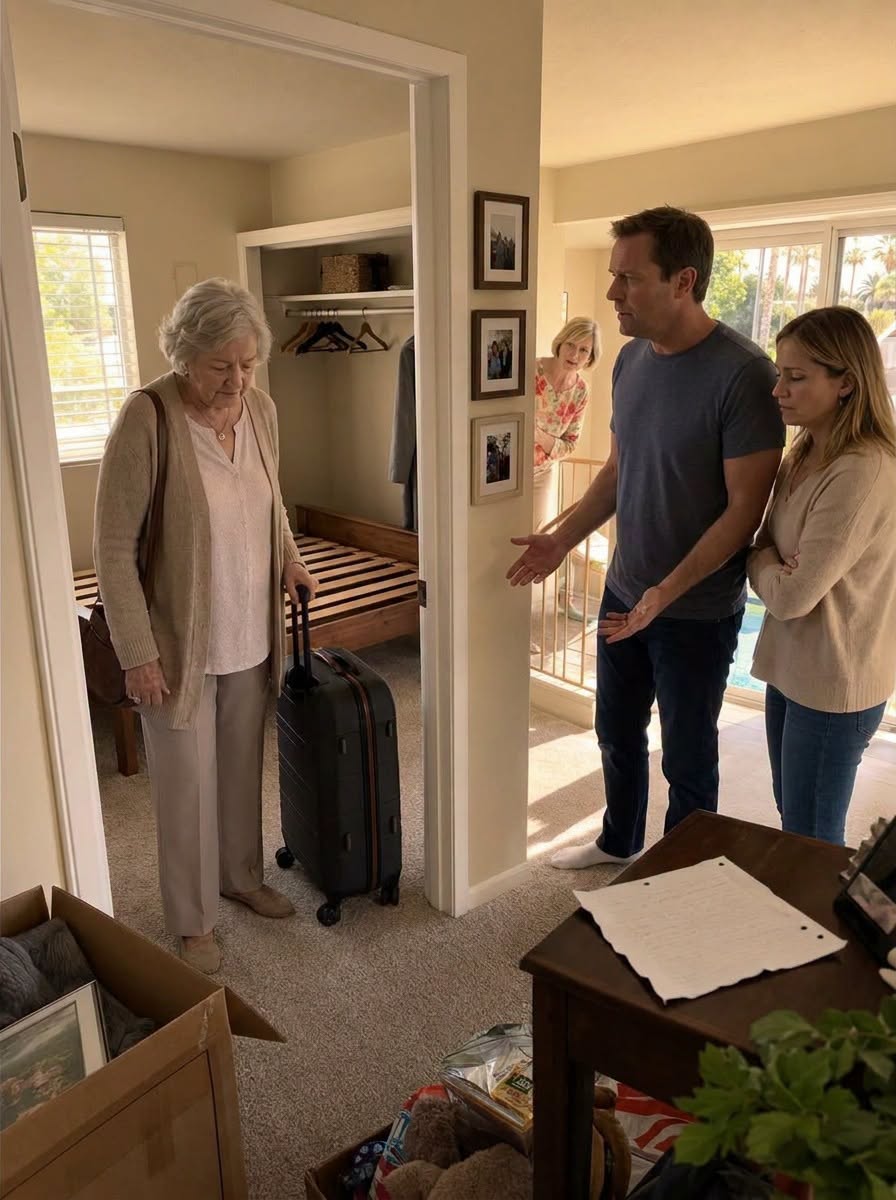
The breaking point came when I walked into my small upstairs bedroom and found Patricia’s storage boxes stacked beside my dresser, blocking half the window. I had already paid Gavin $900 that month for the privilege of living in that room, while his mother-in-law occupied a downstairs guest suite twice the size with a private bathroom, walk-in closet, pool access, and the garage space—all without paying a cent. I bought most of the groceries, cooked dinner, walked the dog, accepted deliveries, and handled errands whenever Gavin and Lauren were away. Patricia, meanwhile, complained about pool temperatures and requested fresh salmon as if the household were a hotel. When Lauren casually explained that her mother “needed more storage,” something in me finally became very clear. That evening I called my financial adviser, Cynthia, and told her, “I’m ready to buy another home.” Three weeks later, while everyone else was out, movers emptied my room and I left behind only Patricia’s boxes and a note asking that they be returned to her suite.
I had moved into Gavin’s Scottsdale home after my husband Thomas died because loneliness had made the condominium we shared for eighteen years feel unbearable. Gavin told me I should not be alone and invited me to stay until I felt steady again. His landscaping business was also struggling, so after selling my condo I gave him $20,000 to help with what he called a temporary cash-flow problem. What he did not know was that Thomas and I had spent nearly forty years saving carefully; between retirement accounts, insurance proceeds, investments, and my condo equity, I was financially secure. For three months I believed I had found a workable arrangement. Then Patricia moved in after selling her own home for more than $400,000. Soon afterward, Gavin slid a handwritten rent agreement across the kitchen counter. When I asked why Patricia paid nothing, Lauren claimed her mother’s money was “tied up in investments.” I agreed to the $900 anyway, but once groceries, household supplies, pet expenses, and errands were included, my actual contribution was closer to $1,700 a month—before counting hours of unpaid work.
What troubled me most was how quickly money became only one part of the imbalance. Patricia received every accommodation without discussion, while my presence increasingly required permission. Lauren told me the family room was private, complained when I invited a longtime friend over for tea because her mother preferred quiet afternoons, and expected me to rearrange my routines around Patricia’s comfort. Gavin watched all of it without intervening. When I finally spoke with Cynthia, she reminded me that I could purchase a comfortable home outright without touching the core of my retirement security. I found a modest two-bedroom house with a neglected garden, a sunny reading room, and a garage no one else could claim. I paid cash from an account Gavin did not know existed and closed in under three weeks. I did not announce the move because I knew what would follow—arguments, guilt, perhaps a slightly improved rent arrangement designed to keep the underlying dynamic intact. I needed the decision completed before anyone had a chance to persuade me that being treated unequally was somehow the reasonable price of staying close to my family.
Gavin’s first reaction was disbelief. When I finally returned his calls from my new living room, he demanded to know how I could afford a house and accused me of disappearing without discussing it with anyone. I reminded him that I had given him $20,000, paid monthly rent, bought groceries, cooked, cared for the dog, and accepted the smallest room while Patricia received substantially better accommodations at no cost. Weeks later, he came to see me and finally admitted what had happened: he had recognized the unfairness much earlier than he wanted to acknowledge, but confronting Lauren about her mother felt harder than allowing me to absorb the imbalance. Keeping peace in his marriage had become easier when I was the one paying for it. The financial arrangement changed after I left, with Patricia eventually contributing toward household expenses, though still less than I had paid. More importantly, Gavin began taking responsibility for the way he had allowed convenience to replace fairness. I made clear that none of those changes would bring me back. My new home was not leverage in a family negotiation; it was simply mine.
Our relationship survived, though it became more honest and less automatic. Gavin visits now because he wants to see me rather than because we share an address, and my grandson has begun spending weekends in the spare bedroom. Lauren and I remain cordial but distant, while I eventually came to understand that her fierce protectiveness of Patricia grew partly from unresolved wounds in their own relationship. Understanding that softened some of my anger without changing what I had needed to do. In my new house, Thomas’s old reading chair sits in the morning light, friends come for coffee without anyone’s permission, and the garden has begun filling with roses and tomatoes. I think sometimes about that handwritten rent agreement and how long I waited for Gavin to notice what was happening. The real change came when I stopped waiting. I had spent months trying to preserve belonging by making myself smaller; moving out reminded me that family closeness is worth keeping only when there is room inside it for your dignity too.

