
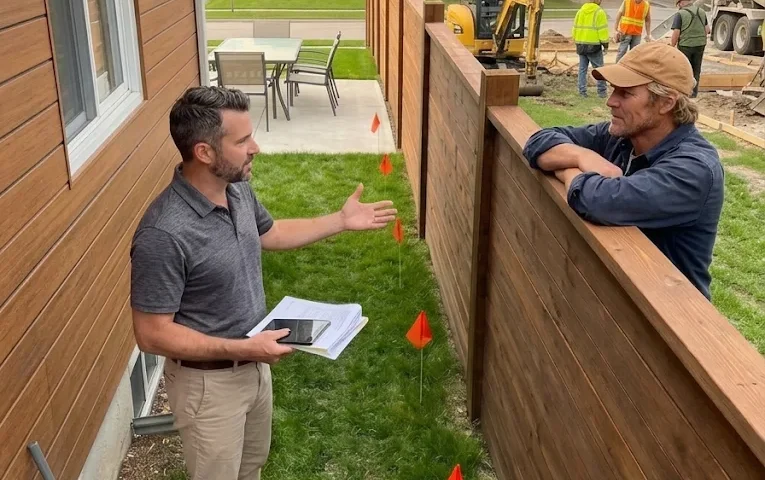
The sound of construction equipment interrupted an ordinary Saturday morning. Outside, workers were installing a new cedar fence along a property line that had remained unchanged for years. At first, the homeowner thought nothing of it. But by the following morning, a closer look revealed something troubling: the fence appeared to have taken over a large section of his lawn. After measuring the distance, he realized the new structure extended approximately eight feet onto the land he had owned for eleven years. When he approached his neighbor, Tyler, expecting a simple conversation, the response was anything but reassuring.
Tyler insisted the fence was in the right place and argued that moving it would be too expensive. He also mentioned that construction crews were preparing to begin work on a swimming pool. Rather than start an argument, the homeowner decided to hire a professional surveyor to establish the exact boundary. Ten days later, the survey confirmed his concern: the fence and landscaping were sitting on his property. But the most important discovery came when he compared the survey with the documents Tyler had submitted for his pool project.
The records showed that Tyler’s original permit application identified a fence location consistent with the legal property boundary. However, a contractor’s handwritten note revealed something very different: the owner had requested that the fence be shifted approximately eight feet to gain more usable yard space. That detail changed the dispute. The homeowner hired property attorney Rachel Adler, sent a formal notice, and eventually filed a complaint after Tyler continued construction. The county also reviewed the permit discrepancy. During mediation, Tyler’s own attorney examined the contractor’s note, while the homeowner presented the professional survey, previous property records, and years of aerial photographs showing the established boundary. Tyler offered $5,000, then $10,000, and eventually $25,000 to keep the disputed strip. The homeowner refused, explaining that the issue involved more than money. The land affected future construction, drainage, privacy, and the property’s value. When mediation failed, the case moved to court, where the judge examined the survey, permit documents, and construction records. The ruling confirmed the legal boundary and ordered Tyler to remove the fence and structures from the neighboring property within 45 days.
The removal took several weeks. The pergola footings were taken out, landscaping was relocated, and the fence was rebuilt on Tyler’s side of the boundary. The pool project also had to be redesigned, adding unexpected expenses and delays. For the homeowner, the resolution meant more than recovering eight feet of lawn. It meant protecting his property rights and keeping the boundary clearly documented for future owners. He eventually planted six blueberry bushes along the restored strip, inspired by the garden his father had maintained years earlier. When Tyler later admitted that he had expected the dispute to be too expensive for his neighbor to pursue, the homeowner understood why the situation had become so complicated. A new family eventually purchased Tyler’s house, and their first conversation about the boundary was simple: they checked the survey and agreed where the property line belonged. After a year of legal expenses, paperwork, and court proceedings, that ordinary conversation felt like the best possible ending.